





 Português
  Inglês
  Espanhol
  4 min de leitura
  0 comentários


Billion-Dollar Investment Promises to Transform Infrastructure, Reduce Bottlenecks, and Balance Regional Electricity Supply
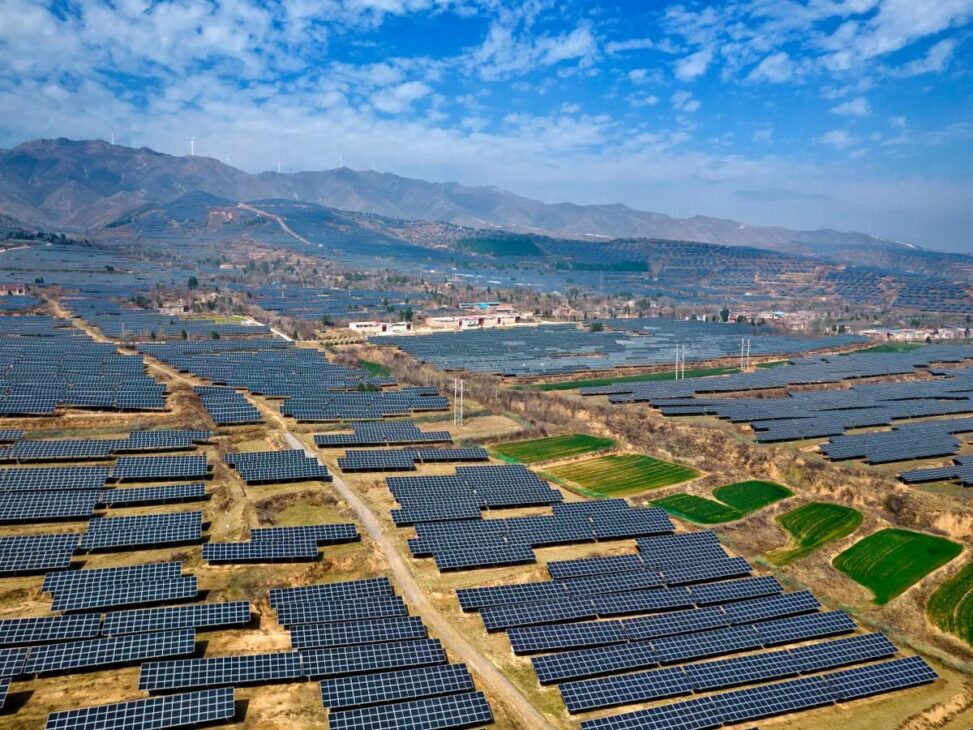
The China Southern Power Grid announced in May 2025 an estimated investment of R$ 23 billion. The goal is to channel the excess clean energy generated in Northeast Brazil to the Midwest. This information comes from the Ministry of Mines and Energy and CNN Brazil.
Currently, the Northeast is responsible for about 80% of the country’s wind and solar energy. Nevertheless, it faces limitations in transmission infrastructure. This results in significant losses and waste of productive potential.
Technical Study Identifies Bottlenecks and Structural Solutions
According to data from the National Electric Energy Agency (Aneel), electrical engineering consultants have been conducting technical studies since 2023. These studies identify flow failures that jeopardize consistent supply to states that demand more electricity.
-
Renewable energy advances over protected areas in Brazil, and a survey by the Energy Transition Observatory reveals silent impacts that challenge environmental conservation and pressure sensitive traditional territories.

-
Rio Grande do Sul accelerates energy transition: State invests in renewable technologies and consolidates decarbonization strategies and pathways to attract billions in new industrial investments.

-
With 160,000 m² of collectors, an area larger than 20 football fields, Silkeborg, in Denmark, hosts a solar thermal plant that heats 19,500 homes and could become the largest solar heating plant in the world.

-
A study reveals the expansion of renewable energy procurement in Brazil and shows how companies are taking advantage of opportunities to reduce expenses, ensure energy efficiency, and strengthen strategic environmental commitments.


In May 2025, Minister Alexandre Silveira reinforced that the Sovereign Fund of China will support the expansion project. This includes new transmission corridors, high-capacity towers, and modernized substations.
For infrastructure specialists, this integrated network is a strategic response. It combats energy fluctuations that affect industrial and residential consumers.
Economic and Strategic Impacts for Brazil
With the billion-dollar investment, the Midwest, historically dependent on thermal and hydroelectric plants, will have renewable energy on a larger scale.
According to BloombergNEF, agricultural companies and industrial hubs in the region are already signaling increased investments. This is because they will have a guarantee of stable supply. This scenario reduces the risks of production stoppages.
Moreover, this energy expansion strengthens Brazil as an international reference in clean energy. This could attract new bilateral agreements with Asian countries.
Environmental and Social Challenges of the Project
Although the project has the potential to boost the economy, environmentalists warn of possible socio-environmental impacts.
In June 2025, representatives from traditional communities in the interior of Mato Grosso expressed concerns. The installation of transmission towers in environmentally protected areas is a matter of concern.
For this reason, the China Southern Power Grid, in partnership with Aneel, initiated public consultations. The aim is to discuss environmental impact studies and ensure transparency in the process.
Nevertheless, civil organizations demand adequate compensation. They also call for damage mitigation plans to preserve natural resources and respect territorial rights.
Expansion Follows Strict Criteria
According to the Ministry of Mines and Energy, all stages of the schedule must adhere to technical criteria. Completion is expected by 2029. The environmental licensing will also be strict.
Independent audits will monitor the progress of the works. The goal is to avoid delays, cost overruns, or resource misappropriation. Thus, the billion-dollar investment will be well utilized.
The Aneel and the ministry state that the auctions for the concession of the lines will follow a transparent model. They will take place in October 2025. This management aligns with editorial guidelines that reinforce the commitment to public governance.
Transformation of the Energy Matrix in a Global Context
Experts point out that the project is part of a global trend. Countries with large territorial extents are seeking to expand clean matrices.
Examples in Asia and Europe show significant results. Studies from BloombergNEF and the International Renewable Energy Agency (Irena) confirm this. Bilateral partnerships balance supply and demand. Thus, they prevent network overloads or unexpected rationing.
Therefore, the energy integration between Northeast and Midwest places Brazil in a position of regional leadership. This will happen as long as technical management and environmental oversight work together.
What Does the Future Hold for Energy Flow?
Economic analysts emphasize that the success of the Chinese investment depends on efficiency, innovation, and socio-environmental responsibility.
If the works stay on schedule, the Northeast will make the most of its wind and solar potential. At the same time, the Midwest will diversify its matrix and attract new industrial enterprises.
However, environmental associations continue to demand transparency. They require a commitment to impacted communities. The warning is that past mistakes in hydroelectric plants should not be repeated.
Meanwhile, the China Southern Power Grid, with a history of large projects in Asia, ensures frequent audits.
What should be the balance: accelerating infrastructure to ensure more renewable energy or focusing on mitigating environmental and social impacts? Share your opinion!










Seja o primeiro a reagir!