





 Português
  Inglês
  Espanhol
  3 min de leitura
  0 comentários


China Revealed the Results of Its US$ 15 Billion Investment in Mineral Exploration, with 124 New Findings and Four Massive Oil and Natural Gas Fields. Learn How This Advance Can Impact the Global Energy Scenario!
The investment by China in mineral exploration has grown significantly, pushing the country to make major advances in the discovery of new deposits. Just in the last year, the Ministry of Natural Resources of China reported the discovery of 124 additional mineral deposits, as well as oil and gas fields, further strengthening the country’s strategic reserves and increasing its self-sufficiency in critical sectors.
According to the press in the Asian country, the total investment in mineral exploration reached 110 billion yuan (approximately US$ 15.5 billion), consolidating the third consecutive year of growth.
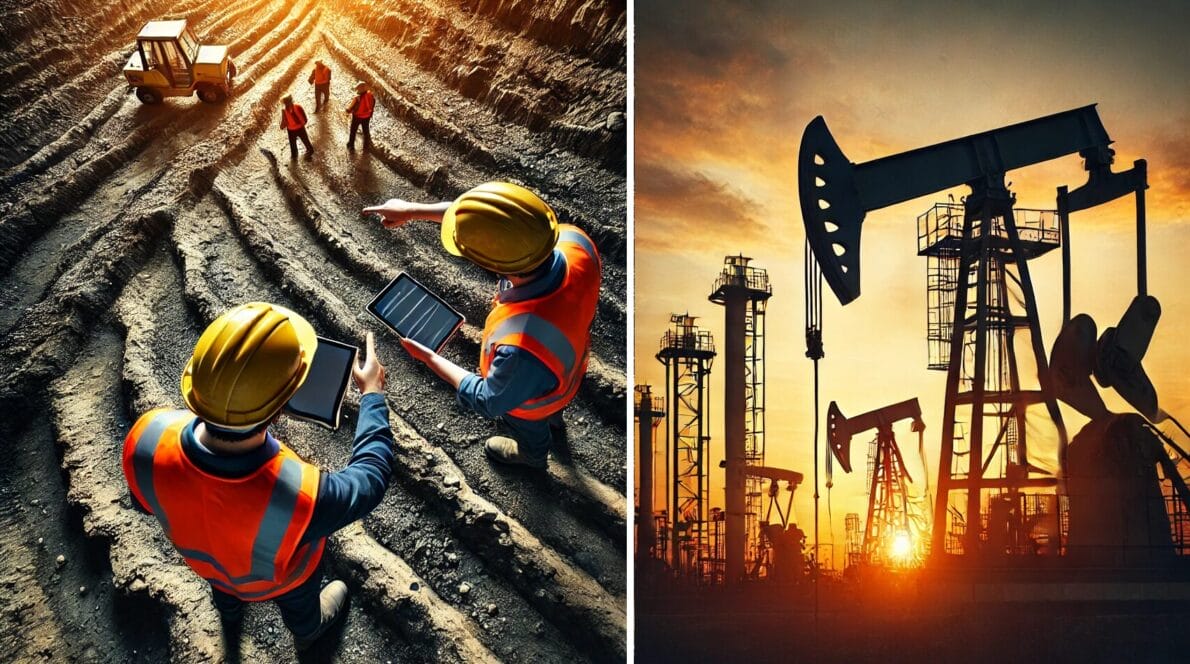
China’s Strategy in Mineral Exploration and Strategic Reserves
In 2021, Beijing launched a long-term strategy aimed at strengthening exploration and ensuring energy security and self-sufficiency in critical minerals.
-
Offshore industrial demand in Macaé skyrockets with the recovery of oil and gas and could grow by up to 396% by 2026 in the Campos Basin.
-
Offshore industrial demand in Macaé surges with the recovery of oil and gas and could grow by up to 396% by 2026 in the Campos Basin.
-
Brazilian giant expands borders in the Southeast: Petrobras confirms new oil discovery in ultra-deep waters in the pre-salt of the Campos Basin.

-
Alert in the global energy market: Severe tropical cyclone hits the coast and disrupts gas production at major plants in Australia, threatening global supply.


This 15-year strategy mainly focuses on essential minerals for high-tech industries, such as fluorite, crystalline graphite, and molybdenum.
Fluorite, a vital mineral for semiconductor production and electric vehicle batteries, saw its reserves increase by 24.4% last year, reaching 107 million tons.
Another highlight was crystalline graphite, used in industries such as nuclear energy and defense, which experienced a 23.9% growth, surpassing the mark of 100 million tons.
These advancements are part of China’s ongoing effort to ensure that its resources are aligned with the demand of emerging industries, especially in sectors such as new energies and aerospace.
Moreover, the country continues to lead globally in the production of minerals like antimony, tungsten, and molybdenum, which are essential for various cutting-edge technologies.
New Oil and Gas Fields: Strengthening Energy Security
In addition to mineral reserves, China has made significant discoveries in oil and natural gas exploration. Four new oil fields, each with a capacity of over 100 million tons, were found.
These fields have a total capacity of 746 million barrels, further strengthening the country’s energy security.
Similarly, four natural gas fields, each with a capacity of over 100 billion cubic meters, were discovered, signaling a significant boost in energy production.
Growth of Mineral Reserves for Food Security
Another critical area for Chinese growth is agricultural production, which heavily relies on minerals such as sylvite, essential for fertilizer production.
In the last year, sylvite reserves increased by 15.3%, reaching 332 million tons. This represents an important step towards ensuring food security in a country with a growing demand for high-quality agricultural production.
The Strategic Importance of Discoveries
The recent discoveries are part of a broader approach by Xi Jinping, who sees the pursuit of internal resources as a pillar of national economy and security.
The discoveries are crucial for the growing domestic and international demand, as well as helping the country reduce its dependence on imports of essential resources.
However, China’s moves to reinforce control over exports of critical minerals have raised global concerns, especially in sectors such as semiconductors, electric vehicles, and defense.
Recently, Beijing intensified export restrictions on antimony, gallium, germanium, and graphite, raising questions about the impact on the global supply of essential materials for high-tech manufacturing.
Marine Research and Exploration
China has also been investing in exploring maritime and oceanic zones, expanding its geological research beyond land territory.
This approach aims to find new mineral deposits and natural resources on the seabed, further increasing the country’s self-sufficiency in areas such as energy production and deep-sea mining.
With increasing investment and ongoing discovery of mineral deposits, China is getting closer to achieving its energy security and mineral self-sufficiency goals.
This progress positions the country as a global force in sectors that depend on strategic minerals, strengthening its role as one of the leading producers and consumers of natural resources on the world stage.
In summary, China’s effort to expand its reserves of critical resources, combined with its ability to discover new deposits, is transforming the global dynamics of strategic minerals, with impacts that resonate across industries worldwide.










Seja o primeiro a reagir!