





 Portuguese
  English
  Spanish
  3 min of reading
  0 comments


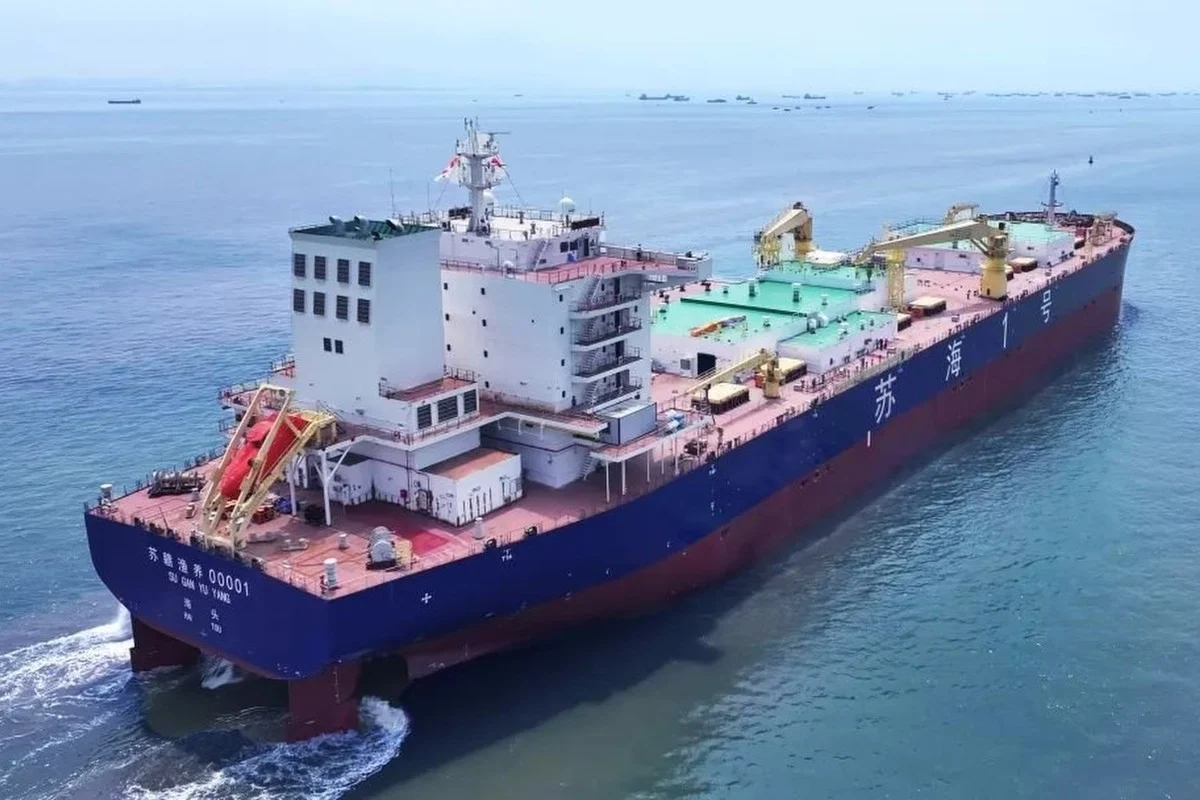
Chinese Ship “Su Hai No 1” Will Have The Capacity To Farm 8,000 Tons Of Salmon Per Year And Promises To Reduce Imports And Logistic Costs.
China is about to make a leap in salmon production with the launch of “Su Hai No 1”. This is the world’s first ship dedicated exclusively to offshore salmon farming.
The vessel was designed to reduce China’s dependence on imported fish and enhance the country’s food security.
The “Su Hai No 1” is an ambitious bet by the Chinese government to develop large-scale offshore aquaculture. With a length of 250 meters, the ship was built at the Huangpu Wenchong Shipyard in Guangzhou. The investment reached 600 million yuan, equivalent to 83.6 million dollars.
-
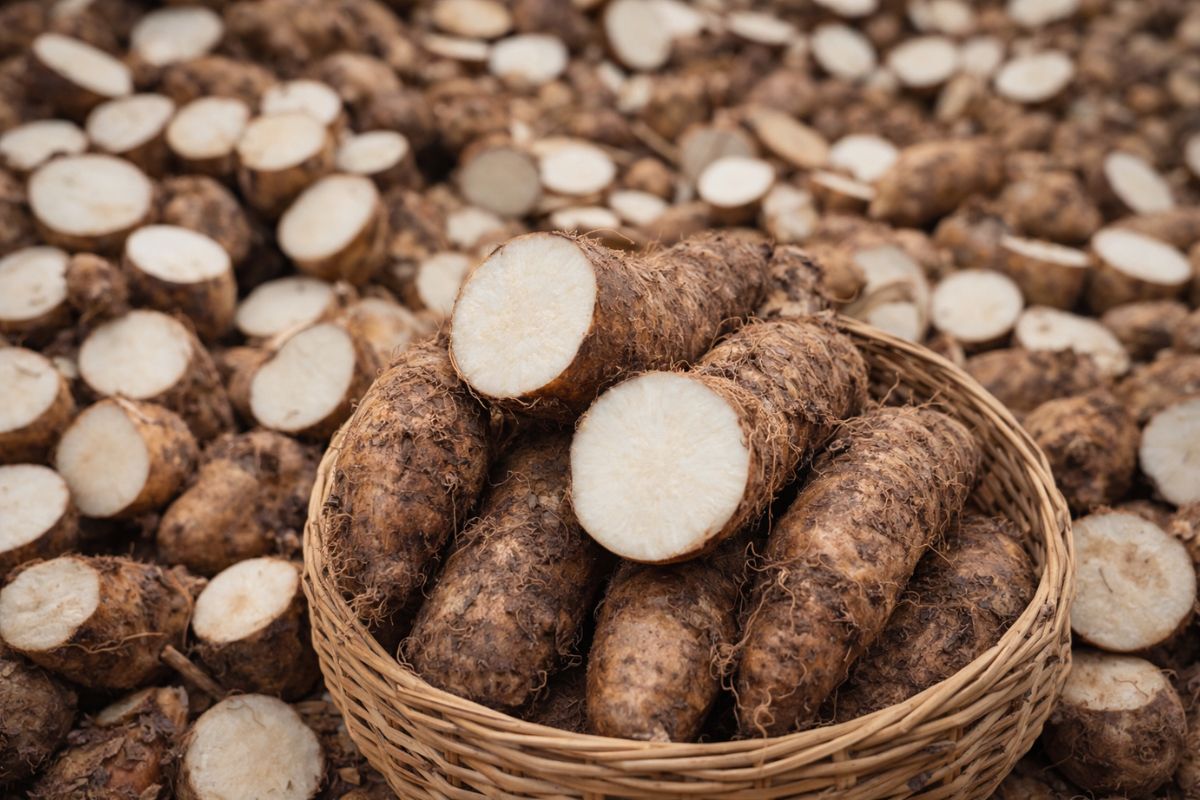
Millions of people have been eating yam for centuries without knowing that this humble tuber contains a compound called diosgenin, which scientists have now discovered can improve memory and help control blood sugar levels.
-
Scientists from an international project drill 1,800 meters of ice in Antarctica using hot water and discover details about one of the most intriguing places on planet Earth.

-
Seen from space, a colossal volcano nearly 5,000 meters high in Russia has released 1,600 km of smoke over the Pacific, forming “devil’s horns” of lava and revealing the brutal force of the Ring of Fire.

-
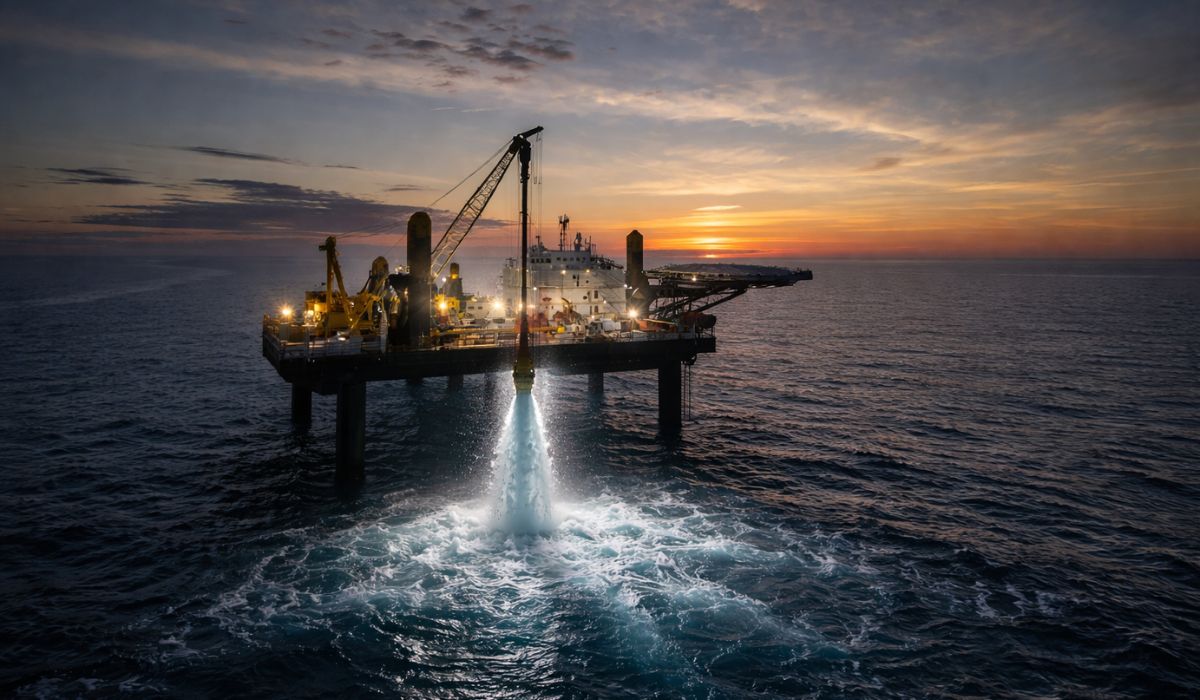
Expedition 501: Scientists drill into the ocean floor and discover a giant reserve of fresh water hidden beneath the sea, extracting nearly 50,000 liters and revealing an invisible system that could reshape the map of water scarcity.

Offshore Salmon Production
The ship is designed to produce up to 8,000 tons of salmon per year. Delivery is scheduled for June, after a successful test voyage at the end of April. Final adjustments are being made ahead of the official operation.
According to the South China Morning Post (SCMP), the “Su Hai No 1” will be able to navigate to different regions, offering an advantage over fixed methods. This allows for the avoidance of environmental risks such as typhoons or harmful algae. The vessel will also feature an internal processing system, ensuring that the fish is delivered fresh to domestic markets within just 24 hours.
Operations are expected to commence in the fall, in the Yellow Sea, near Jiangsu province. The ship will utilize cold water whirlpools from the region to create ideal conditions for farming. The first salmon harvest is expected next year.
Alternative To Imports
Currently, over 80% of the salmon consumed in China is imported. The main suppliers are Norway and Chile. In 2023, the country imported over 100,000 tons of the fish. The expectation is that this number will double by 2030, exceeding 200,000 tons per year.
Local farming is seen as an alternative to tackle high logistical costs and the carbon footprint associated with transporting salmon from abroad. The Chinese ship represents a direct response to this challenge and the rising demand in the domestic market.
The “Su Hai No 1” has a farming capacity of 8.3 million cubic meters of seawater. This represents a significant step towards autonomy in producing highly nutritious fish like salmon.
Strategy For Food Security
The project is part of a larger strategy by China to expand its ocean economy. The government sees this expansion as essential to ensuring food security amid an unstable global scenario.
SCMP states that China is dealing with climate change, trade tensions, and geopolitical challenges. These factors have made it urgent to strengthen internal food production chains.
Last year, the Ministry of Agriculture and Rural Affairs of China, along with the Ministry of Natural Resources, published guidelines to encourage sustainable marine farming. The goal is to balance increased production with the protection of the ocean environment.
Trout As An Alternative To Salmon
Despite advancements, farming Atlantic salmon in China has been a technical challenge. As a temporary solution, the country has adopted rainbow trout as a substitute.
Since 2018, trout can be labeled as “salmon” in Chinese markets. The government’s decision was based on the similarity between the two fish. Both have a similar appearance, firm, oily, pink-orange flesh, and offer similar nutritional values.
This alternative has helped meet the growing demand of the Chinese population while projects like “Su Hai No 1” progress to consolidate large-scale domestic salmon production.









Seja o primeiro a reagir!