





 Português
  Inglês
  Espanhol
  4 min de leitura
  0 comentários


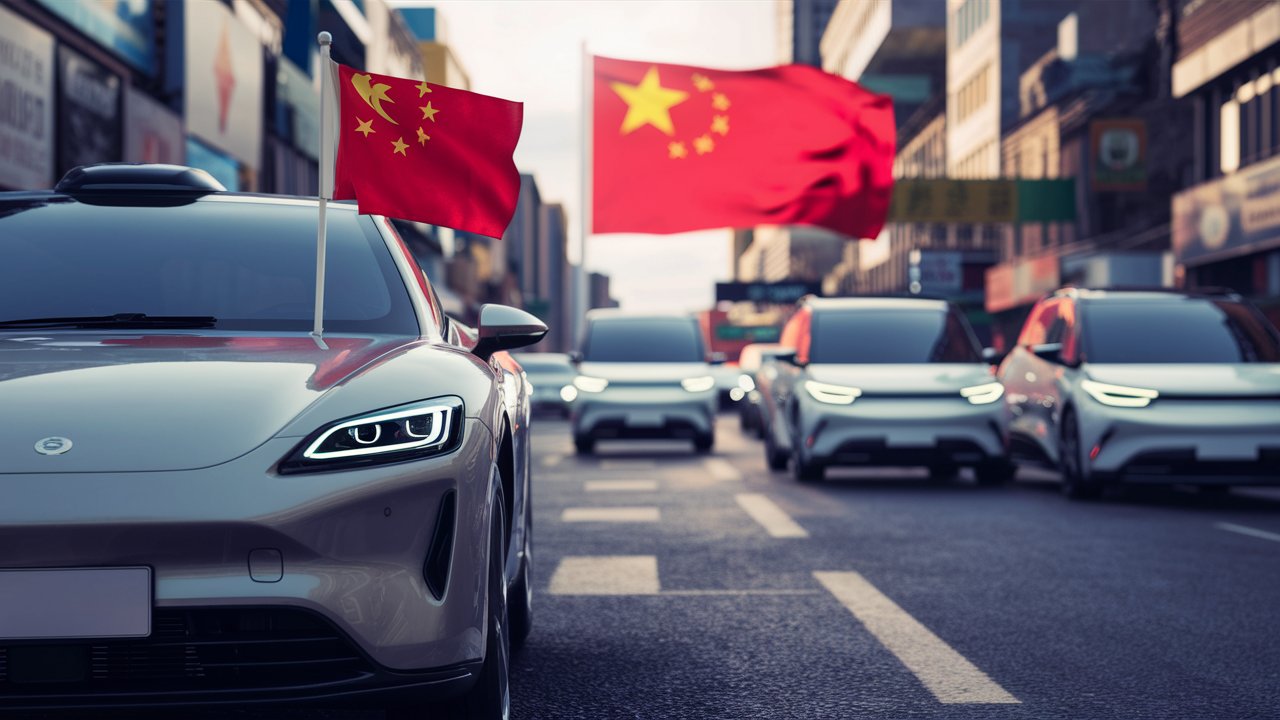
See How China Became the Global Leader in Electric Vehicles, Revolutionizing the Automotive Market, Promoting Energy Advancements, and Transforming Sustainability Around the World.
Certainly, China took a bold step and is now reaping the rewards of its bet on electric vehicles. In just over a decade, the country transformed its streets, eliminating much of the noise and pollution typical of megacities. For this reason, cities like Beijing are examples of how mobility can be clean and quiet, with roads dominated by electric cars, easily identifiable by their green plates. Since 2017, there has been a strong acceleration in sales of these vehicles, according to the International Energy Agency (IEA).
Therefore, this evolution reflects a true technological and political revolution. Consequently, the largest automotive market in the world is on track to eliminate combustion vehicles in the near future.
How China Gained Global Leadership in Electric Vehicles
- Accelerated Growth: More than 60% of electric cars sold globally in 2024 originated in China.
- Strategic Incentives: Since 2009, the Chinese government has offered financing and cheap credit to boost the sector. In 2015, the creation of the “Made in China 2025” program gave a decisive boost to consolidate this strategy.
- Robust Infrastructure: The country has massively invested in charging stations, ensuring access to cities and rural areas.
As a result, the Chinese automotive market has become a global example. Moreover, these advancements accelerate the global transition to a more sustainable future.
-
If the USA were to go to war with Brazil, Washington’s greatest fear would not be the attack itself, but facing a vast territory, prolonged resistance, and a costly, chaotic, and unpredictable occupation.

-
In 2013, Nicaragua sold the concession for a canal to rival Panama to a Chinese billionaire who lost 85% of his fortune, disappeared, and was declared bankrupt. Now the project resurfaces with a new route, a new Chinese partner, and a cost of $64.5 billion.

-
The USA announces a mysterious billion-dollar vault project to store critical minerals, but what intrigues experts is not just the plan itself, but why Latin America, including Brazil, has entered the center of this global dispute against China.

-
Trump Announces Bombing of U.S. Military Targets on Iranian Island Responsible for About 90% of Iran’s Oil Exports, Warns of Further Attacks if Navigation in Strategic Strait of Hormuz Is Threatened


Impressive Numbers
Undoubtedly, the growth of electric vehicles (EVs) in China is remarkable:
- 11 million electric vehicles sold in 2024, representing an increase of almost 40% compared to 2023, according to consultancy Rho Motion.
- More than 50% of new cars sold in the country are electric.
Thus, this transformation, deemed “irreversible” by experts like Li Shuo from the Asia Society Policy Institute, reflects a market in full ascension.
China’s Strategic Bet
Why Are Electric Vehicles So Important?
- Energy Security: China, unlike other countries rich in fossil fuels, relies on oil imports. Thus, EVs allow for greater independence, leveraging its own electricity production.
- Technological Dominance: Betting on EVs offered a unique opportunity to lead an emerging market and surpass Western manufacturers in innovation. Since 2013, when BYD launched its line of affordable electric vehicles, the Chinese market has gained competitiveness.
- Sustainability: With a focus on emission reduction, the sector helps China meet its global climate targets set in the Paris Agreement in 2015.
On the other hand, while the beginning was challenging, the consistency of policies and the collaboration between municipal governments and private companies have solidified the sector. Therefore, companies like BYD, one of Tesla’s main competitors, lead the market with affordable and efficient innovations.
Global Energy Market Impacts
China’s advancement in the EV sector is reshaping the energy market and influencing global demand for fossil fuels. According to the International Energy Agency (IEA):
- Gasoline demand fell by around 1% in 2024 and is expected to accelerate this decline in the coming years.
- China’s crude oil imports decreased by almost 2% in the same year, marking the first significant decline in two decades.
Thus, this shift has cascading effects on the global market, especially for oil-exporting countries, which are already feeling the impact of Chinese demand reduction.
China as an Exporter of Innovation
It is not only internally that China is transforming markets. On the other hand, the country has expanded its EV exports to emerging markets like Thailand and Brazil. Since 2019, exports of electric models have increased significantly, according to BloombergNEF. In this way, this expansion accelerates the global transition to electricity and highlights China’s influence in shaping the future of mobility.
The Role of Renewable Energies
Although China’s power grid still relies heavily on coal, rapid advances in wind and solar energy are promising. According to the Rhodium Group:
- The carbon intensity of the Chinese power grid is expected to fall 60% by 2040.
- Renewable sources, such as solar and wind energy, could make up to 65% of the energy mix by 2050.
Since 2013, China has led global investment in renewable energies, according to data from IRENA (International Renewable Energy Agency). Therefore, these changes will further reduce the environmental impact of EVs, strengthening China’s commitment to a cleaner future.
The Legacy of the Chinese Electric Revolution
The advancement of EVs in China represents a historic transformation. By aligning its economic, geopolitical, and climate interests, the country demonstrates how strategic innovations can reshape entire industries. Meanwhile, other nations like the United States face challenges in keeping up with this revolution.
In this way, China is reshaping the future of mobility and energy, consolidating its position as a global leader in sustainability and technology.










Seja o primeiro a reagir!