





 Portuguese
  English
  Spanish
  3 min of reading
  0 comments


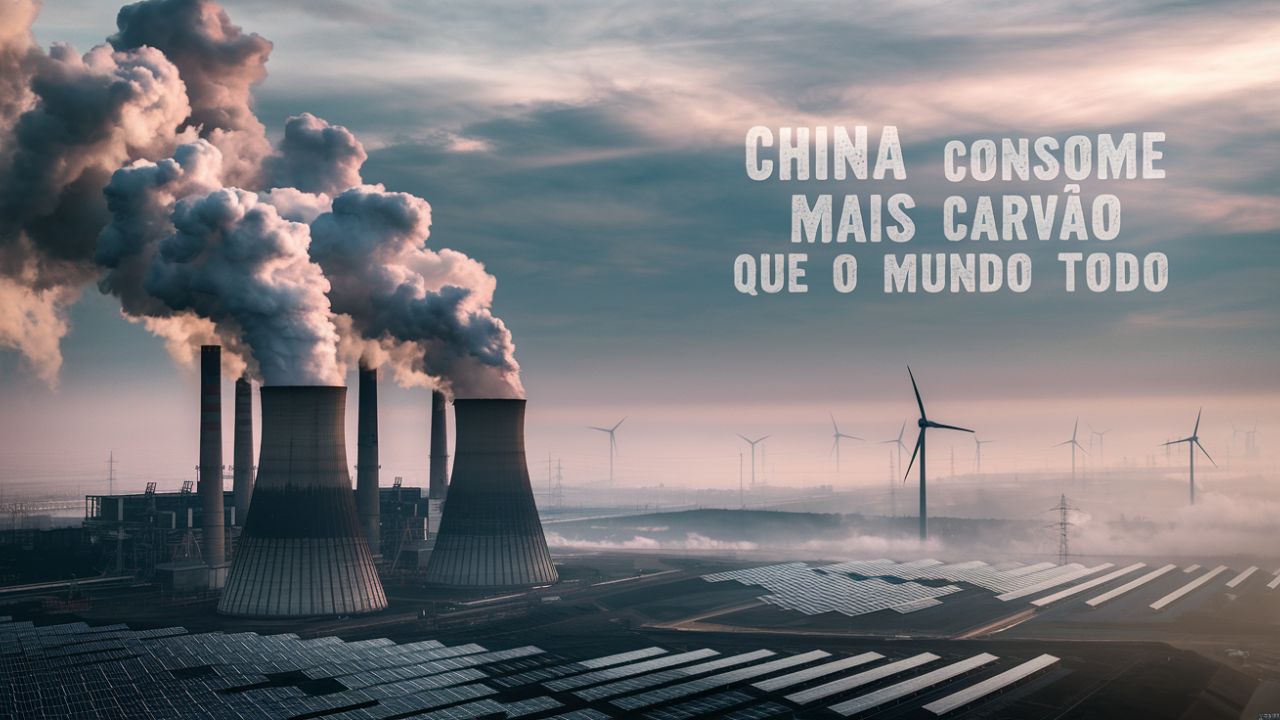
Despite Leading In Solar And Wind Energy Production, China Ended 2024 With A Coal Consumption 30% Higher Than The Rest Of The World Combined, Expanding Domestic Production For The Ninth Consecutive Year And Putting Its Climatic Commitments At Risk.
A room full of brilliant solutions for the future of sustainable energy. In the center, a huge elephant, representing a problem that no one can ignore. This is the current scenario in China. Despite being the “king” of renewable energy, the Asian giant continues to bet on coal to ensure its energy security. How to balance this equation without collapsing economic development? Let’s explore.
The Contradiction of China: Renewable Energy Leader, But Dependent On Coal
China doesn’t mess around when it comes to clean energy. A global leader in solar and wind energy, the country dominates the renewable market. Its cities are filled with solar panels, and wind farms are multiplying across the countryside. It’s a demonstration of strength and commitment to the environment.
But, like a bird with one wing larger than the other, dependence on coal prevents a higher flight. Chinese energy security still relies on this polluting source, even with all the investments in alternatives. After all, what’s at stake is avoiding blackouts and keeping the economic engine running.
-
Renewable energy advances over protected areas in Brazil, and a survey by the Energy Transition Observatory reveals silent impacts that challenge environmental conservation and pressure sensitive traditional territories.

-
Rio Grande do Sul accelerates energy transition: State invests in renewable technologies and consolidates decarbonization strategies and pathways to attract billions in new industrial investments.

-
With 160,000 m² of collectors, an area larger than 20 football fields, Silkeborg, in Denmark, hosts a solar thermal plant that heats 19,500 homes and could become the largest solar heating plant in the world.

-
A study reveals the expansion of renewable energy procurement in Brazil and shows how companies are taking advantage of opportunities to reduce expenses, ensure energy efficiency, and strengthen strategic environmental commitments.


Coal Consumption: The Asian Giant And Its Hunger For Energy

In 2024, China consumed 30% more coal than all other countries combined. It’s as if the rest of the world is riding a bicycle while China drives a heavy truck. The reason? A gigantic economy that demands a constant energy supply.
To meet this demand, domestic coal production grew by 1.5%, marking the ninth consecutive increase. The province of Shanxi, known for its mines, is expanding its capacity. It’s a tough cycle to break: high demand requires high production, and this dynamic keeps coal at the center of the energy matrix.
Government Strategies: Between Reductions And Expansions
The government has drastically reduced licenses for new coal plants by 80%. Still, it has increased production to ensure energy stability. Does it seem contradictory? It’s a delicate dance between progress and tradition.
With China consolidating its position as the largest consumer, countries like Mongolia and Russia find opportunities to maximize their sales. But this dependence also limits the country in transitioning to cleaner energies.
Renewable Energies: The Future Still Far From Replacing Coal
China leads the world in the installation of solar panels and wind turbines. It’s like planting trees in a desert: a huge effort full of hope. However, these sources still cannot completely replace coal.
Replacing coal is a monumental challenge, especially for such a large country. It’s like changing the turbines of an airplane mid-flight. China is on the right track, but time and scale remain obstacles.








-

Uma pessoa reagiu a isso.