





 Português
  Inglês
  Espanhol
  5 min de leitura
  2 comentários





Oil Lost Structural Strength in China in 2025, According to IEA and EIA, with Demand Stalling Amid Record Growth of Electric and Plug-in Hybrid Cars, Drop in Diesel Refining, Modest GDP Growth, and Accelerated High-Speed Rail Expansion, Which Together Have Already Removed 400 Thousand Barrels Per Day from Global Consumption.
The oil began 2026 under increasing pressure in China, and consolidated data from international agencies indicates that the slowdown has ceased to be occasional and has become structural. The International Energy Agency projects stagnation in Chinese consumption throughout the year, while the U.S. Energy Information Administration is working with very similar numbers, both reflecting a scenario in which transportation is no longer driving demand.
At the center of this movement is the transformation of Chinese mobility. Sales of electric and plug-in hybrid vehicles have reached record levels, while high-speed rail has gained unprecedented scale. The practical result is already showing in global estimates: the IEA indicates that this combination will reduce global demand by 400 thousand barrels of oil per day as early as 2026.
The Reading of Agencies and China’s Weight in Global Oil

The International Energy Agency describes 2026 as an inflection point for oil in China. The country, which accounted for more than 60% of global consumption growth since the 1970s, is now cooling right at the time when the rest of the world is growing at a slow pace.
-
Brazilian city gains industrial hub for 85 companies that is equivalent to 55 football fields.

-
Peugeot and Citroën factory in Argentina cuts production by half and opens a layoff program for more than 2,000 employees after Brazil drastically reduced purchases of Argentine vehicles.

-
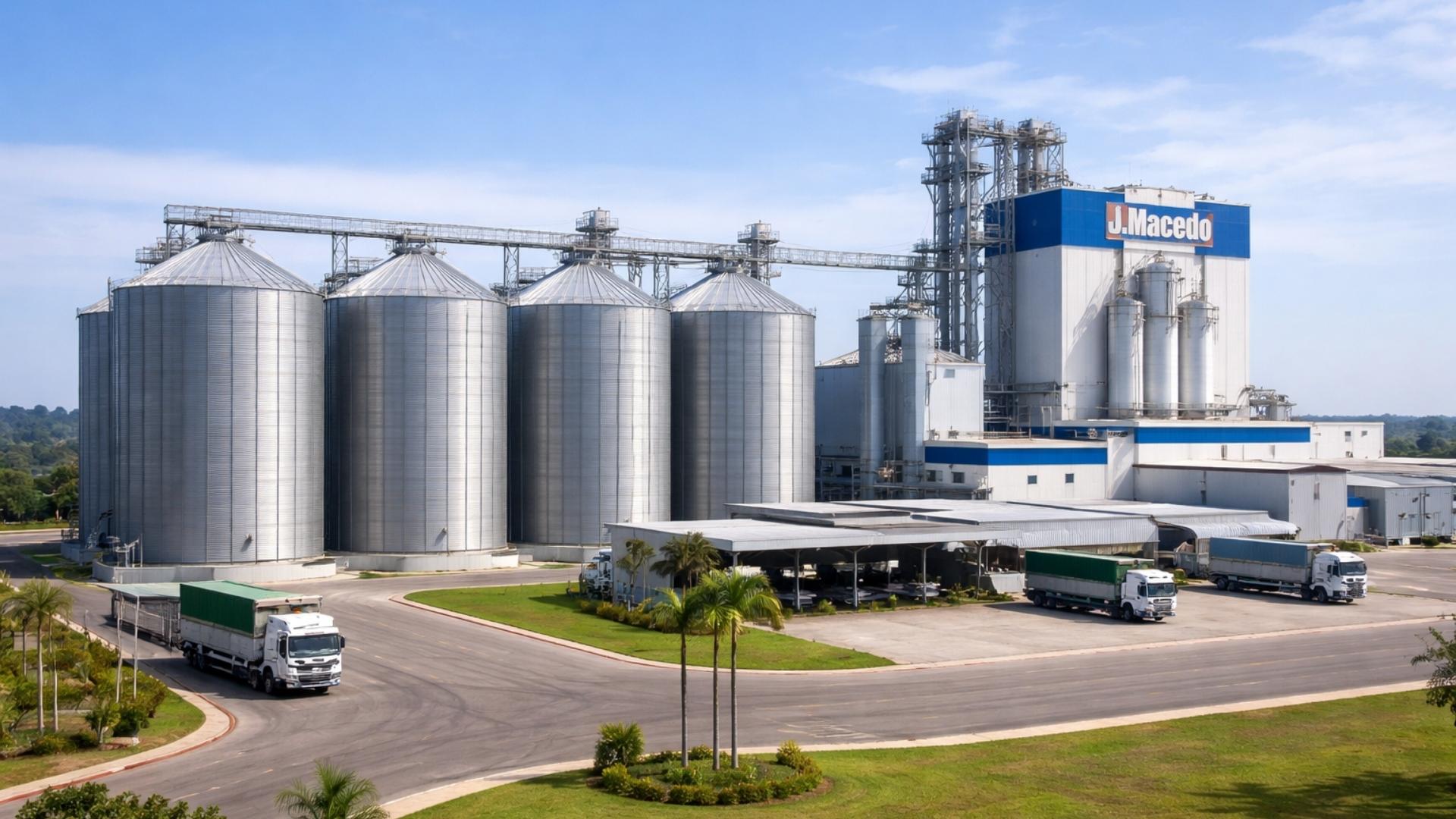
A Brazilian city gains a factory worth R$ 300 million with the capacity to process 200 thousand tons of wheat per year, a mill of 660 tons/day, silos for 42 thousand tons, and an industrial area of 276 thousand m².
-
Havan will leave the shopping mall in Blumenau to inaugurate something that the chain has never done before: a megastore in half-timbered style in the Historic Center of the city, which is expected to be completed in May and change the landscape of local retail.


The IEA projects that China’s oil consumption will grow by only 1.1% in 2026, equivalent to 180 thousand barrels per day, a number that stands in stark contrast to the historical trajectory of continuous expansion. This assessment is supported by the Energy Information Administration, which in its latest report works with practically identical projections for the Chinese market.
This convergence of diagnosis between IEA and EIA is relevant because it indicates that the demand stalling is not a statistical noise but rather a movement consistently observed by different energy analysis centers.
GDP Slows and the Old Correlation with Oil Loses Strength

For decades, GDP growth was one of the main indicators to anticipate the trajectory of oil. A booming economy meant more cars sold, more trips, more construction, and therefore more fossil fuels consumed. This logic is still considered valid, but has been weakening over time.
As early as 2002, analysts pointed out that the advancement of the services sector in the global economy was beginning to undermine the reliability of this correlation. By 2026, China seems to be materializing this decoupling more clearly. Growth projections for 2025 hover just above 4%, well below the 6.7% recorded before the COVID-19 pandemic, while oil demand appears to be stalling even more intensely.
The central fact is that the economic slowdown helps explain part of the decline, but does not solely account for the movement. Even in scenarios of positive growth, oil no longer follows GDP as it did before, especially in the transportation sector.
Diesel Refining Falls and Logistics Confirms the Cooling

Signs of weakening oil also appear at the industrial level. Data tracked by Reuters indicates that diesel refining in China fell significantly in the last months of 2025.
The slowdown in logistics and transportation has reduced capacity utilization in refineries, with drops of up to 13% in some units compared to the same period the year before. Diesel is historically a thermometer of real economic activity, especially in cargo transport, and its retreat reinforces the reading that oil demand has lost momentum beyond what was expected.
Electrics and Plug-in Hybrids Reach Critical Mass
The most cited factor by agencies is the advancement of “new energy” vehicles. For the first time, more than half of the cars sold in China are electric or plug-in hybrids, directly altering the consumption profile of oil in the world’s largest automotive market.
The numbers from October illustrate this turnaround. There were 1.43 million plug-in vehicles sold in the month, including exports, according to CNEVPost. The volume surpassed the previous record set in September and was 49.6% above the result from October 2025.
This sales pace creates a cumulative effect. Each new electric vehicle on the streets represents less future demand for gasoline and diesel, making the impact on oil progressive and difficult to reverse in the short term.
400 Thousand Barrels Per Day Less in Global Consumption
The IEA quantifies this effect by estimating that, just in 2025, the combination of electric cars, plug-in hybrids, and increased use of high-speed rail will remove 400 thousand barrels of oil per day from global demand.
This number gains weight because it arises right at the moment when global consumption growth is described as slow. In a tighter market, any reduction of this magnitude alters expectations, pressures price projections, and changes investment strategies for oil companies.
High-Speed Rail Accelerates Oil Substitution
In addition to cars, high-speed rail consolidates as a strategic vector. The mode is treated by the Chinese government as a national priority, both to integrate a continent-sized territory and to demonstrate technological capability.
According to the Global Times, recent advances have allowed maintenance costs to be reduced by 15%, thanks to the use of lighter and more modern trains. The efficiency gain makes rail transport even more competitive against oil-dependent alternatives.
Demand data confirms this adherence. In the summer of 2024, the number of passengers transported by high-speed trains grew 6.2% compared to 2023, reaching 872 million people. And the plans are ambitious: to build more 15 thousand kilometers of high-speed lines before the end of the decade, expanding the modal’s reach and reducing short- and medium-distance road and air travel.
The Role of the Petrochemical Industry in the Short Term
Despite the cooling in transportation, oil still finds some support in the industry. The reading attributed to the United States suggests that, by 2025, China is expected to increase consumption by around 300 thousand barrels per day, mainly driven by petrochemicals.
This detail is crucial for understanding the new market balance. Growth ceases to come from direct fuel use and begins to focus on industrial inputs, plastics, and chemical derivatives, a segment less visible to consumers but relevant for the total volume.
A New Demand Pattern Begins to Take Shape
The sum of factors in 2015 indicates a structural redesign of Chinese demand for oil. Economic slowdown, loss of correlation with GDP, drop in diesel refining, explosion of plug-in vehicles, and expansion of high-speed rail act simultaneously.
The result is a less predictable market, in which transportation, historically the largest engine of consumption, becomes precisely the sector most pressured by technological substitution.
The 2025 data make it clear that oil has already felt the impact of China’s energy transition. With 400 thousand barrels per day less in global demand, 1.43 million plug-ins sold in a single month, and a railway network that continues to expand, China is redefining its role in the global energy market.
If this trajectory continues, transportation will cease to be the main pillar of oil consumption in the country. In your view, is this change irreversible, or is there still room for a resurgence of oil in Chinese transportation in the coming years?









A energia elétrica aguenta a demanda?
A indústria do petróleo sempre tentou demonstrar que o aumento do seu consumo representava crescimento. Mas crescimento pra quem? Para poucos! Viva a fase dos elétricos!!