





 Portuguese
  English
  Spanish
  3 min of reading
  0 comments


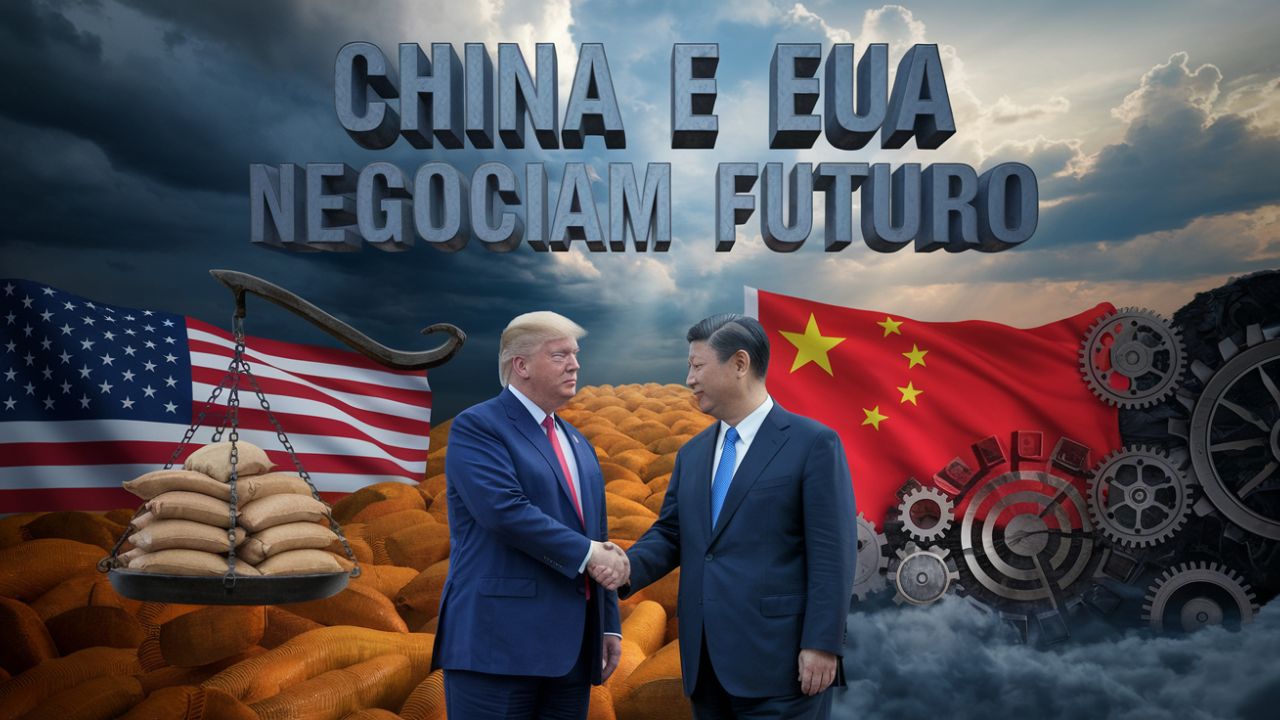
After Trump’s Statement About a Friendly Conversation With Xi Jinping, China Signals Openness to Dialogue to Overcome Trade Differences; Experts Assess Global Impacts While Brazil Remains on Alert for Possible Reflections in Agriculture.
What happens when two economic giants decide to negotiate? The world stops to observe. Recently, Donald Trump brought to light the possibility of a new trade agreement with China, rekindling discussions that shape the future of the global economy. But what exactly is at stake here?
A Promising Dialogue: What Trump and Xi Jinping Discussed?
According to Trump, his recent conversation with Chinese President Xi Jinping was “friendly.” He emphasized that he would prefer not to resort to tariffs, but did not rule out using them as a card up his sleeve. For those who know Trump, this sounds like a classic strategy: offering a handshake, but with the cards hidden.
China, through Foreign Ministry spokesperson Mao Ning, demonstrated a willingness for dialogue. She emphasized that trade wars benefit no one and that there is room for cooperation. This statement can be seen as a clear signal that Beijing wants to avoid the economic and political wear and tear of a new escalation of tensions.
-
Larger than entire cities in Brazil: BYD is building a 4.6 km² complex in Bahia with a capacity for 600,000 vehicles per year, but the discovery of 163 workers in conditions analogous to slavery has shaken the entire project.

-
With an investment of R$ 612 million, a capacity to process 1.2 million liters of milk per day, Piracanjuba inaugurates a mega cheese factory that increases national production, reduces dependence on imports, and repositions Brazil on the global dairy map.

-
Brazilian city gains industrial hub for 85 companies that is equivalent to 55 football fields.

-
Peugeot and Citroën factory in Argentina cuts production by half and opens a layoff program for more than 2,000 employees after Brazil drastically reduced purchases of Argentine vehicles.


Interests at Stake: Why an Agreement Is Important?
A new agreement is not just about tariffs or trade; it is about defining who leads the global economy. For Trump, this means ensuring jobs and protecting strategic industries. For China, it is an opportunity to consolidate its position as an economic and technological powerhouse.
The tariffs imposed during the trade war have affected both American and Chinese companies. Interconnected economies suffer together, like two sides of the same coin. An agreement, therefore, is not just desirable; it is necessary.
Brazil in Focus: How the Agreement Could Affect Brazilian Agriculture
According to the website Exame, while Trump and China are discussing, Brazil is paying attention. After all, we are major exporters of soybeans, corn, and meat—products that the U.S. is looking to sell to China. A trade agreement between the two giants could reduce demand for Brazilian products, directly impacting our agriculture.
Former Agriculture Minister Tereza Cristina has already warned: we need to closely monitor these negotiations. For Brazil, this is like being in a game of chess where each move between China and the U.S. could take down our most valuable pieces.
Signs of Cooperation: Experts Analyze the Scenario
Robert Daly, an expert on Sino-American relations, believes that the delay in the announcement of new tariffs by the U.S. is a good sign. For him, this indicates that there is room for progress in the negotiations.
Moreover, both sides know that an escalation in the trade war would be a shot in the foot. Trump, despite his tough stance, understands the weight of economic cooperation, while China seeks stability to continue growing.








Seja o primeiro a reagir!