





 Português
  Inglês
  Espanhol
  4 min de leitura
  3 comentários





China Innovates in Engineering and Builds a 446 km Road in the Tarim Desert. For US$ 600 Million, Project Changes the Country’s Direction in the Oil Sector, Logistics, Infrastructure, and Much More with the Arrival of the New Silk Road.
New Silk Road: China, known for its ambitious infrastructure projects, once again surprises the world with a monumental undertaking. The construction of a 446 km road that crosses the inhospitable Taklamakan Desert, in the heart of Asia, represents a milestone in civil engineering and a renaissance of the legendary Silk Road. With an investment of US$ 600 million, China challenges the limits of engineering and connects remote regions, revitalizing ancient trade routes and boosting the economic development of the Xinjiang region.
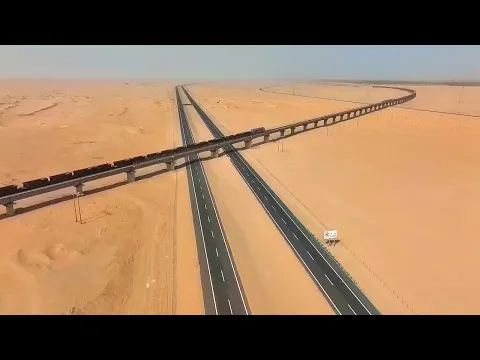

However, this mega project also raises environmental and social concerns, such as habitat fragmentation and the potential displacement of local communities. The road, which revives the ancient Silk Road, places China in a crucial strategic position, strengthening its trade and political relations with countries in Asia and Europe.
How the Need for a 446 km Road in the Tarim Desert Arose?
Hardly anyone hears about the Taklamakan Desert outside of China. This desert has an oil reserve capable of supplying China entirely without relying on external resources.
-
Historic bankruptcy of Centauro shocks the market, and the century-old company puts more than 500,000 products, machines, and complete infrastructure up for online auction.

-
New shoe factory in Ceará is expected to create 400 jobs and strengthen the local economy.

-
No one imagined it, but a mixture of sawdust with a mineral that fights fires surprises scientists with a result that changes the course of fire-resistant construction.
-
From empty land to a high-end house, wooden construction uses a lightweight system, metal structure for the foundation, ventilated ceramic cladding, and special windows to create an efficient and comfortable living space throughout the year.

This is the largest desert on the planet and is located in the western part of China, in the region known as Xinjiang. For a long time, the Taklamakan area was for China a burden: too valuable to throw away and too difficult to carry. This situation began to change in the 1990s when it was discovered that there was a large oil reserve in this desert.
Deng Xiaoping, former chairman of the Chinese People’s Political Consultative Conference, analyzed the potential of this region and decided to make the most of what it had to offer, initiating the construction of the 446 km road in the Tarim Desert in 1992. A project was developed to connect by road to the states of Lintai and Nia, located to the north and south, respectively.
From there, it was necessary to build branches in this vast oil field like branches that sprout from a tree trunk. The total length of this road exceeded 550 km, and many Western experts described the project as overly ambitious, extremely costly, and nonsensical.
Main Objective of the Project

The construction of this road is aligned with China’s ambitious Belt and Road Initiative, which aims to connect Asia with Europe and Africa through a network of infrastructure. By crossing the Taklamakan Desert, the new highway opens new trade routes and strengthens China’s strategic position in the region.
Furthermore, the work aims to boost the economic development of the resource-rich Xinjiang region, which has been historically isolated.
Construction of the 446 km Road in the Tarim Desert in China
Indeed, Taklamakan is an area completely devoid of people with no infrastructure. Additionally, unlike the Sahara Desert and the deserts of the Arabian Peninsula, which is mostly a rocky desert, the desert in China is a sea of sand with dunes over 20 m tall. These dunes could completely cover the roads and render all the effort completely useless.
But in 1995, the 446 km road in the Tarim Desert was completed and within the road, where humanity had not set foot for centuries, small towns were built where drivers can refuel, rest, talk to family on the phone, and recently it has even become possible to use the internet.
The 446 km road in the Tarim Desert became a topic of discussion worldwide. As it became possible to transport engineers and workers easily to the site where oil was buried, China began extracting oil from this region, and in a short time, they achieved this grand feat. However, China’s challenge with the Tarim Desert Road did not end there.
Challenges Faced by China
After a while, the sand completely covered the road without stopping, and removing it required a considerable amount of time. Building 1 kilometer of the track cost 14 billion dollars and if periodic maintenance were needed, it would require an even greater amount.
To combat the wave of sand that could sink the road within a few years, engineers considered several solutions, and in the end, it was proposed to build a drainage ditch or barrier. China has already built the famous Great Wall, but building something like that again would require many resources.
Fortunately, salvation came from nature itself, and although the Taklamakan Desert is dry, underground water was discovered in the desert, providing a simpler and more aesthetic solution. It was enough to cultivate more plants around the track. This way, it was possible to prevent the sand from entering the road.









Projeto maravilhoso
Tenho uma pergunta: ~ os veículos utilizados para esta construção desta estrada são com motores movidos a hidrogênio ?
Os chineses estão de parabéns ! São gigantes ! 🛏️🏖️
Impressionante!