





 Portuguese
  English
  Spanish
  4 min of reading
  4 comments


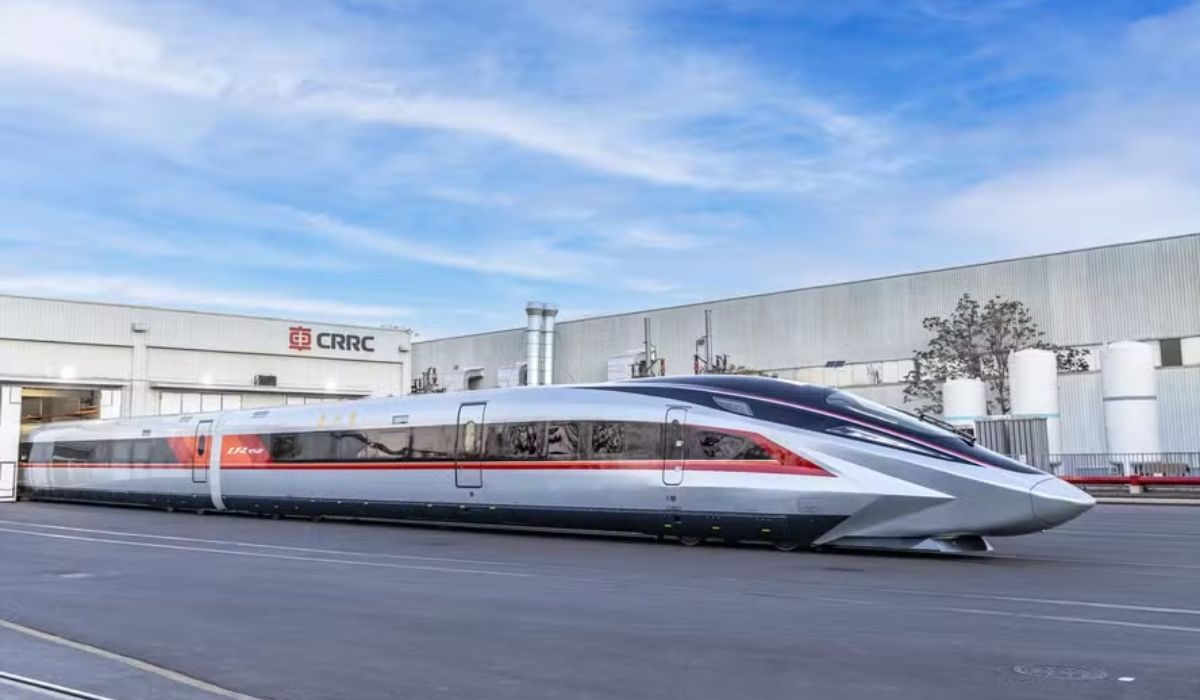


Test Conducted by Chinese Researchers Accelerates Experimental Vehicle on Short Track and Validates High-Power Magnetic Levitation and Electromagnetic Propulsion Technologies with Potential for Future Applications in Transportation and Aerospace Systems.
An experimental vehicle with an approximate mass of one ton was accelerated from 0 to 700 km/h in about two seconds on a 400-meter test track in China.
The experiment, reported by Chinese state media, was presented as a world record for electrical magnetic levitation systems of a similar scale, combining extreme acceleration, stability during the run, and controlled braking at the end of the track.
The test was conducted by researchers affiliated with the National University of Defense Technology (NUDT), institution mentioned in the reports as responsible for the development of the system.
-
A “silent skill” is allowing Brazilians to earn up to R$ 22,000 per month without a degree and become indispensable for companies that rely on millions of data to survive.

-
Researchers at the Toyota Research Institute found that if a human uses robotic arms to flip a pancake 300 times in an afternoon, the robot learns to do it on its own the next morning, and this is currently the most promising method to solve the biggest bottleneck in modern robotics.

-
Goodbye iron: a common item in households is starting to lose space to technology that smooths clothes in minutes without an ironing board and with less energy consumption.

-
Antarctica reveals an unusual clue high in the Hudson Mountains, and what appeared to be just an isolated rock began to expose a secret hidden under the ice for ages.

According to the information released, in addition to reaching maximum speed within the limited space, the vehicle successfully performed a safe deceleration, an aspect considered central by the scientists involved due to the forces and electrical power required in this type of operation.
Extreme Acceleration on 400-Meter Track
In high-speed platform tests, the final speed is often the most emphasized data.
In this case, however, the focus is on the acceleration rate achieved over a limited distance.
To reach 700 km/h in just 400 meters, the system needs to provide significant power in a very short time, maintaining vehicle control and then managing the transition to braking without loss of stability.
According to the reports, the equipment used does not correspond to a complete commercial train, but to a test vehicle specifically designed for technological validation.
Images released by the Chinese press show an experimental platform without a passenger cabin, reinforcing the research nature of the test and the absence, at this stage, of direct application in public transportation.
Maglev Technology and Electric Magnetic Levitation
Maglev technology, short for “magnetic levitation,” allows vehicles to move suspended above the track, reducing physical contact with the rails.
This reduces mechanical friction, one of the main factors limiting speed in conventional railway systems based on wheels and axles.
In the disclosed experiment, sources cite the use of a superconducting system associated with levitation and electromagnetic propulsion.
In superconducting materials, when cooled to very low temperatures, electric current flows with reduced losses, enabling the generation of intense and stable magnetic fields.
This feature is considered relevant for supporting and controlling heavy vehicles at very high acceleration levels.
Nevertheless, even with the elimination of mechanical friction, the vehicle remains subject to air resistance in open environments.
For this reason, projects aimed at even higher speeds often consider alternatives to reduce aerodynamic drag, such as low-pressure environments, although this was not the direct focus of the disclosed test.

Ten Years of Research and Technical Challenges
Chinese reports inform that the result is the product of approximately ten years of research.
Over this period, researchers faced challenges related to the electric control of the suspension, the vehicle’s stability at high accelerations, and the development of systems capable of handling large energy flows in very short intervals.
Among the highlighted points is the creation of a high-speed electromagnetic propulsion system, as well as solutions for temporary energy storage and inversion, necessary steps to enable both acceleration and controlled braking.
These aspects are cited as critical to ensuring that movement occurs predictably and repeatedly in successive tests.
According to the scientists involved, mastery of these elements is essential for advancing future applications, as control failures in such systems can compromise equipment integrity and operational safety.
Low-Pressure Tubes and Future Applications
The information released also relates the experiment to studies on magnetic levitation transportation systems in low-pressure tubes.
This type of approach, often discussed in international research, seeks to combine magnetic levitation with significant reduction of air resistance to enable movements at speeds far exceeding current levels.
According to the cited researchers, the technologies now tested could, in the future, serve as a basis for this type of system, as well as applications in spacecraft aerospace.
In these cases, controlled electromagnetic acceleration is seen as a potential tool for simulations and tests in highly controlled environments.
The reports, however, do not indicate timelines for the commercial implementation of these solutions.
The focus remains on technical validation and demonstrating feasibility in an experimental environment, without detailing costs, necessary infrastructure, or regulatory steps.
World Record and International Context
The mark released by China was presented by state media as a new record within the specific category of superconducting electric maglev at a ton scale.
Experts consulted in international coverage often highlight that results of this kind reinforce China’s strategy to invest in high-complexity transportation and propulsion technologies.
Despite this, transitioning a laboratory prototype to an operational system involves a series of additional steps, such as safety integration, continuous operation, maintenance, and adaptation to long distances.
These factors have not been detailed in the information made public so far.






Someone was sleeping during their math class in highschool. 🤣
Para acelerar de 0 a700km/h en 2 segundos, la aceleración debe ser 97m/s2. Eso es 10 veces la gravedad. Nadie aguanta esa aceleración. Eso no sirve para transporte de pasajeros.
1 tonelada, 1000 kilos, menos de lo que pesa un coche mediano? Dejen de escribir pavadas.