





 Português
  Inglês
  Espanhol
  4 min de leitura
  16 comentários


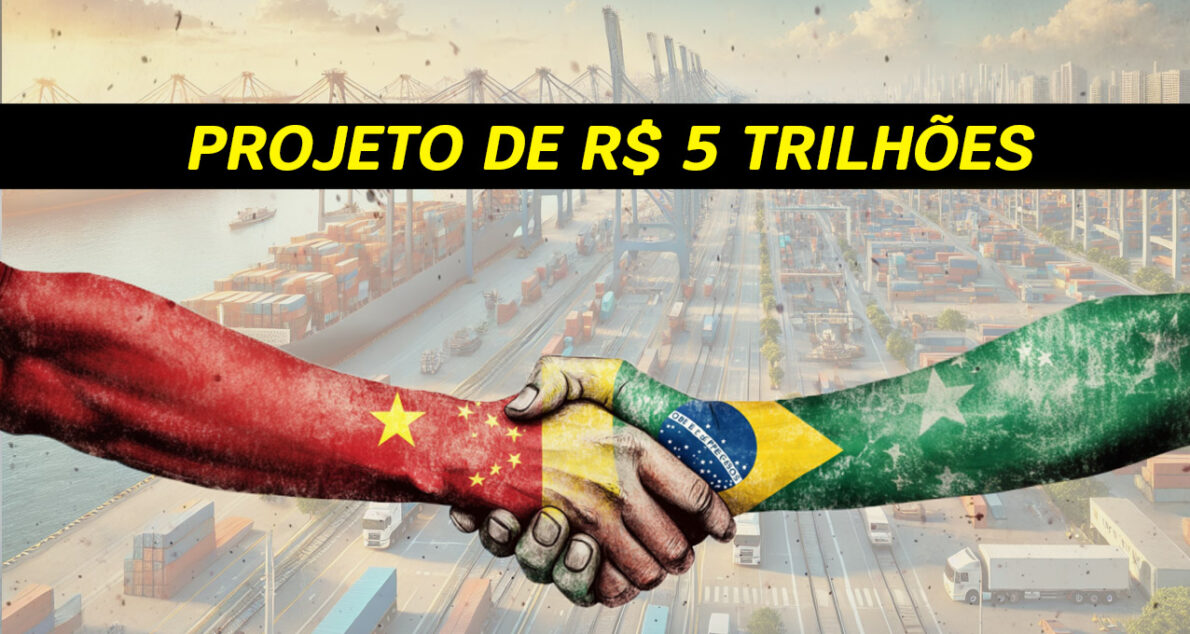

China Wants to Include Brazil in the New Silk Road, an Ambitious Global Infrastructure Project Estimated at US$ 5 Trillion. With Significant Investments in Transportation, Communication, and Energy, the Program Promises to Transform the Brazilian Economy.
In recent years, the Asian giant has transformed its aspirations for global hegemony into reality through a plan that has captured the world’s attention: the New Silk Road.
The initiative, launched in 2013 under the name “One Belt, One Road,” gained notoriety by connecting Asia to Europe, the Middle East, and Africa through major infrastructure projects.
Now, Brazil has become the latest target of this billion-dollar strategy, which promises to transform the country’s economic landscape.
-
A megaproject worth R$ 89 billion is advancing in Iraq and promises to change the game in global trade by creating a new corridor between Asia and Europe, reducing traditional routes and repositioning the country as a logistics powerhouse.
-
Goodbye bedside table: floating shelves become a trend in 2026 by freeing up space in the bedroom, improving circulation, bringing visual lightness, and integrating technology without taking up floor space.

-
Brazilian city gains industrial hub for 85 companies that is equivalent to 55 football fields.

-
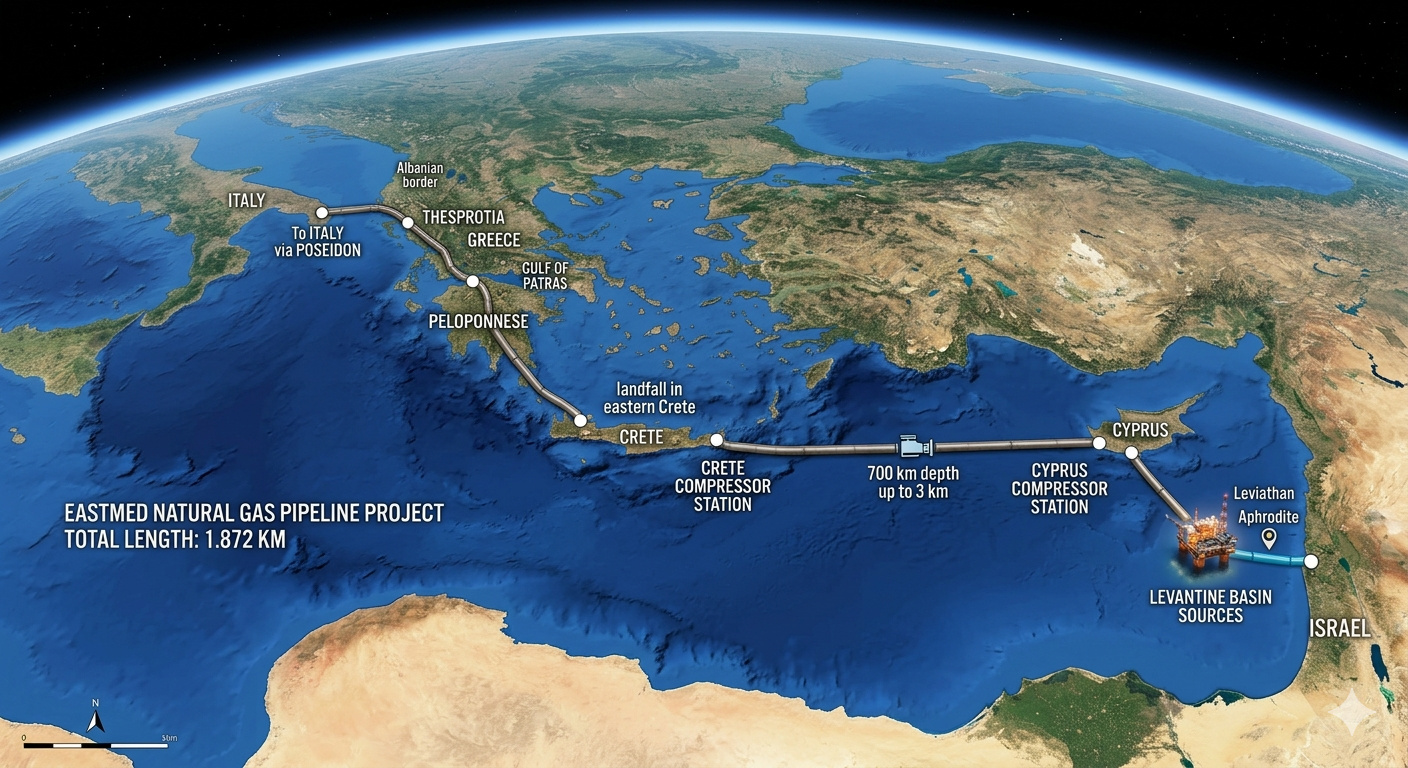
Israel, Greece, and Cyprus signed an agreement in 2020 to transport gas from the Mediterranean to Europe via a 1,872 km pipeline, but Turkey claimed sovereignty over part of the maritime route, and the project never materialized.

What is the New Silk Road?
The New Silk Road, or Belt and Road Initiative (BRI), is a global development initiative that aims to build a comprehensive infrastructure network connecting China to dozens of countries around the world.
With massive investments in roads, railways, ports, and other infrastructures, the main objective is to facilitate international trade and increase China’s geopolitical influence.
According to the Chinese government, the project aims to boost trade exchange and economic cooperation, promoting sustainable and inclusive growth in various regions.
Since its launch, the BRI has involved over 140 countries and international organizations, with a total estimated investment in the trillions of dollars.
Brazil: The New Target of the Silk Road
This week, according to an article published by Folha de S. Paulo, during a conference held in Chengdu, China, the Chinese government announced the inclusion of Brazil as a crucial part of the New Silk Road.
The decision marks a significant step in the expansion of Sino-Brazilian relations, with the promise of large investments in transportation, communication, and energy infrastructure.
According to Sun Haiyan, Deputy Minister of the International Department of the Central Committee of the Communist Party of China, “China will determine to develop the Silk Road despite global adversities.” This statement counters criticism regarding the plan’s loss of momentum, especially after Italy’s exit from the group of European partners.
Billion-Dollar Investments and a Long-Term Focus
The total amount allocated to the New Silk Road has already exceeded US$ 5 trillion, with the prospect of continued growth as more countries join the initiative.
In Brazil, the initial focus will be on infrastructure projects that facilitate the export of commodities to China, such as soybeans and iron ore, as well as improving domestic connectivity through highways, railways, and telecommunications networks.
Wang Yingjie, Vice President of the Silk Road Fund, emphasized that “our patient capital aims for long-term returns,” suggesting that China is willing to wait for the results of these investments, which may take decades to materialize.
Global and Regional Impacts
The New Silk Road project goes far beyond merely building roads and ports. It is a complex strategy that seeks not only to increase connectivity but also to strengthen China’s political and economic power on the international stage. Investments in countries in Africa and Latin America, for example, come with strategic partnerships in sectors such as education, technology, and agriculture.
In the case of Brazil, joining the BRI could bring significant benefits, such as modernization of infrastructure and strengthening trade relations with China, the country’s largest trading partner. However, there are also concerns about increasing economic dependence and the political influence that China may exert over Brazil and other countries in the region.
Challenges and Questionings
Despite the apparent benefits, the New Silk Road faces significant challenges. The political and economic priorities of the participating countries may change over time, creating uncertainties about the continuity of projects. Additionally, the financial sustainability of Chinese investments has also been questioned, especially in countries with weaker economies.
In Brazil, President Lula recently stated that he intends to discuss joining the program with Chinese President Xi Jinping. The Perseu Abramo Foundation, linked to the Workers’ Party, has even held a seminar to discuss the implications of Brazil’s entry into the BRI.
Brazil’s entry into the New Silk Road marks a new chapter in Sino-Brazilian relations, with promises of investments that could transform the country’s economic landscape. However, it is crucial to consider the challenges and implications of this accession, which could redefine Brazil’s future on the global stage.
With so many investments and promises of development, do you believe that Brazil’s participation in the New Silk Road will be beneficial or will it bring more challenges to the country?









Na atualidade, a China se mostrou que e um grande parceiro comercial do Brasil e do mundo, vamos nos conectar com os chineses, a final a China hoje ja e o maior parceiro comercial do Brasil, comprando e vendendo para o Brasil.
A economia brasileira vai começa alavancar quando tiver a troca do presidente do Banco Central que está acabando com a economia e favorecendo os especuladores.
Alguns já embolsando os lucros e sumindo do nosso país.
Investimento estrangeiro de responsabilidade com o ganho do selo de Bom pagador com o grau de investimento próximo de ser declarado ao país, trará os investidores que vai impulsionar os investimentos que timidamente já estão voltando ao país.
Inflação sobre controle mesmo o Banco Central jogando contra, e o país intervindo para o dólar volta ao valor entre R$ 3,50 e R$ 4,00, valor esse que é bom tanto para importar quanto exportar, melhorando a dívida do país.
Investimentos desse calibre deve ser executado paulatinamente sempre considerando o benefício ao país e, em caso positivo , prosseguir investindo.
OTIMO PARA O BRASIL VAI GERAR MILHOES DE EMPREGOS E DISTRIBUICAO MELHORES DE RENDA EM TUDO.AVANTE BRICS.