





 Português
  Inglês
  Espanhol
  5 min de leitura
  0 comentários


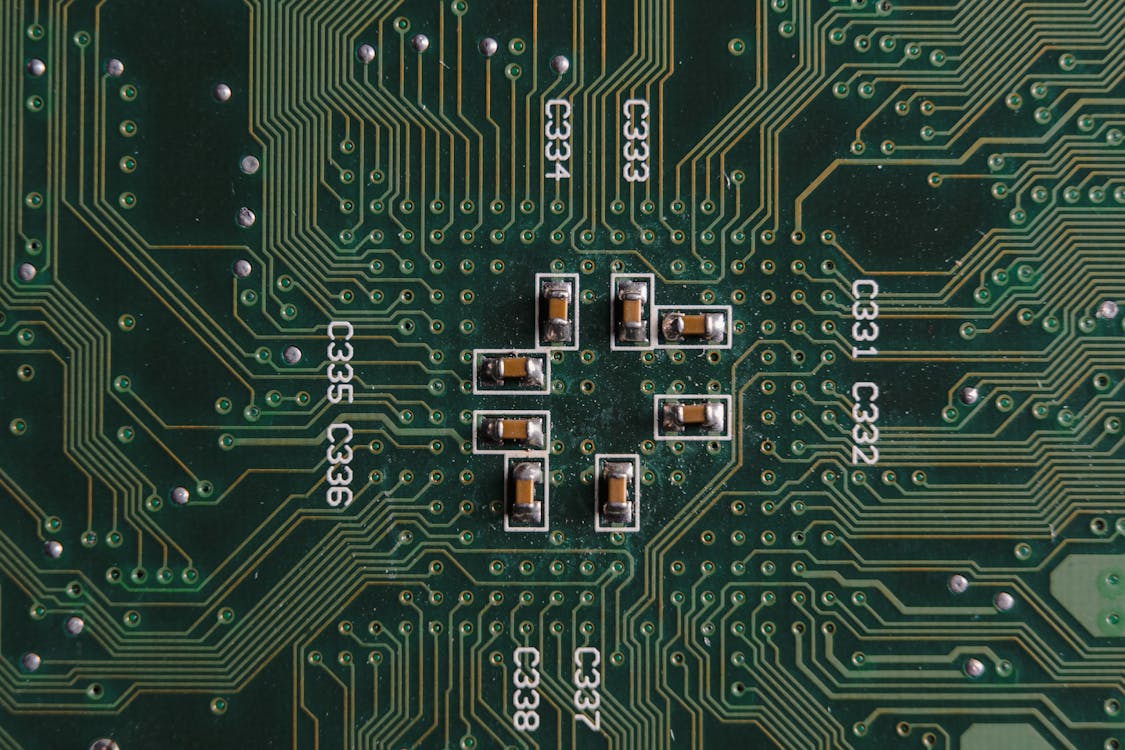
China Invests € 37 Billion (About R$ 201.65 Billion) to Face European Dominance in Chip Manufacturing. Measure Already Provokes Reactions and Tension in the Global Technology Market
At the center of the global dispute for semiconductors, two names stand out: SMIC, China’s largest chip manufacturer, and ASML, the Dutch company that dominates photolithography technology. This rivalry represents more than just industrial competition. It is a geopolitical race, where each advance represents technological power and national sovereignty.
ASML’s Dominance in Photolithography
ASML is currently the only supplier in the world of extreme ultraviolet (EUV) lithography technology, essential for manufacturing the most advanced chips.
Photolithography, a process that uses light to etch circuits onto silicon, is a critical step in the production of modern microchips. With ASML’s leadership in this sector, the company has become indispensable in the global supply chain.
-
Found in one of the most radioactive places on Earth, this Chernobyl fungus may be doing something with radiation that no one has been able to explain to this day.

-
A bright yellow mushroom imported from Asia escaped from a cultivation farm in the United States in 2010 and is now aggressively spreading across 25 states, destroying entire communities of native fungi in American forests.

-
Buried under China, a colossal machine weighing 20,000 tons began operating as the largest neutrino detector on the planet and, in just 59 days, surpassed results that science took half a century to achieve.

-
Iran enters the center of a climate alert after the war emitted 5.6 million tons of CO2 in two weeks, surpassing the annual pollution of entire countries.

Global dependence on ASML’s technology has grown over time. The demand for smaller, faster, and more efficient chips has further strengthened its strategic position. Today, it is at the center of a game where innovation and geopolitics go hand in hand.
Pressure on China and Strategic Response
With the restrictions imposed by the United States, China has faced difficulties accessing essential equipment like that of ASML. These trade barriers have limited its ability to produce cutting-edge chips, intensifying the need for technological independence.
In response, China has launched an ambitious plan. An investment of € 37 billion is being directed towards the development of its own lithography machines. The goal is to reduce dependence on foreign suppliers and create a viable alternative to systems dominated by the West.
This investment shows the magnitude of Beijing’s bet. It is not only about competing with ASML but about ensuring that the Chinese chip industry moves forward, even amid external restrictions. China seeks to consolidate its position as a technological powerhouse.
Huawei Mate 60 Pro: A Milestone for China
In 2023, Huawei launched the Mate 60 Pro, a smartphone equipped with an advanced 7-nanometer processor. The launch surprised the market, as Huawei was facing tough sanctions from the U.S. The success of the device demonstrated that the Chinese industry had the power to innovate even under intense external pressure.
The device has become a symbol of China’s technological resilience. The advancement was not only technical but also strategic. It showed that even with barriers, China could advance in the manufacturing of cutting-edge semiconductors. Huawei has become an example of the new phase of technological independence that the country is trying to consolidate.
ASML’s Technological Leadership Continues
Despite China’s advances, ASML has not stopped. The company continues to develop the next generation of EUV technology, called High-NA. This innovation promises to take chip production to a new level, with precision to manufacture components smaller than 2 nanometers.
This move shows that ASML remains ahead. The new generation of lithography could further widen the gap between Western and Chinese technology. Even with the billion-dollar investment, China still faces the challenge of reaching this level of sophistication.
ASML’s advantage is not only technical. It possesses accumulated knowledge, a consolidated industrial structure, and global presence. These factors make it difficult for any competitor to match its level of excellence in the short term.
The Geopolitical Weight of Semiconductors (Chips)
The dispute between SMIC and ASML is part of a larger conflict. Control over semiconductor production has become a geopolitical issue. Chips are used in almost everything: from cell phones to military systems. Whoever dominates this technology holds influence in strategic areas of the economy and security.
In this context, China’s investment is more than just a response to sanctions. It is a clear step to ensure autonomy in a vital sector. The country wants to stop depending on foreign suppliers, especially when these relationships are subject to political tensions.
Controlling chip production means having power over global supply chains. Therefore, the race for semiconductors goes far beyond laboratories and factories. It is a contest for the future of global technology.
SMIC and the Self-Sufficiency Challenge
SMIC, as China’s leading manufacturer, is at the center of this effort. With government support and financial incentives, the company is trying to develop its own capacity to produce cutting-edge chips. But the road is not simple.
The technology needed to compete with ASML requires years of research and development. Furthermore, the complexity of lithography involves mastering numerous processes and components that are currently supplied by Western companies.
Still, China is determined. The goal is to build a wholly national semiconductor production chain. This includes everything from chip design to manufacturing equipment. The investment of € 37 billion shows that the country is willing to pay the price for this independence.
The Impact on the Global Market
If China succeeds in achieving technological self-sufficiency, the impact will be felt worldwide. ASML’s dominance may be challenged. New suppliers could emerge. And the current configuration of the chip industry could change.
This move may also influence trade negotiations and political alliances. Countries that currently depend on Western technology may consider Chinese alternatives. This would change the balance of power in the industry and in international diplomacy.
On the other hand, the West’s response will also be decisive. Maintaining technological dominance will depend on ongoing investments, constant innovation, and policies that ensure secure access to markets.
The Chips Dispute Continues
The race for semiconductors is far from over. With each new chip, each new generation of machines, the rivalry between China and the West intensifies. China’s investment of € 37 billion is a decisive chapter in this story. It could change the course of the industry or merely reinforce ASML’s current leadership.
Everything depends on how this bet will be executed. The world is watching. And the outcome of this dispute may define the future of global technology. For now, the only certainty is that semiconductors remain the most strategic battleground of the 21st century.
With information from Jason Deegan.







-

Uma pessoa reagiu a isso.