





 Portuguese
  English
  Spanish
  3 min of reading
  0 comments


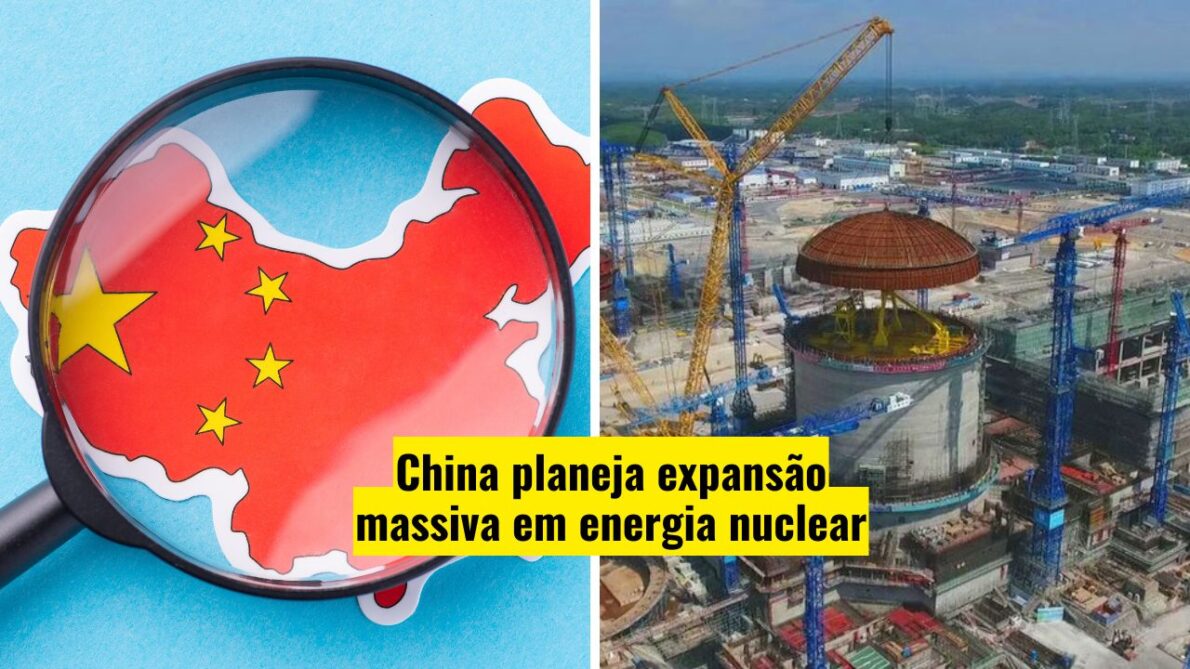
To Strengthen Its Economy And Advance Toward Carbon Neutrality, China Plans Massive Expansion In Nuclear Energy, With A Focus On Innovation And Sustainability.
The China is taking another bold step toward global leadership in nuclear energy. With a robust investment of 28 billion dollars, the country plans to build 11 new nuclear reactors, integrating an ambitious expansion plan aimed not only at strengthening its economy but also at achieving the goal of carbon neutrality by 2060.
The China, under the leadership of Xi Jinping, continues to demonstrate its determination to become a superpower in nuclear energy. Currently, the country has 56 nuclear reactors in operation, tying with France, and trailing only the United States, which has 94 active reactors. However, China is in full expansion, with 30 reactors under construction and plans to commission another 37 in the coming years. This colossal effort not only puts the country on track to match the United States but also solidifies its position at the forefront of global nuclear innovation.
China Developing Molten Salt Reactor: It’s The First Of Its Kind In The World
One of the most notable ongoing projects is the molten salt and thorium reactor TMSR-LF1, approved by the China Nuclear Safety Administration in June 2023. Located in the industrial complex of Minqin, in Gansu province, northern China, this 2 megawatt thermal (MWt) reactor is the first of its kind in the world. Using thorium as fuel, the TMSR-LF1 represents a milestone in nuclear technology, combining innovation with energy efficiency. The China already plans to build a higher capacity molten salt reactor by 2030, further reinforcing its leadership in the sector.
-
Renewable energy advances over protected areas in Brazil, and a survey by the Energy Transition Observatory reveals silent impacts that challenge environmental conservation and pressure sensitive traditional territories.

-
Rio Grande do Sul accelerates energy transition: State invests in renewable technologies and consolidates decarbonization strategies and pathways to attract billions in new industrial investments.

-
With 160,000 m² of collectors, an area larger than 20 football fields, Silkeborg, in Denmark, hosts a solar thermal plant that heats 19,500 homes and could become the largest solar heating plant in the world.

-
A study reveals the expansion of renewable energy procurement in Brazil and shows how companies are taking advantage of opportunities to reduce expenses, ensure energy efficiency, and strengthen strategic environmental commitments.

Construction Of 11 New Reactors
In addition to technological innovations, China is also expanding its nuclear infrastructure with the approval of five new projects in the provinces of Shandong, Zhejiang, Jiangsu, Guangdong, and in the Guangxi autonomous region. These projects will involve the construction of 11 new reactors, with a total investment of 28 billion dollars. According to He Zhaohui, an analyst at Guolian Securities, “the increase in approvals for new nuclear energy projects is expected to boost growth for suppliers and equipment operators.” This move marks the largest number of nuclear reactors approved since 2019, highlighting the priority the Chinese government has given to the development of this sector.
China Operates 55 Nuclear Power Plants
Currently, China operates 55 nuclear power plants, and impressively, 50% of the reactors under construction in the world are located on Chinese soil. The other 50% are distributed among 15 countries, demonstrating how much China is ahead in terms of nuclear expansion. This dominance reflects the country’s ambition to achieve carbon neutrality by 2060, a goal that the Chinese government seeks to achieve through increasing investments not only in nuclear energy but also in renewable energies such as wind and solar.
The Goal Is To Sustain The Country’s Growth
The decision to heavily invest in nuclear energy is part of a broader economic strategy to sustain the country’s growth. By strengthening its energy base, China is laying the groundwork for a future where clean and sustainable energy will be essential to maintain the pace of development and ensure energy security.
With these new investments, China not only solidifies its position as a global leader in nuclear energy but also demonstrates its commitment to a sustainable and innovative future. The combination of aggressive expansion and technological innovation places the country on a firm path to becoming the world’s largest nuclear power, aligning its economic development with ambitious environmental goals.
What do you think of China’s strategy to heavily invest in nuclear energy to boost its economy and achieve carbon neutrality? Share your opinion in the comments below!










Seja o primeiro a reagir!