





 Português
  Inglês
  Espanhol
  3 min de leitura
  0 comentários


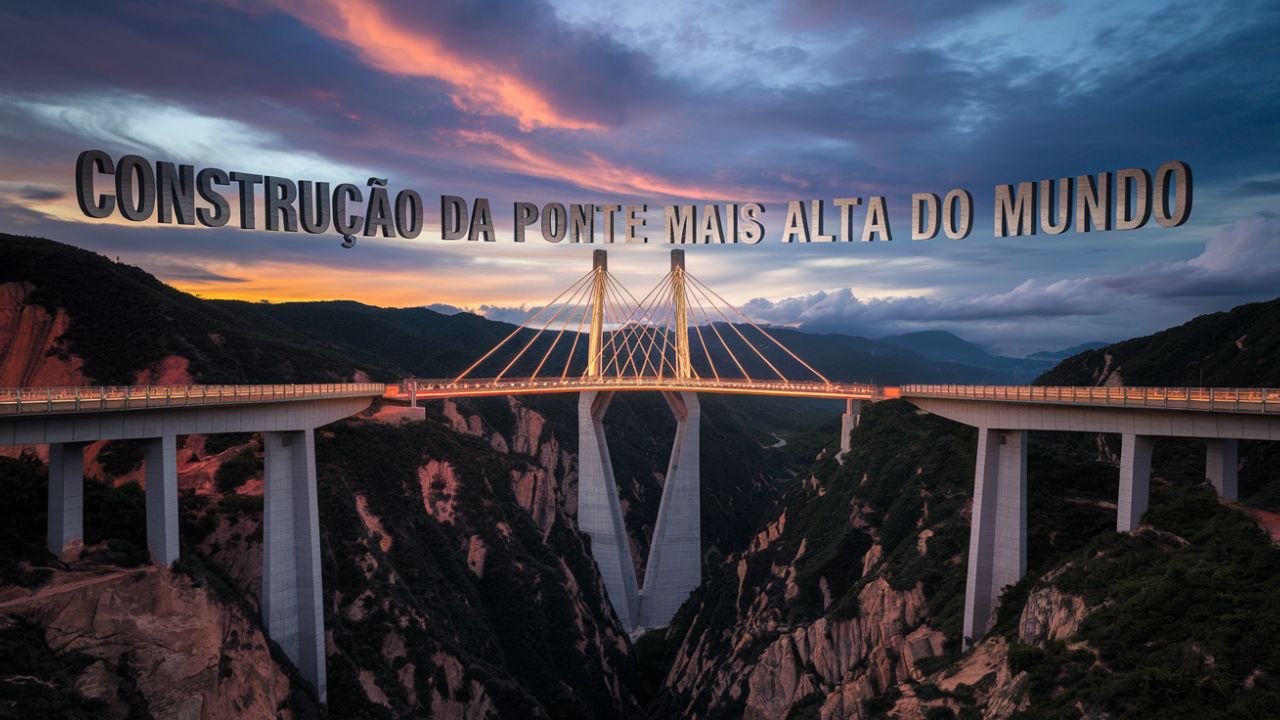
With 625 Meters in Height and 2.89 Kilometers in Length, the Huajiang Canyon Bridge in Guizhou Province Redefines China’s Construction by Integrating Smart Cables and Cutting-Edge Technology to Tackle Extreme Challenges and Connect Remote Regions.
When it comes to epic and breathtaking constructions, China is serious. Have you ever wondered how it’s possible to build something at 625 meters in height? This is the reality of the Huajiang Canyon Bridge, which is about to become the highest bridge in the world. More than a monumental work, it represents a challenge overcome by modern engineering.
And this isn’t the first time China has impressed in this field. The country already holds eight of the ten highest bridges in the world, but the new construction in Guizhou promises to surpass even the iconic Duge Bridge, which has dominated the landscape since 2016.
The Huajiang Canyon Bridge: Challenging Heights
Located in Guizhou Province in southwestern China, the construction of the Huajiang Canyon Bridge spans the Beipan River with a height of 625 meters and an impressive length of 2.89 kilometers. This work will connect the Liuzhi District in Liupanshui to Anlong County, creating a vital link for land transportation in the region.
-
A megaproject worth R$ 89 billion is advancing in Iraq and promises to change the game in global trade by creating a new corridor between Asia and Europe, reducing traditional routes and repositioning the country as a logistics powerhouse.
-
Goodbye bedside table: floating shelves become a trend in 2026 by freeing up space in the bedroom, improving circulation, bringing visual lightness, and integrating technology without taking up floor space.

-
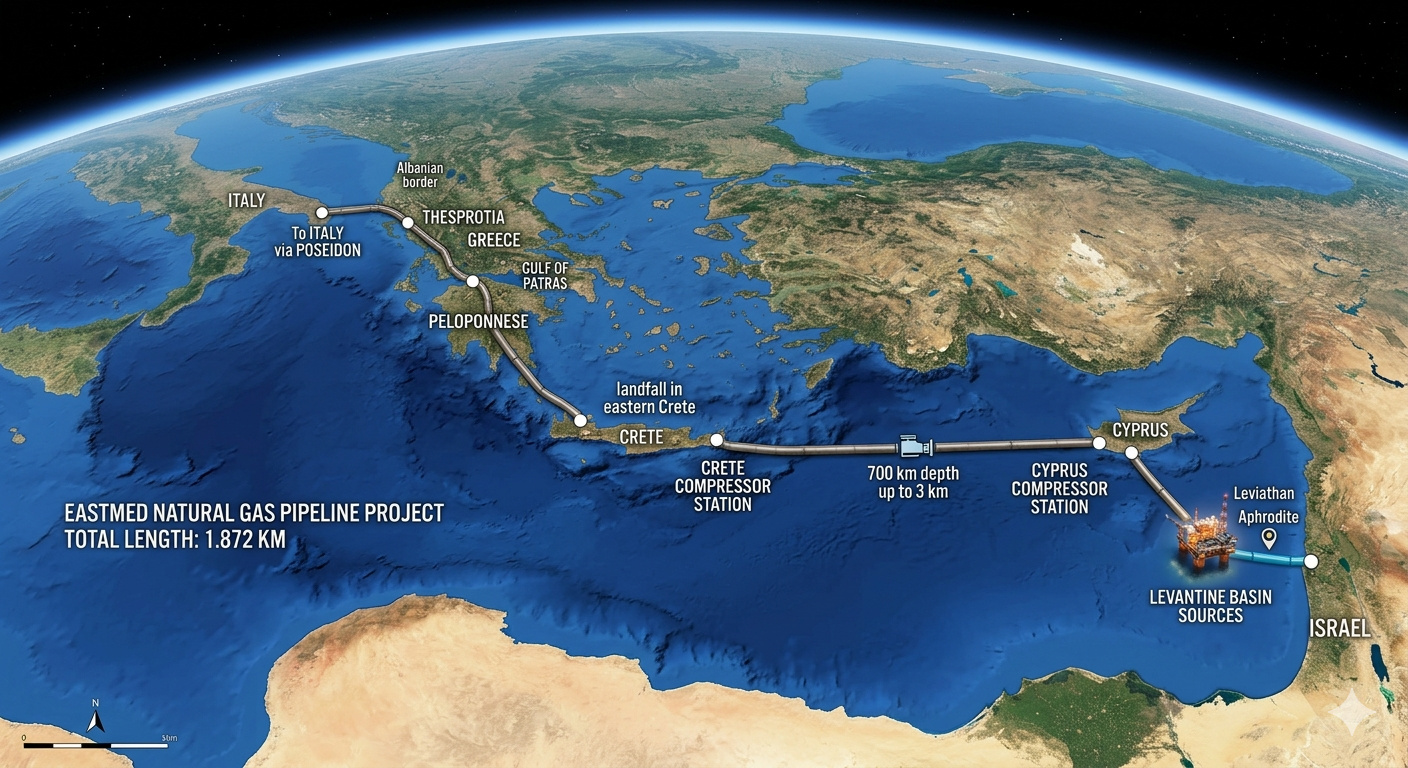
Israel, Greece, and Cyprus signed an agreement in 2020 to transport gas from the Mediterranean to Europe via a 1,872 km pipeline, but Turkey claimed sovereignty over part of the maritime route, and the project never materialized.
-
Israel, Greece, and Cyprus signed an agreement in 2020 to transport gas from the Mediterranean to Europe via a 1,872 km pipeline, but Turkey claimed sovereignty over part of the maritime route, and the project never materialized.

The project began in 2021 and has since faced challenges that required ingenious solutions. One of the great assets of this bridge will be the presence of “smart” cables equipped with sensors that monitor safety in real-time. It’s as if the structure itself had a “brain”, capable of identifying any problems before they occur.
Overcoming Challenges: How Engineering Is Redefining Limits

Building a bridge of this magnitude is no easy task. Imagine pouring 439,000 cubic meters of concrete without causing cracks. It seems like a puzzle, doesn’t it? But engineers solved this with a thermal control system monitored by sensors. Thus, they ensured that the temperature remained stable throughout the process.
Another challenge? The wind. The structure was designed to withstand strong gusts using galvanized steel wire mesh and climbing formwork systems. The design was constantly adjusted based on data collected on-site.
The Contribution to Regional Development
But why all this effort? The construction of the Huajiang Canyon Bridge goes far beyond being just an architectural landmark. It will be a key piece in connecting isolated communities in Guizhou Province. This means faster travel, easier transport, and a significant boost to the local economy.
Just imagine the impact on those who previously had to face hours on the road to cross the Beipan River. Now, everything will be more accessible, fostering trade and tourism in the region.
The Huajiang Bridge and the Rivalry with the Duge Bridge
Did you know that the two highest bridges in the world will be just 200 kilometers apart? The Huajiang Canyon Bridge is about to dethrone the Duge Bridge, which stands at “only” 565 meters high. Both are in the same province and cross the same river, showcasing the power of Chinese engineering.
The Future of Construction in China
China has made it clear: it dominates the bridge construction game. The Huajiang Canyon Bridge is not just an isolated project; it reflects how the country is leading technological advancement in global infrastructure. And with innovation as a priority, there are no limits to what they can achieve.
The question that remains is: what else does China have in store for the future? One thing is for sure, the whole world will be watching.








-

-

2 pessoas reagiram a isso.