





 Portuguese
  English
  Spanish
  2 min of reading
  0 comments


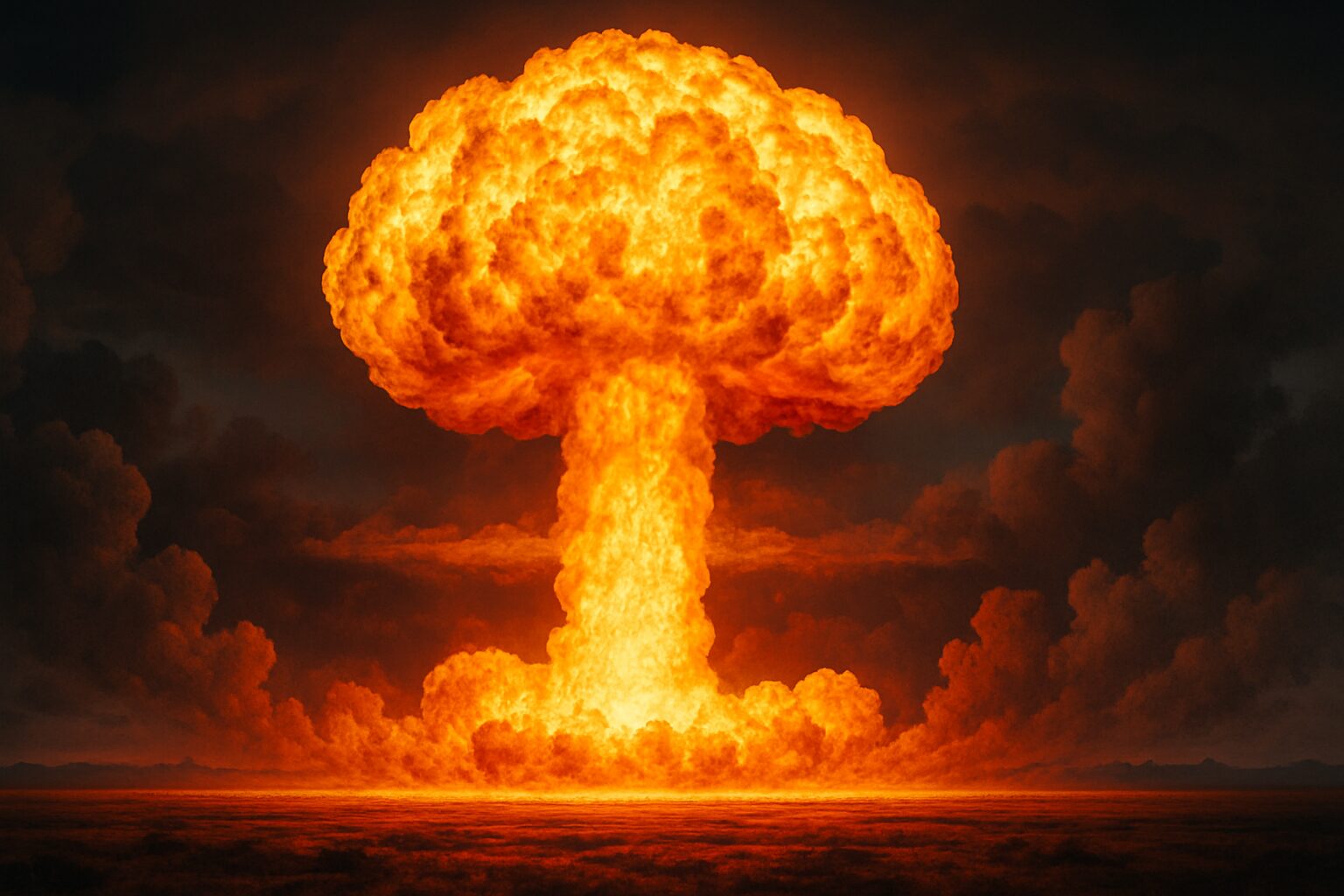
Technology Uses Fusion Without Fission to Generate Intense and Prolonged Heat, with Possible Strategic Military Use and Less Residual Contamination
Recently, Chinese researchers announced the test of a hydrogen-based explosive with thermal effects far superior to TNT.
The explosion, conducted in open field, created an incandescent fireball that lasted over two seconds—a duration 15 times longer than that recorded in conventional explosions. The study was published in the Journal of Projectiles, Rockets, Missiles and Guidance.
Technology Without Nuclear Material
The tested device weighs about two kilograms and does not use nuclear material in its composition.
-
What can really trigger large volcanic eruptions? Research suggests that gas returning to the magma may be more dangerous than gas escaping from it.

-
Found in one of the most radioactive places on Earth, this Chernobyl fungus may be doing something with radiation that no one has been able to explain to this day.

-
A bright yellow mushroom imported from Asia escaped from a cultivation farm in the United States in 2010 and is now aggressively spreading across 25 states, destroying entire communities of native fungi in American forests.

-
Buried under China, a colossal machine weighing 20,000 tons began operating as the largest neutrino detector on the planet and, in just 59 days, surpassed results that science took half a century to achieve.


The research is from the 705 Research Institute, which is part of the China State Shipbuilding Corporation (CSSC), an organization with a strategic role in the area of underwater weapons.
According to the article, the explosion reached temperatures above 1,000 degrees Celsius.
The main innovation lies in the use of magnesium hydride, a metallic powder capable of releasing hydrogen gas when heated. This gas, when ignited, generates intense and prolonged heat, amplifying the explosive potential.
How the Explosive Works
Magnesium hydride was originally designed to fuel fuel cells in off-grid locations.
However, when ignited, it creates a sustained exothermic reaction. “Hydrogen gas explosions ignite with minimal energy, have a wide explosion range, and release flames that expand rapidly,” explained Wang Xuefeng, the lead author of the study.
In the test, the substance was triggered by conventional explosives, which caused the rapid release of hydrogen gas.
The mixture with air reached the explosivity point and initiated a continuous combustion cycle, which persisted until the fuel was exhausted.
Lower Power, but More Destructive Heat
Although the force of the explosion is less than that of TNT—about 40% of the generated pressure—the thermal damage was significantly higher. Researchers stated that the heat produced was sufficient to melt aluminum alloys. The weapon would be ideal for causing uniform destruction over large areas or targeting high-value strategic objectives.
The study did not reveal concrete military plans for the use of the technology. It was also not disclosed where the magnesium hydride used came from.
Large-Scale Production
Until recently, the production of this compound was limited. However, in 2024, China inaugurated a factory in Shaanxi province with the capacity to produce 150 tons per year.
The new plant utilizes a “one-step synthesis” method, which is safer and more economical, according to the Dalian Institute of Physical Chemistry.
In addition to applications in armaments, the technology may also be used in submarines and drones with great autonomy.








-

2 pessoas reagiram a isso.