





 Portuguese
  English
  Spanish
  3 min of reading
  0 comments


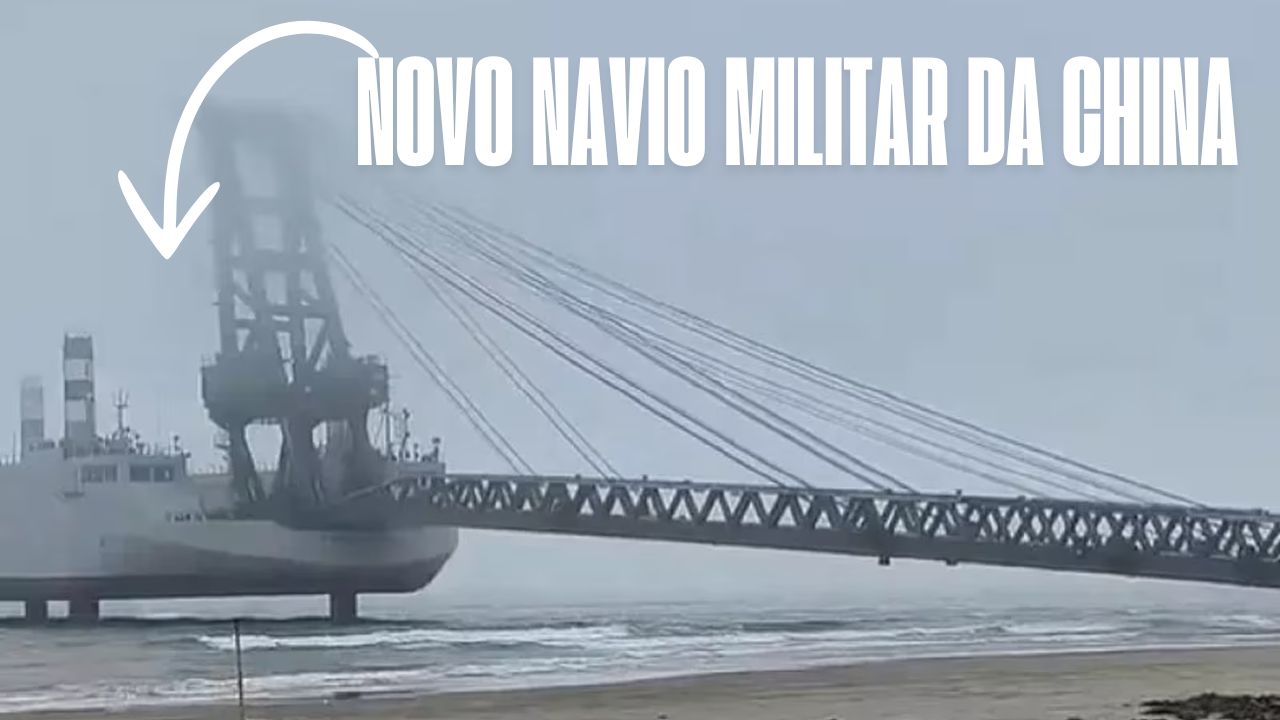
Innovative Amphibious Military Ship Deploys Armored Vehicles and Tanks Directly on Shore, Enhancing China’s Military Capability in the Indo-Pacific
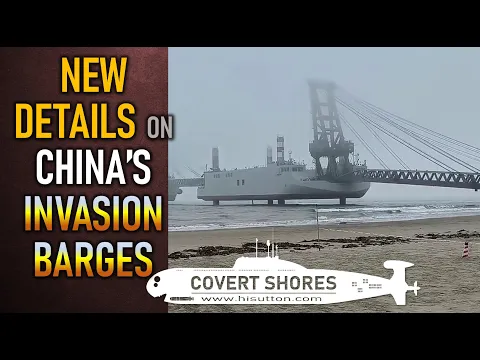
China tests next-generation amphibious military ship designed for rapid and strategic landings in military operations. Images of the test, briefly shared on Chinese social media before being removed, show three interconnected vessels forming a floating platform capable of allowing the landing of heavy vehicles directly on the sand. This technological advancement further strengthens China’s military presence in the Indo-Pacific and raises concerns about the geopolitical situation in the region, especially regarding Taiwan.
According to information published by R7, this new amphibious military ship can extend up to 120 meters, using retractable pillars to stabilize itself in shallow waters. This allows armored vehicles and tanks to land directly on the coast without the need for a port, making military logistics more efficient in invasion operations.
What Is Known About This New Amphibious Military Ship From China?
The images reveal that the vessel closest to the shore has a foldable ramp, which facilitates the entry of armored vehicles and other heavy equipment. This type of amphibious military ship is a modern alternative to traditional amphibious assault ships and can play a key role in strengthening the People’s Liberation Army Navy of China.
-
Historic bankruptcy of Centauro shocks the market, and the century-old company puts more than 500,000 products, machines, and complete infrastructure up for online auction.

-
New shoe factory in Ceará is expected to create 400 jobs and strengthen the local economy.

-
No one imagined it, but a mixture of sawdust with a mineral that fights fires surprises scientists with a result that changes the course of fire-resistant construction.

-
From empty land to a high-end house, wooden construction uses a lightweight system, metal structure for the foundation, ventilated ceramic cladding, and special windows to create an efficient and comfortable living space throughout the year.


In addition to the newly tested modular system, China also recently presented the “Sichuan”, an amphibious assault ship of the Type 076 class, considered the largest of its kind ever built by the country. With a displacement of approximately 40,000 tons, this vessel features electromagnetic catapults, allowing the launch of fixed-wing aircraft directly from the deck. This advancement significantly expands the operational range of Chinese naval forces.
Chinese Naval Expansion and Strategic Impacts
China has been aggressively investing in the modernization of its naval fleet. In recent years, the country has launched several destroyers, aircraft carriers, and amphibious assault ships, expanding its influence in the South China Sea and the Taiwan Strait.
Experts point out that the newly tested amphibious military ship system could be a key piece for future amphibious invasion operations, facilitating the movement of troops and equipment to conflict zones without the need for prior port infrastructure. This raises concerns for neighboring countries, especially Taiwan, which has been preparing for a potential Chinese military incursion for years.
According to analyses from the Beijing Institute of Strategic Studies, the new technology “allows Chinese forces to conduct faster and safer landings in conflict scenarios”, reducing vulnerabilities and increasing the effectiveness of amphibious maneuvers.
International Response and Possible Developments

The Chinese military advancements are being closely monitored by the United States and its allies in the region. Recently, the U.S. Navy has intensified patrols in the Indo-Pacific, aiming to counter any strategic movements by China.
According to a report from the U.S. Defense Intelligence Agency (DIA), the development of new naval technologies by China “reinforces its power projection capability beyond its territorial waters, increasing the risks of military escalation in disputed regions“.
While the Chinese government insists that its naval advancements are defensive and aimed at protecting its maritime interests, international analysts highlight that tests of amphibious military ships like the new model indicate preparation for conflict scenarios.










Seja o primeiro a reagir!