





 English
  Francês
  Alemão
  Italiano
  Japonês
  Norueguês
  Portuguese
  Spanish
  3 min of reading
  0 comments


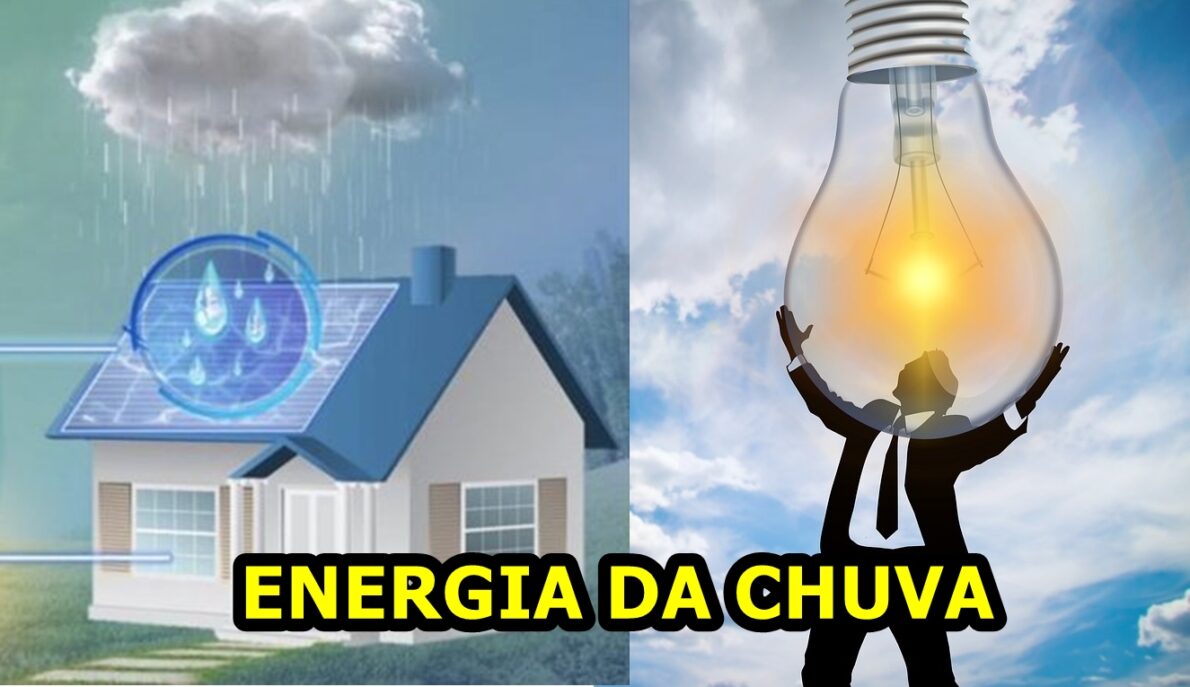
Energy Revolution: The Chinese Technology That Generates Energy from Raindrops Can Now Be Used at Home
In China, the search for sustainable alternatives for clean energy generation has led to the development of technologies capable of transforming mere raindrops into sources of energy. This advancement represents a new chapter in the already essential quest towards renewable energy, which is vital in the face of climate change and global warming that drastically alter landscapes and ecosystems.
Areas previously filled with biodiversity now face severe droughts, while regions traditionally defined by four seasons see these divisions disappear. In this scenario, China is heavily investing in new technologies that aid in the generation of clean energy.
China Tests Energy Production through Raindrops
One of these solutions comes from China, where scientists are revolutionizing the concept of hydropower by miniaturizing it to harness the energy from raindrops. The development involves the use of triboelectric nanogenerators (TENGs), which operate based on the principle of liquid-solid contact electrification.
-
A study reveals the expansion of renewable energy procurement in Brazil and shows how companies are taking advantage of opportunities to reduce expenses, ensure energy efficiency, and strengthen strategic environmental commitments.

-
Mato Grosso do Sul excels in the sugar-energy sector: the state reaches a milestone of 22 operating mills and accelerates the production of clean energy in MS with a focus on sustainability.

-
National energy dilemma: Brazilians support clean energy but reject increases in tariff costs to finance the sustainable transition.
-
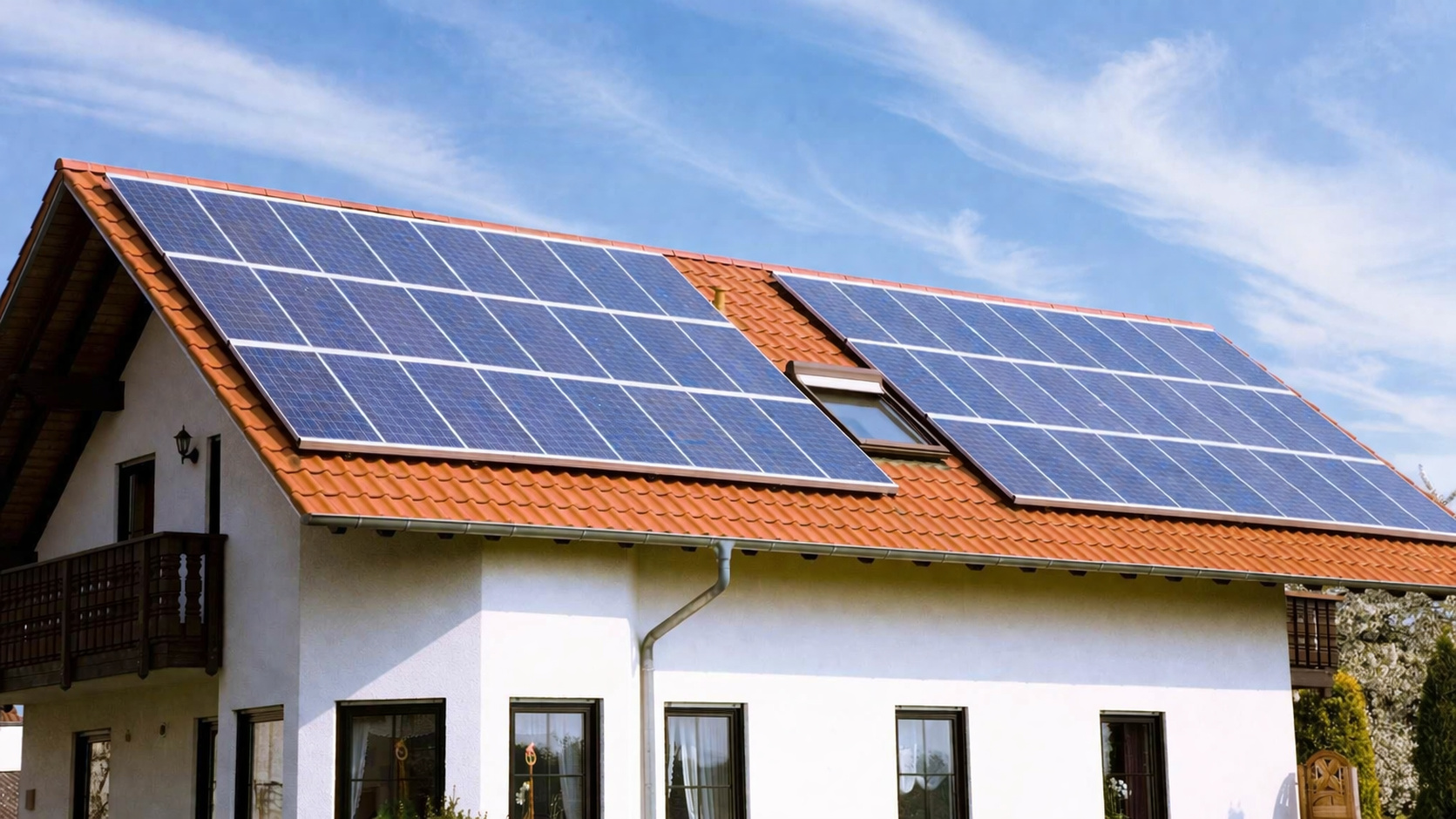
Research indicates that Brazilians support clean energy and wish to advance in the energy transition, but reject paying more on their electricity bill, showing a direct conflict between cost and sustainability.


When raindrops hit these devices, they generate an electrostatic charge that, although small in a single drop, can accumulate a significant amount of energy if collected efficiently.
Zong Li, a professor at Tsinghua University in Shenzhen, is one of the leaders in this research field and describes the process as a microscopic adaptation of hydropower generation, where the kinetic energy of water droplets is converted into electrical energy.
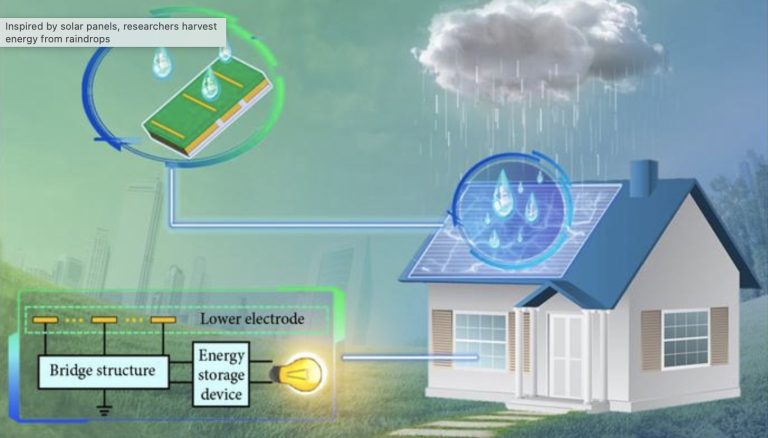
Although this technology already exists in various forms, adapting it to harness energy from raindrops presents unique challenges, especially regarding scalability.
The D-TENGs (droplet-based triboelectric nanogenerators) can produce high energy instantly, but sustaining this production to meet high power demands has been complicated.
To overcome this, Chinese researchers are exploring the use of bridge array generators (BAGs), which function similarly to solar panels. These devices are designed to operate independently of one another, eliminating mutual interference and maintaining high energy efficiency, regardless of the system size.
The possibility of generating energy at home using this technology is an exciting prospect, with potential not only to reduce dependence on fossil fuels but also to encourage a new green economy. Imagine entire communities generating their own electricity from the rain that falls on their roofs, integrating these systems with other forms of renewable energy like solar and wind. This approach not only relieves the burden on traditional power grids but also distributes energy generation, potentially stabilizing supply during periods of irregular demand.
By leading with this type of innovation, China not only advances its own energy security but also establishes a model that, if replicated globally, could mean a drastic reduction in greenhouse gas emissions from burning fossil fuels. Raindrops, such a common and until now undervalued resource in energy terms, could be one of the many answers to the urgent challenge of climate change.
Therefore, as the world faces these environmental issues with growing urgency, China shows us that even the smallest particles of nature can be key to a more sustainable future. The possibility of anyone generating and even profiting from this form of energy at home is not only innovative but also a powerful incentive for more people to actively participate in the transition to a greener world.









Seja o primeiro a reagir!