





 Portuguese
  English
  Spanish
  5 min of reading
  0 comments


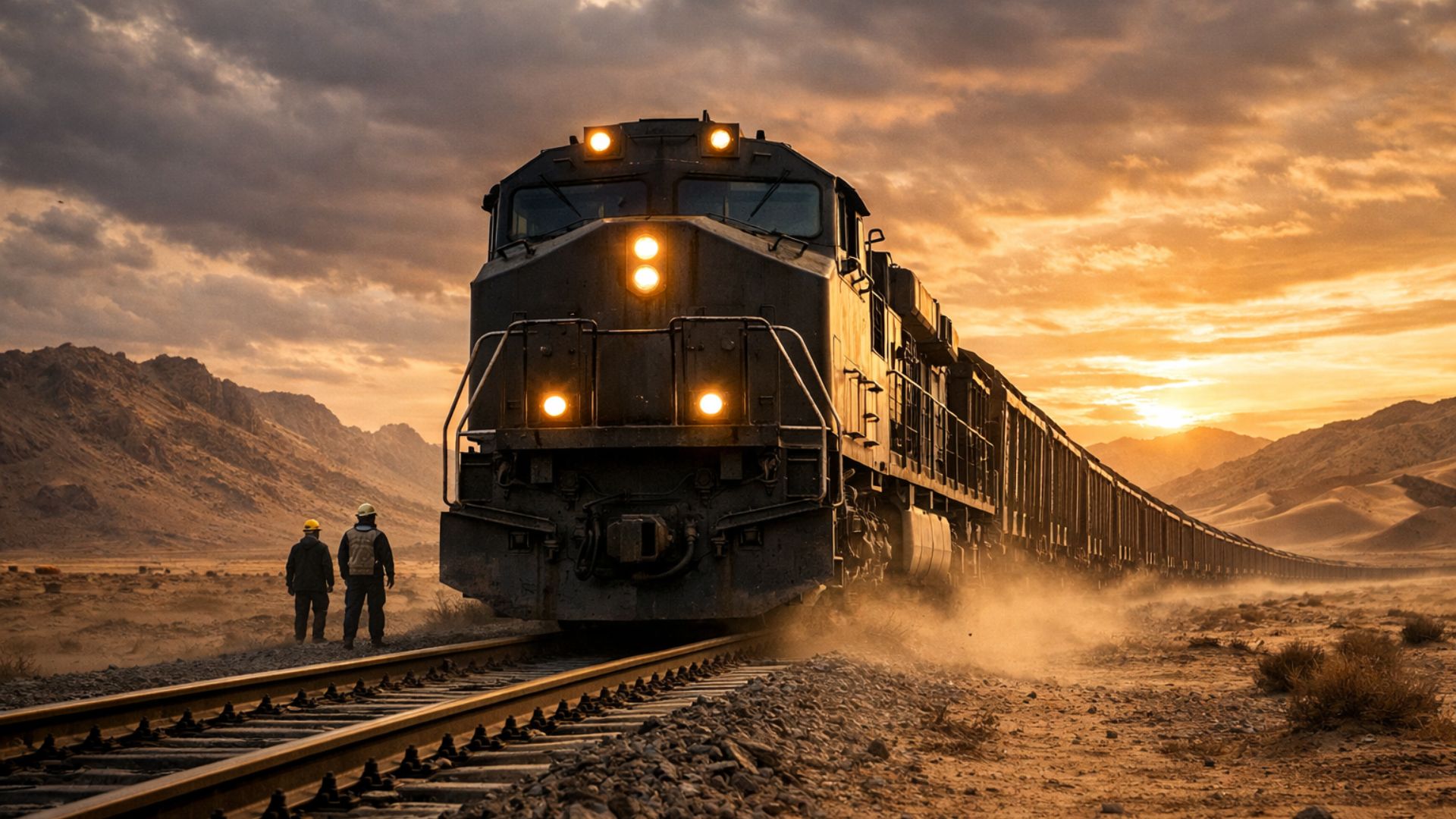
Railway connection between Mongolia and China advances after more than a decade of technical and political impediments, with a short but decisive final section capable of expanding mineral exports, reducing logistical costs, and strengthening commercial dependence between the two countries.
Mongolia and China are moving to unlock a railway corridor considered strategic for coal and metal trade in Asia, after more than a decade of political, financial, and technical deadlocks.
The project connects the Tavan Tolgoi region, one of the largest coking coal deposits in the world, to the Chinese railway system through the Gashuunsukhait-Gantsmod border, reducing dependence on long truck queues in the Gobi Desert.
The first phase of this connection became operational on September 9, 2022, with the opening of the Tavan Tolgoi–Gashuun Sukhait railway, spanning 233.6 kilometers, built in southern Mongolia to bring the mines closer to the Chinese border.
-
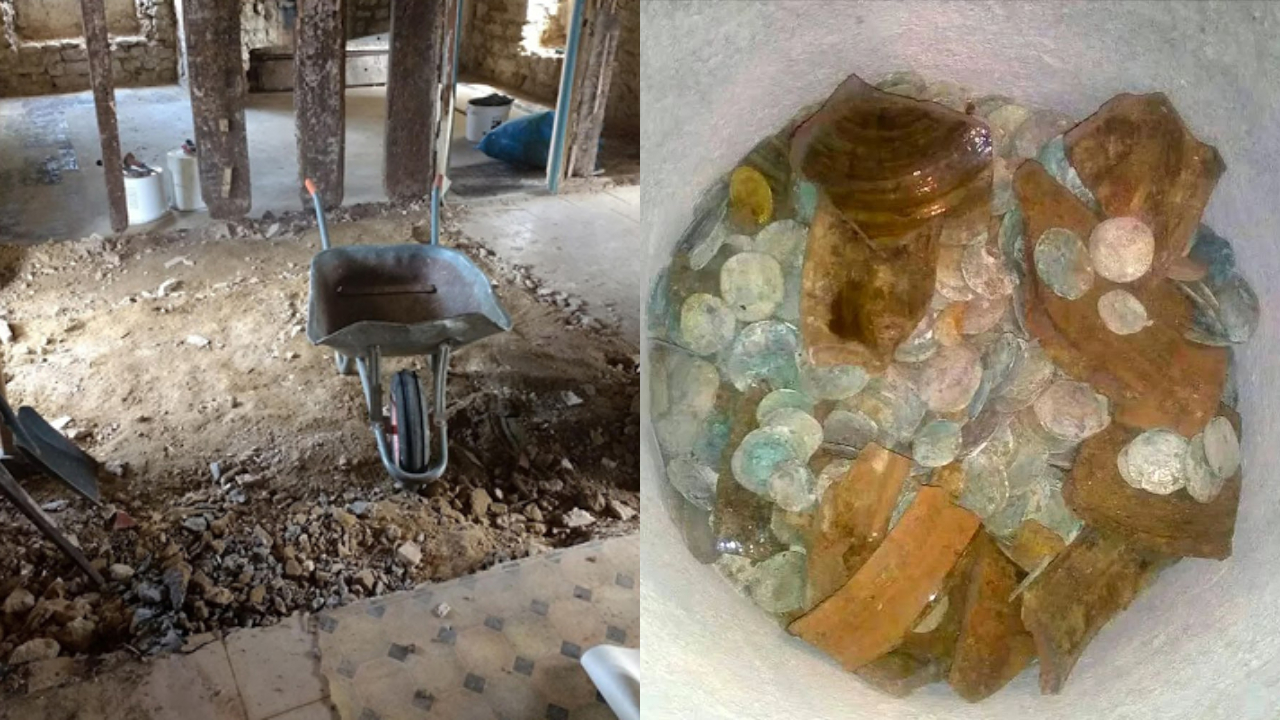
A couple buys an old chalet, breaks the kitchen floor for renovation, and finds over a thousand coins of gold and silver hidden since the English Civil War over 4 centuries ago.
-
Rigid bags with their days numbered: new trend prioritizes comfort in 2026.

-
YouTuber creates an excavator equipped with a giant 4.5-meter sword to challenge his brother to a rematch, and the invention quickly goes viral on social media.

-
The U.S. Army surprises the world by presenting the UH-60MX Black Hawk helicopter capable of flying without pilots, controlled by a tablet, featuring the MATRIX system, smart sensors, and full autonomy in real combat and rescue missions.


Still, the most sensitive link remained incomplete because the effective crossing between the two countries was missing, precisely the section capable of transforming a national railway into a cross-border export corridor.
Challenge of the railway connection at the Mongolia-China border
The new phase of the project took shape in 2025, when both governments formalized the advancement of the Gashuunsukhait-Gantsmod connection.
The total railway project was presented with 32.6 kilometers, of which 19.5 kilometers correspond to the main section of the line, while the remainder includes bridges, elevated structures, operational facilities, and control areas at the border.
The official forecast is to complete this phase by 2027.
The central obstacle lies not only in the short distance but in the incompatibility between the systems.
Mongolia operates with a 1,520-millimeter gauge, inherited from the Soviet standard, while China uses the 1,435-millimeter gauge, which is the international standard.
Without a solution to this technical disparity, the cargo needs to be transferred from one system to another, which increases costs, lengthens travel time, and maintains the logistical bottleneck at the border.
To overcome this barrier, the project was designed with a dual track compatible with both railway standards, allowing trains from both sides to operate up to the border area.
In addition to the gauge difference, the route requires bridges and structures with heights between 8 and 31 meters, in a region marked by severe terrain and operational conditions.
Mineral reserves drive railway project
The economic weight of the project starts in Tavan Tolgoi, a deposit frequently cited with 6.4 billion tons of coal resources, some of which are coking quality, an essential input for steel production.
The deposit is located in southern Mongolia, just a few hundred kilometers from the Chinese border, which helps explain Beijing’s interest in shortening and cheapening the supply route.
In the same mineral belt, the country also hosts Oyu Tolgoi, a copper and gold complex that ranks among the major mining projects on the planet.
The expectation announced by Rio Tinto is that the operation will produce around 500,000 tons of copper per year, on average, from 2028 to 2036, with the mine among the largest in the world by the end of the decade.
This context reinforces why railway infrastructure has ceased to be merely a transport project and has come to be treated as a piece of industrial and commercial policy.
Coal transport: from truck to train in the Gobi Desert
For years, the most immediate exit for Mongolian coal was the road.
Trucks crossed the Gobi on long, expensive routes subject to delays, especially during extreme weather or increased pressure on the border.
With the opening of the railway line in 2022, Mongolia began to reduce part of this internal cost, and estimates related to the project indicated a drop in freight from US$ 32 to US$ 8 per ton for transporting coal to the border.
Still, the overall economy of the corridor depends on the final connection with China.
Without it, the Mongolian railway reaches the edge of the consumer market but does not completely eliminate transshipment or the fragmentation of the journey.
It is this discontinuity that the two countries are now trying to remove, betting on a direct railway passage to increase the flow of coal and other minerals exported south.
Economic impact and commercial dependence on China
The Mongolian government asserts that, with the new connection operational, coal export capacity could jump from about 83 million to 165 million tons per year, with an estimated impact of US$ 1.5 billion additional annual revenue.
Part of this gain would come from reduced logistical costs and greater regularity in flow, in a landlocked country deeply dependent on the efficiency of its land corridors.
On the Chinese side, the project is also of interest for supply security reasons.
China is the largest steel producer in the world and remains dependent on coking coal to supply its steelmaking industry.
In times of trade tension with other suppliers, Mongolia’s physical proximity has become even more valuable to Beijing.
For Mongolia, however, the logistical gain coexists with a known risk. The country increases its capacity to export and monetize its mineral reserves but continues to have a strong concentration of sales in the Chinese market.
Gobi Desert imposes limits on railway engineering
The history of the project helps explain why a relatively short work at the border has faced so many years of delays.
The initiative was launched in 2012, faced interruptions, debates over gauge choice, economic obstacles, and changes in leadership until a more consistent resumption at the end of the last decade.
The operation of the first phase, in 2022, resolved part of the problem; the phase initiated in 2025 aims to close the missing link to make the corridor fully functional.
Neither does geography make it easier. Southern Mongolia imposes temperature variations ranging from -40°C in winter to over 40°C in summer, in addition to wind, sand, and pressure on infrastructure maintenance.
In this scenario, the last kilometers concentrate more than just a border crossing.
They encompass commercial disputes, railway engineering, mineral dependence, and the attempt to redesign one of the most sensitive cargo routes in the interior of Asia.





Seja o primeiro a reagir!