





 Português
  Inglês
  Espanhol
  3 min de leitura
  0 comentários


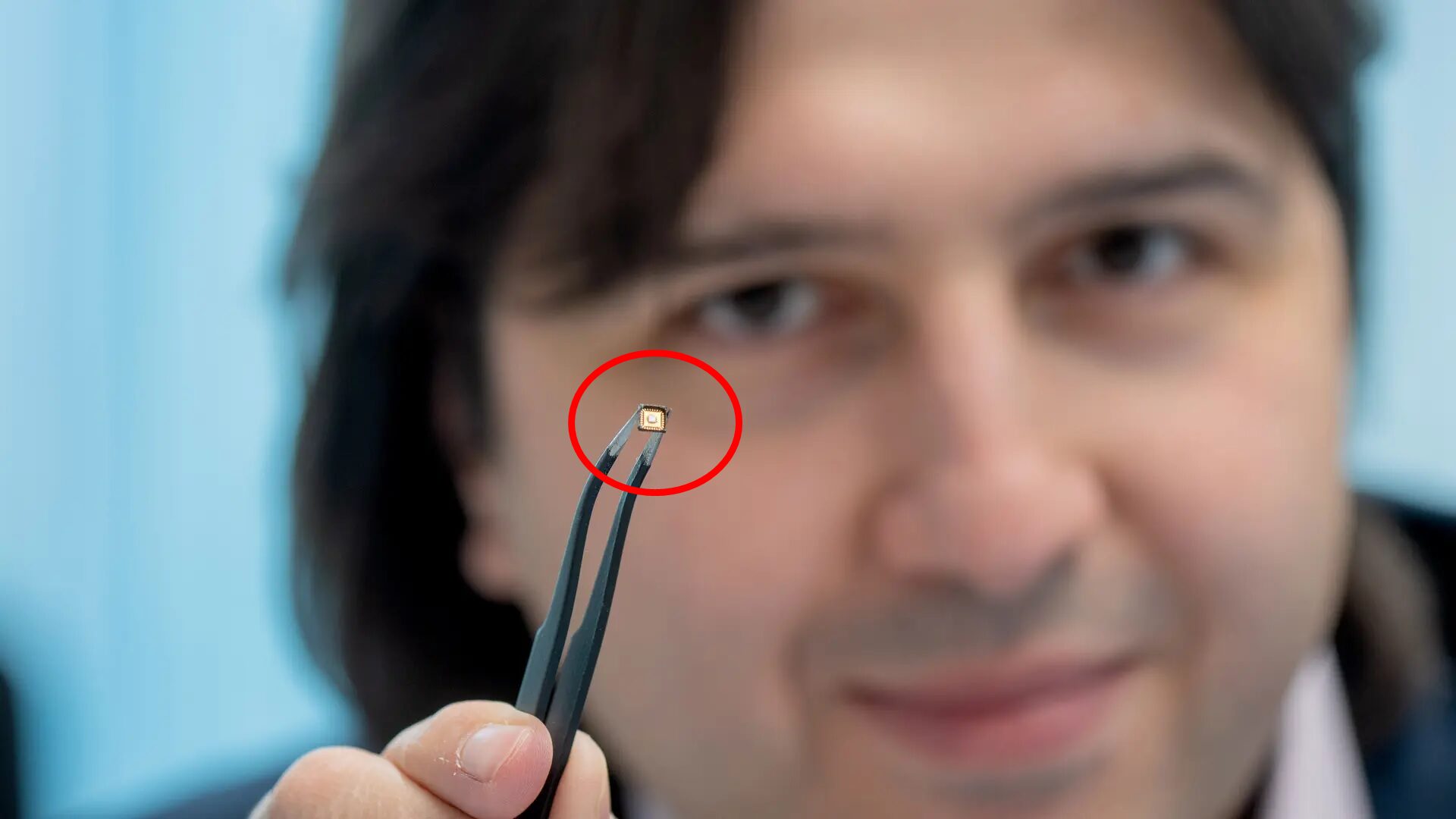
Inspired by the Human Brain, the AI Pro Chip Works Offline, Guarantees Total Data Privacy, and Consumes Up to 100 Times Less Energy Than Conventional Models.
A new artificial intelligence chip, inspired by the human brain, promises to revolutionize the way electronic devices learn and make decisions.
Created by scientists from the Technical University of Munich (TUM) in Germany, the chip operates without relying on the internet, consumes much less energy, and maintains total data privacy.
Architecture Based on the Human Brain
The chip, named AI Pro, is designed to mimic the way the brain recognizes patterns and learns.
-
Found in one of the most radioactive places on Earth, this Chernobyl fungus may be doing something with radiation that no one has been able to explain to this day.

-
A bright yellow mushroom imported from Asia escaped from a cultivation farm in the United States in 2010 and is now aggressively spreading across 25 states, destroying entire communities of native fungi in American forests.

-
Buried under China, a colossal machine weighing 20,000 tons began operating as the largest neutrino detector on the planet and, in just 59 days, surpassed results that science took half a century to achieve.

-
Iran enters the center of a climate alert after the war emitted 5.6 million tons of CO2 in two weeks, surpassing the annual pollution of entire countries.


According to the researchers, the neuromorphic structure combines memory and processing in the same space, allowing data to be analyzed and used directly on-site, without needing to send anything to the cloud.
Developed by Hussam Amrouch, PhD, and professor of AI processor design at TUM, the AI Pro measures only one square millimeter.
Still, it is capable of processing information independently, learning from incoming data, and making real-time inferences.
Energy Efficiency and Total Privacy
One of the highlights of the AI Pro is its low energy consumption. In tests, it used only 24 microjoules, while other AI chips consumed up to 100 times more.
For Amrouch, this is due to the combination of specific algorithms, innovative architecture, and a new way of handling data.
Additionally, the chip guarantees total privacy, as all calculations are done locally. This reduces cybersecurity risks and eliminates dependence on external connections, such as the internet or remote servers.
How the Chip Learns
Unlike other systems that analyze large volumes of data, the AI Pro learns through pattern association.
It utilizes a technique called hyperdimensional computing, which relates information and creates inferences based on similarities.
Instead of memorizing images of cars, for example, the chip understands that a car has four wheels, is used on roads, and has specific shapes.
From these characteristics, it can identify patterns, even without large volumes of data.
Practical Applications
The AI Pro has already been produced in prototype form, with around 10 million transistors, by the manufacturer Global Foundries in Dresden.
Although it is much smaller than high-performance chips with billions of transistors, it stands out for its efficiency and functionality.
The team claims that the chip was designed for specific applications, such as healthcare, robotics, and autonomous navigation. In situations where the internet is limited or privacy is essential, the AI Pro could be an ideal solution.
Smartwatches, for example, could use the chip to analyze heart rates or blood oxygen levels in real-time, without having to send data to external servers. Drones could adjust routes in mid-flight, even without satellite connectivity.
Niche Technology
Even with a still high price—around US$ 33,700 (€ 30,000) per unit—the creators do not intend to compete with the giants of the industry.
The goal is to offer a safe, efficient, and tailored alternative for specific tasks, without relying on the brute force of traditional superprocessors.
According to Amrouch, the focus is on on-device intelligence, something that many current systems still lack. “This mix of modern architecture, specialized algorithms, and innovative processing makes the AI Pro something special,” he concludes.







Seja o primeiro a reagir!