





 Portuguese
  English
  Spanish
  3 min of reading
  1 comment


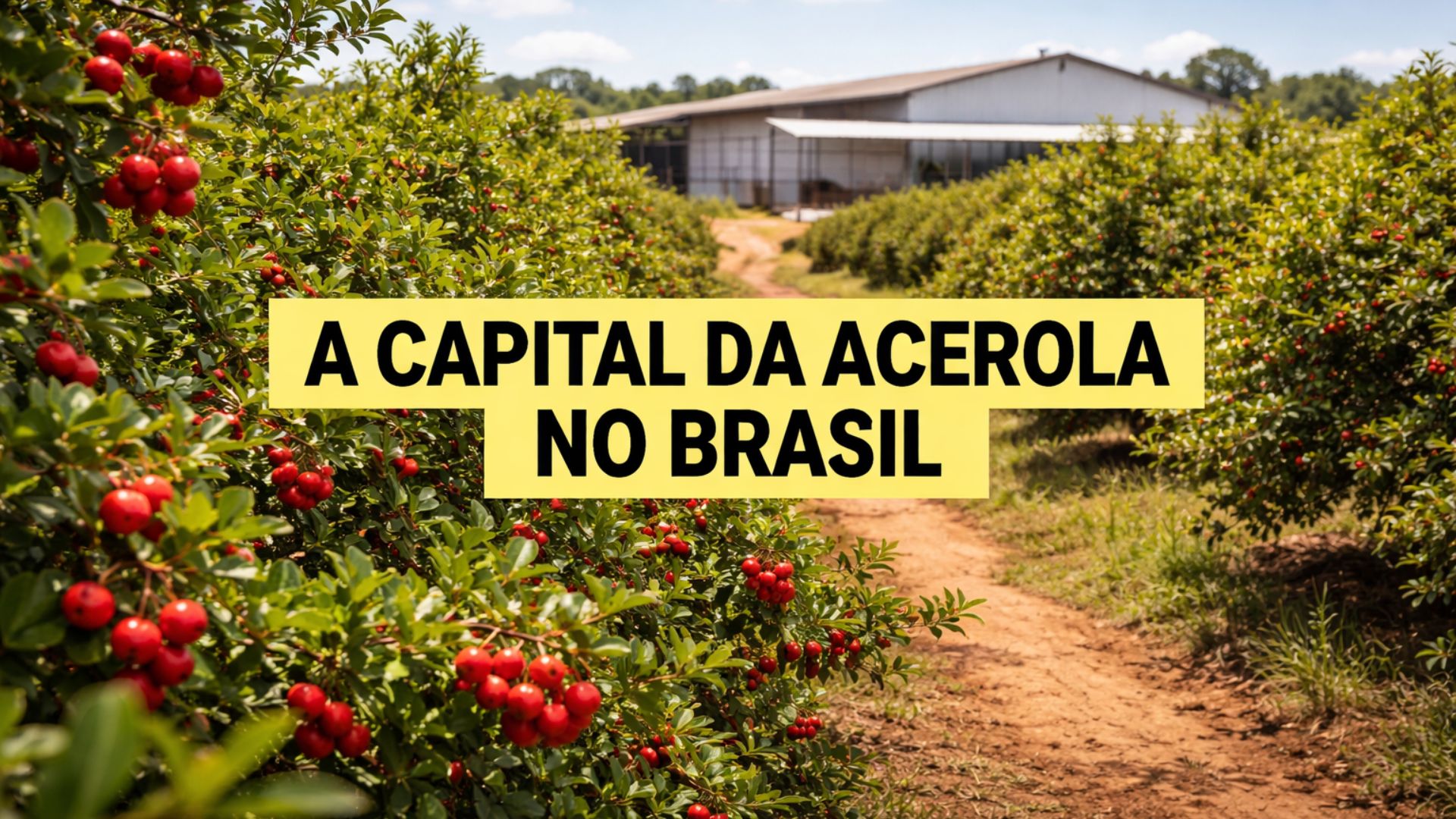


Municipality in the Interior of São Paulo Transformed the Cultivation of Acerola into an Economic Base and Projected a City of Just Over 20 Thousand Inhabitants in the Regional Agricultural Scenario, Articulating Rural Production, Industrial Processing, and Thematic Events Focused on the Appreciation of the Fruit.
Junqueirópolis, in the interior of São Paulo, has consolidated its fame as the “acerola capital” by transforming the fruit’s cultivation into the axis of the local economy, combining rural production and industrial processing in a city that had 20,448 inhabitants in the 2022 Census.
Located in the Presidente Prudente region, the municipality is a little over 600 kilometers from the state capital by road, varying according to the route and point of departure, and gained prominence by associating commercial orchards with frozen pulp agro-industries and beverages.
Acerola Capital in the Interior of São Paulo
Unlike the generic use of the nickname in different regions of the country, the recognition given to Junqueirópolis is related to a historical process of productive specialization that the city began to promote as a brand, especially when acerola gained traction in the regional agricultural agenda.
-
Friends have been building a small “town” for 30 years to grow old together, with compact houses, a common area, nature surrounding it, and a collective life project designed for friendship, coexistence, and simplicity.

-
This small town in Germany created its own currency 24 years ago, today it circulates millions per year, is accepted in over 300 stores, and the German government allowed all of this to happen under one condition.

-
Curitiba is shrinking and is expected to lose 97,000 residents by 2050, while inland cities in Paraná such as Sarandi, Araucária, and Toledo are experiencing accelerated growth that is changing the entire state’s map.

-
Tourists were poisoned on Everest in a million-dollar fraud scheme involving helicopters that diverted over $19 million and shocked international authorities.



However, this “title” does not currently appear as a definitive federal designation in law, despite a project presented in the Chamber of Deputies to declare Junqueirópolis as the National Capital of Acerola, still under consideration in the Legislative.
Expansion of Cultivation and Strengthening of Agro-industry
The expansion of cultivation advanced when producers sought alternatives capable of improving income and diluting risks typical of crops more subject to price cycles, finding in acerola a compatible option with frequent harvests and demand for processing.
With production growing, the municipality began to attract and structure industrial stages linked to the fruit’s supply chain, which includes the manufacturing of pulp and derivatives, increasing added value and reducing dependence on sales concentrated only in the fresh market.
Family Farming and Generation of Local Income
Another characteristic associated with the culture is the need for careful labor because the ripe fruit is sensitive, and in many productive realities, management and harvesting are predominantly manual, which reinforces the weight of rural work in the local economic dynamic.
In this scenario, the profile of small properties frequently appears in sectoral reports about the region, and the presence of family farmers helps explain why the activity generates effects beyond the farm gate, moving transportation, processing, packaging, and trade linked to the harvest.


Acerola Festival Boosts Tourism and Business
At the same time, the tradition of events related to the fruit has solidified as a publicity tool, with the Acerola and Grape Festival (Aceruva) integrated into the local calendar and described as a space to expand markets and give visibility to the city’s production.
According to an institutional record from the São Paulo Legislative Assembly, Aceruva is presented as an initiative aimed at strengthening the commercialization and exhibition of the sector, gathering producers and attracting the public for activities that mix culture and agricultural promotion.
Climate Challenges and Productive Organization
Still, the agricultural base depends on difficult-to-control variables such as climate fluctuations and input costs, which often pressure margins and require planning, especially in crops that demand labor and are sensitive to losses at the ideal harvest point.
At the same time, studies and cooperation initiatives among producers are cited in the literature about the municipality, linking local networks to the adoption of process and management improvements, which helps sustain the regional relevance of acerola without relying solely on area expansion.
The trajectory of Junqueirópolis shows how a fruit can become a symbol and structuring activity in a small municipality, connecting production, industry, and events that reinforce the local identity, but what is still needed to transform this fame into more transparent public numbers about volume and revenue?









A cidade que você está lembrando é entre Ubajara e Tianguá, no norte do Ceará 🌵🇧🇷 — bem no “alto” do Nordeste, quase na divisa com o Piauí.
👉 O que existe lá
Uma fazenda enorme de acerola da empresa americana Nutrilite / Amway
Plantio em grande escala (centenas de hectares)
Produção voltada para extrair vitamina C natural em pó, que depois vira cápsulas e outros suplementos.
📍 O projeto começou nos anos 1990, quando a empresa comprou cerca de 1.600 hectares para plantar acerola de alto teor vitamínico. �
📍 O pó da acerola era (e ainda é) exportado para os EUA para virar suplemento alimentar. �
Embrapa
www2.feis.unesp.br
Por que foi para essa região?
Ali na Serra da Ibiapaba:
clima ideal
altitude
produção o ano inteiro
fruta com teor altíssimo de vitamina C
Isso faz da região uma das melhores do mundo para acerola.