





 Português
  Inglês
  Espanhol
 8 min de leitura
  75 comentários


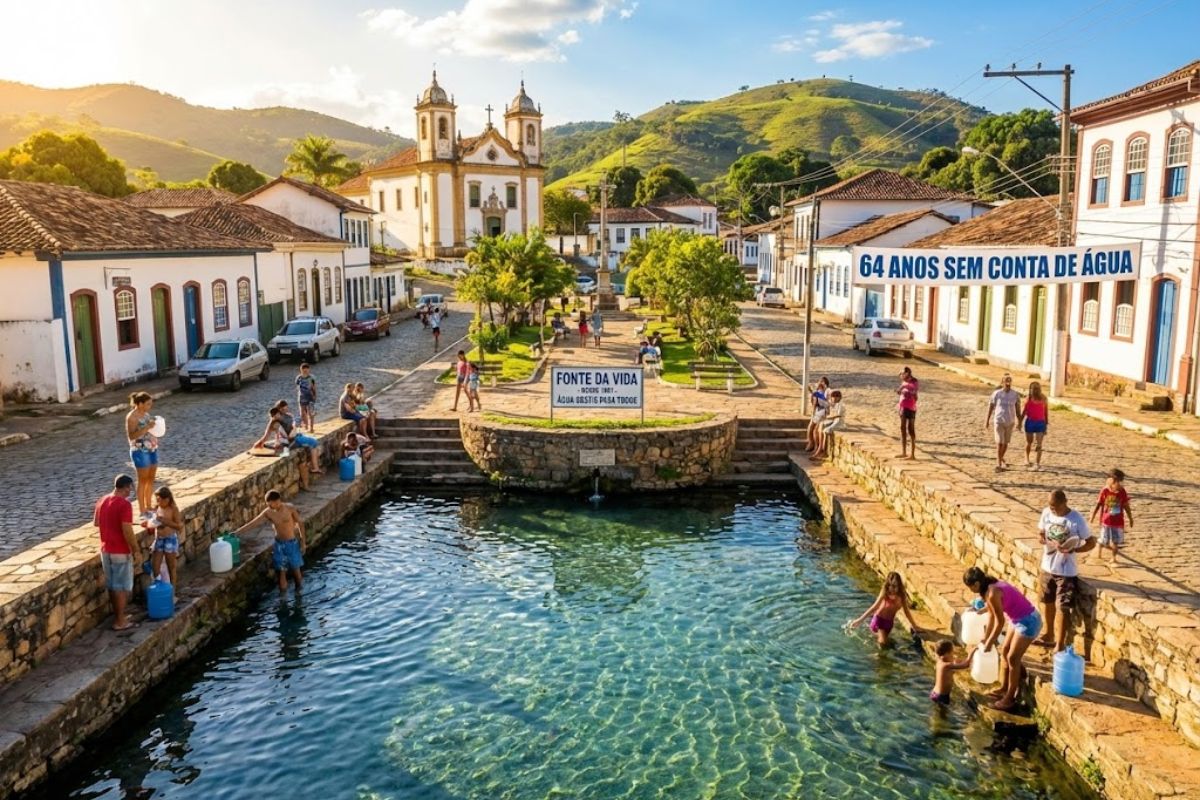


In the Brazilian City of Itapororoca, in Paraíba, Water Has Been Distributed Free of Charge Since 1961, When the Municipality Was Founded. The Spring Functions as a Private Reservoir and Supplies Pools in the Parque da Nascença. With More Than Five Thousand Urban Residences, the Water Crisis Is Pressuring, and the Grant to Cagepa Has Already Been Approved.
The Brazilian city of Itapororoca, in the interior of Paraíba, returned to the spotlight on 12/31/2025 for a detail that seems impossible in today’s Brazil: residents haven’t paid a water bill for 64 years, since the municipality’s founding in 1961, thanks to a spring that supplies the urban area.
This model, however, is under pressure. What once served about one thousand families now needs to sustain more than five thousand residences just in the urban area, while the city faces a water crisis and already has approved grant for water supply to the Water and Sewage Company of Paraíba, Cagepa, still without a defined date to take over.
Where Is Itapororoca and Why This City Became an Exception in Water Supply

Itapororoca is located in Paraíba and is noted as a rare case in the state for maintaining free water distribution.
-
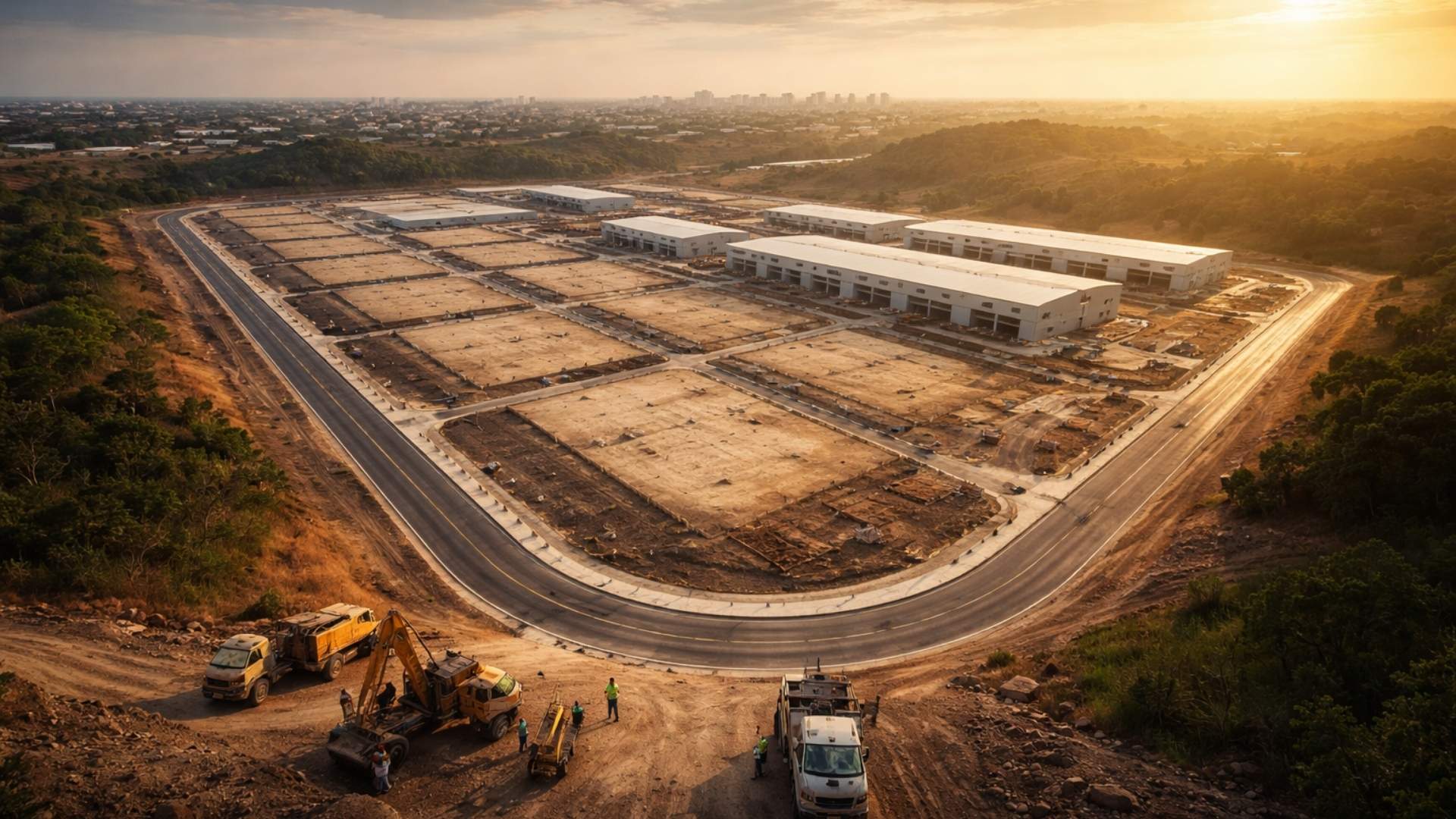
Brazilian city gains industrial hub for 85 companies that is equivalent to 55 football fields.

-
Peugeot and Citroën factory in Argentina cuts production by half and opens a layoff program for more than 2,000 employees after Brazil drastically reduced purchases of Argentine vehicles.

-
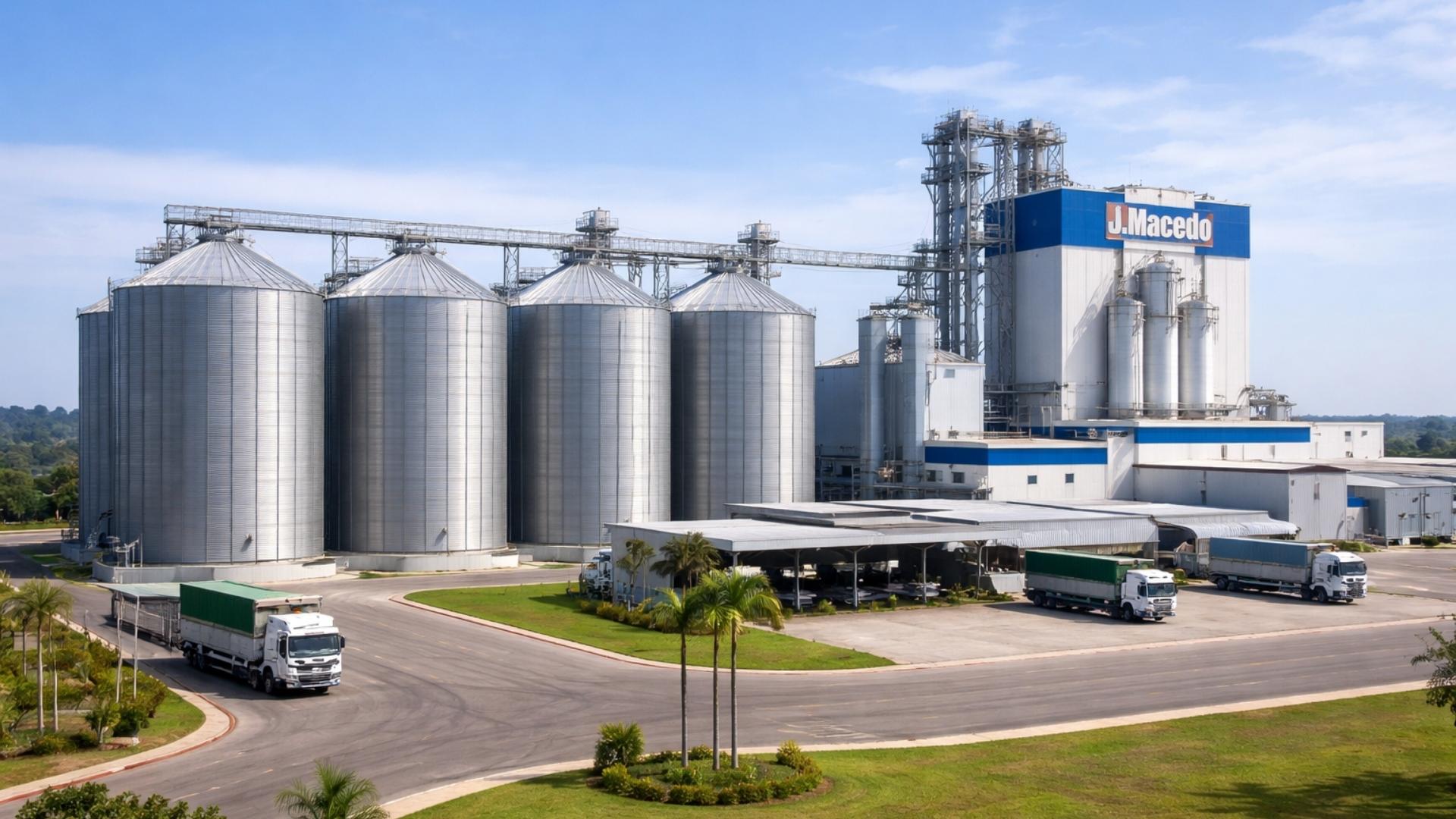
A Brazilian city gains a factory worth R$ 300 million with the capacity to process 200 thousand tons of wheat per year, a mill of 660 tons/day, silos for 42 thousand tons, and an industrial area of 276 thousand m².
-
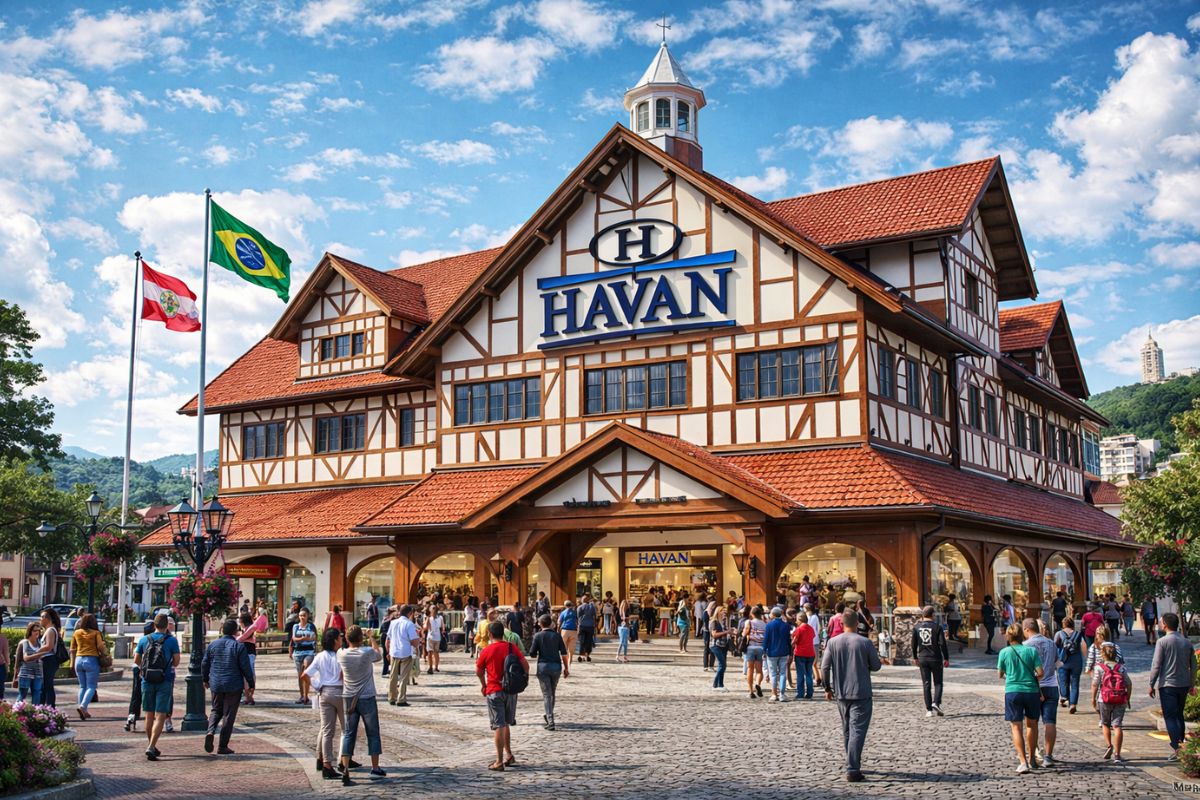
Havan will leave the shopping mall in Blumenau to inaugurate something that the chain has never done before: a megastore in half-timbered style in the Historic Center of the city, which is expected to be completed in May and change the landscape of local retail.

The mentioned difference is that, among the municipalities in Paraíba with this characteristic, Itapororoca would be the only one with a spring that functions as a private reservoir, which helps explain why the policy of not charging for water has managed to last for decades.
In a country where the water supply service typically involves structures for capturing, treating, distributing, maintaining the network, and charging, the fact that a city has maintained free service for 64 years catches attention not only for the cost avoided by residents but also for the logic of the system: the city relies on a natural source considered strategic and historically reliable.
The Spring That Supplies the City Since 1961 and Became a Natural “Reservoir”
The starting point is clear: since 1961, the year of the municipality’s founding, the water supplied to residents comes from a spring that, in practice, functions as a natural reservoir for the city itself.
It is this resource that sustains the distribution without charging, transforming the spring into a central element of local identity.
According to a report attributed to g1, even during severe droughts, the spring in Itapororoca has never dried up.
This fact is the type of information that explains why free supply has been consolidated over time: when the source remains active even under climate stress, the population comes to treat it as a guarantee of daily survival.
The same source is described as an “inalienable right” of the population, protected by municipal law.
This adds a legal component to the issue: it is not just a historical habit, but a formalized understanding that water there has been treated as a right secured by local regulation.
Parque da Nascença: The Water That Supplies Houses Also Fuels Tourism and Preservation
The spring does not appear merely as an infrastructure for supply.
It also supplies the pools of the Parque da Nascença, an environmental preservation area that has become one of the main tourist spots in the region and an option for those seeking ecotourism.
This detail matters because it amplifies the pressure on the resource.
The same water that sustains the supply of the Brazilian city Itapororoca is also associated with a space for visitation and leisure.
When a natural source is both the basis for daily consumption and a tourist component, managing the balance tends to be more sensitive, especially in scenarios of drought or urban growth.
The Parque da Nascença, described as a preservation area, reinforces another dimension: the spring is not just a “point of capture”.
It is situated in a protected environment, with environmental and social significance, which makes any change in the management model a topic with potential for local public debate.
From the Beginning with One Thousand Families to the Jump to More Than Five Thousand Urban Residences
The baseline text presents a numerical contrast that helps understand why the free service has entered a tension zone.
Initially, the spring needed to supply about one thousand families. Today, according to the E9 portal, the city counts with more than five thousand residences, and this number refers only to the urban area.
This shift in scale is at the heart of the problem.
A natural source may have been sufficient for a small municipality at the beginning of its history, but urban growth increases demand volume, requires more from the network, and raises the complexity of supply.
In simple terms, the system got bigger, but the source of the water remains the same.
The figure “more than five thousand residences” in the urban area also suggests that the pressure may be even greater when the entire municipality is considered, but here it is important to maintain precision: the cited number pertains to the urban zone, and it already creates, in itself, a new level of demand on the spring.
Water Crisis: When a Historical Model Begins to Be Tested
Despite the spring’s historical resilience, the basis states that free supply is undergoing a water crisis.
The relevant point here is the combination of previously described factors: on one side, a source that “has never dried up” even during severe droughts; on the other, a current crisis scenario that indicates that historical stability does not mean permanent immunity.
Without adding unreported data, we can summarize the situation with precision: the Brazilian city Itapororoca lives a rare model of free supply sustained by a spring since 1961, but the growth in the number of residences and the context of the water crisis place the system under stress and force administrative decisions.
This is the narrative turning point of the case: it is not just a curiosity about not paying for water.
It is a municipality that needs to reconcile tradition, urban growth, and water limitation, with management decisions already being made.
Grant to Cagepa Approved: What Is Already Decided and What Is Still Undefined
One of the strongest data from the basis is that the grant for water supply service to the Water and Sewage Company of Paraíba (Cagepa) has already been approved.
At the same time, the text is direct in saying that there is no defined date for Cagepa to take over the water management of the municipality.
This creates an open transition.
The approval indicates that the municipality has already taken an institutional step to change the operational model of supply.
The absence of a date indicates that the population continues, for now, under the current format, even with the pressure from the system.
Here, it is important not to extrapolate. The basis does not inform how the charging policy will be, what investments will be made, or what the contract format will be. What can be stated with certainty is:
The grant has been approved
The management still has no date for change
The current system is pressured by growth and the water crisis
Within this context, the issue tends to gain public debate because it touches on a sensitive point: free water has been part of local life for 64 years, and any change is perceived as a rupture of a historical standard.
Why the Discussion About Water Bills Gains Strength When Looking at the Rest of Brazil
The basis presents a comparison that helps the reader gauge what it means to “not pay for water” in financial terms, although the article does not present the amount that would be charged in Itapororoca.
According to a federal government report cited in the text, Rio Grande do Sul has the highest average water tariff in the country, at R$ 4.18 per cubic meter.
At the other end, the lowest mentioned tariff is in Maranhão, at R$ 1.62 per cubic meter.
These two figures make the discussion more concrete for two reasons:
First, they show that there is a large variation between states, indicating that the cost of water generally depends on structural factors, water availability, service model, and tariff policy.
Second, they highlight how uncommon Itapororoca’s free service is.
Even using the lowest cited tariff as a reference for national comparison, the contrast remains: in much of the country, water is a charged service, and in Itapororoca, the bill hasn’t arrived for decades.
What Makes the Free Water of Itapororoca Such a Difficult Case to Replicate
Even without inventing data, it is possible to understand why the case is described as rare. The basis presents three elements that together form a “difficult combination”:
Own Natural Source with Reservoir Function
The city has a spring that, in addition to supplying, is treated as a reservoir, reducing dependence on external structures.
History of Resilience in Severe Droughts
The information that the spring has never dried up, even in severe droughts, suggests a stability that few cities can achieve.
Protection by Municipal Law as an Inalienable Right
When the issue becomes local law, free service stops being just an administrative decision and is framed as a right, increasing the political weight of any alteration.
Therefore, when urban growth and the water crisis come into play, the debate is not merely technical.
It affects local identity, perception of rights, and the reminder that, since 1961, the supply has been treated differently from the national standard.
Chronology of the Case: 1961, 12/31/2025, and the Turning Point Without a Marked Date
For the reader not to get lost, it is worth organizing the chronological milestones that appear in the basis:
1961: year of the municipality’s founding and the beginning of free supply, as described in the text.
12/31/2025: date when the story comes back into the limelight, highlighting the longevity of 64 years and the signs of pressure on the system.
No Defined Date: future moment when Cagepa is expected to take over management, since the grant has been approved, but the date has yet to be informed.
This lack of date is, in itself, an element that captures the reader’s attention. The city stands between two worlds: a historical model of free service and an institutional change already approved but still without a public transition schedule.
In your opinion, will this Brazilian city be able to maintain free water even with the water crisis and more than five thousand urban residences, or will the grant to Cagepa change everything once and for all?









É possivel que seja justo para nós que não somos de lá e para os próprios beneficiários, aplicar uma taxa adequada pelo uso da água e que seja usada para a preservação da fonte, de maneira que o serviço seja melhorado e sustentável e principalmente que os beneficiários sintam melhorias na qualidade dos serviços públicos de alguma forma, devido a gratuidade que se tornou um direito adquirido, ainda que dependa do número de domicílios atendidos e da fonte, que pelo que parece não é ilimitada. É uma questão de justiça com o meio ambiente e com os próprios usuários.
Creio que mudará, infelizmente.
Existem inúmeras cidades que não são cobrados água e ou esgoto essa condição não é exclusiva Itapororoca.
Existem outras como Santa Rita de Jacutinga/MG