





 Portuguese
  English
  Spanish
  3 min of reading
  0 comments


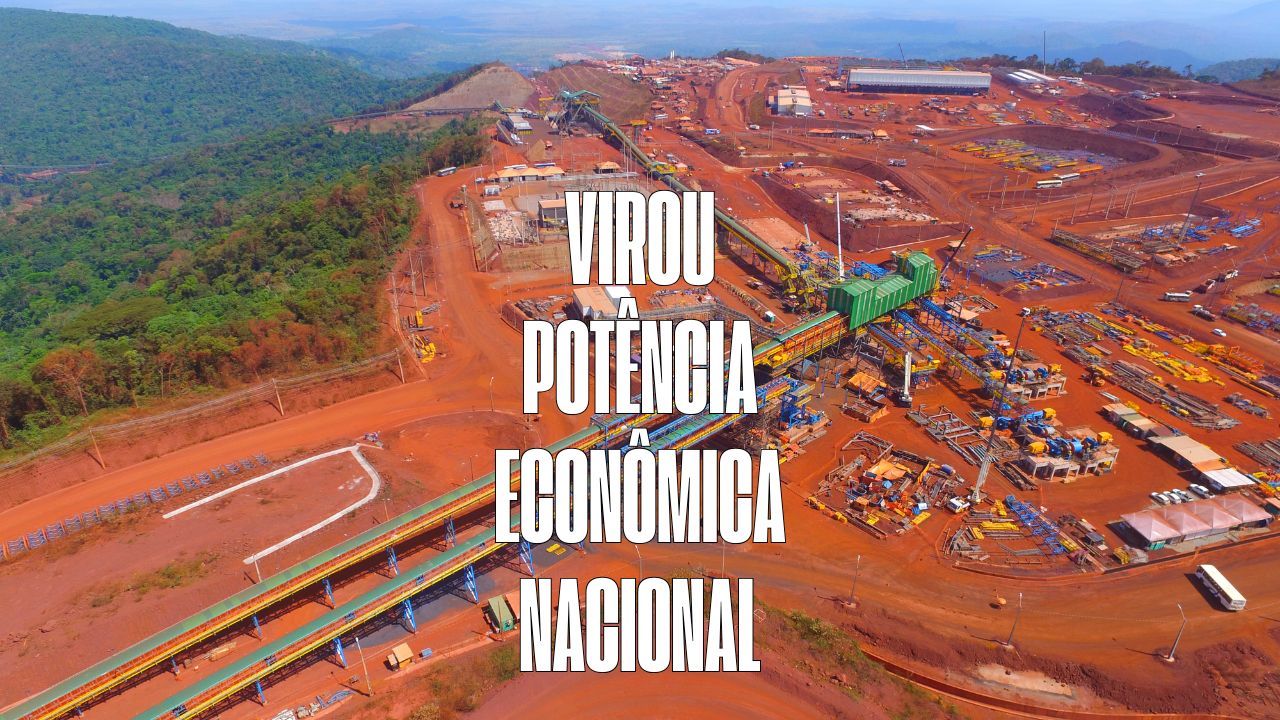
With the S11D Project by Vale, the city of Canaã dos Carajás grew 3,480% in two decades, reaching the second highest GDP per capita in Brazil. Massive investments in infrastructure, education, and sustainability transformed the former agricultural village into an economic reference, attracting thousands of workers and entrepreneurs to the mining sector.
The small city of Canaã dos Carajás, located inland in the state of Pará, has undergone an impressive economic transformation over the past two decades, becoming one of the largest national economic powers. With the development of the S11D Project, the largest iron mining complex in the world operated by Vale, the city recently achieved the second highest Gross Domestic Product (GDP) per capita in the country, trailing only municipalities known for their high income, like Paulínia (SP). The data was released by the magazine IstoÉ in March 2025.
Between 2002 and 2022, Canaã dos Carajás registered extraordinary population growth, jumping from about 10,000 residents to over 130,000, according to the Brazilian Institute of Geography and Statistics (IBGE). This rapid growth is directly linked to mining activities, which generated thousands of direct and indirect jobs, transforming the local economy and attracting workers from various parts of Brazil.
S11D Project: Economic Engine of the City
The S11D Project by Vale, located in Serra Sul, in Canaã dos Carajás, is considered the main driver of the region’s economic advancement. Officially started in 2016, the venture is the largest private investment ever made in Brazil, reaching approximately US$ 14 billion (about R$ 72 billion), according to information from Vale released by the magazine IstoÉ.
-
50 viaducts, 4 tunnels, 28 bridges, and 40 kilometers of bike paths: BR-262 in Espírito Santo will receive 8.6 billion reais for the largest engineering project in the state’s history, inspired by the Immigrant Highway in São Paulo.

-
Brazil produces too much clean energy and doesn’t know what to do with it: over 20% of solar and wind capacity was wasted in 2025 while investors flee and 509 renewable generation projects were abandoned in the last year.

-
Piauí will produce a new fuel that replaces diesel without needing to change anything in the truck’s engine and reduces pollutant gas emissions by half: truck drivers from all over the Northeast are already celebrating the news that will arrive later this decade.

-
A new Brazilian shopping center worth R$ 400 million will be built in an area equivalent to more than 4 football fields, featuring 90 stores, 5 cinemas, a supermarket, a college, and parking for 1,700 cars, potentially generating 3,000 jobs.


The operation uses cutting-edge technology for dry iron ore extraction and processing, without the use of dams, significantly enhancing operational and environmental safety. With an installed capacity to produce up to 100 million tons annually, the project has made Canaã dos Carajás one of the richest cities in the country, attracting additional investments in infrastructure, services, and education.
Investments in Infrastructure and Economic Diversification
To support the accelerated growth, Canaã dos Carajás made robust investments in urban infrastructure, health, and education. According to information from the city hall released by the magazine IstoÉ, in recent years the city has gained new schools, hospitals, paved roads, and advanced sanitation systems, providing a better quality of life for its residents.
In addition to mining, the municipality is investing in agricultural projects, livestock, and sustainable tourism to diversify the local economy. Sustainable development is also a priority, with stringent programs for environmental recovery and reforestation of mined areas, demonstrating a commitment to preserving regional biodiversity.
Tourism and Sustainability as New Opportunities
Canaã dos Carajás seeks to strengthen its tourism potential, offering natural attractions such as the Carajás National Forest, the Blue Lagoon, and the S11D Project Viewpoint, which attracts visitors interested in the grandeur of mining operations. According to the magazine IstoÉ, ecotourism has been promoted as a way to boost the local economy, generating jobs and income beyond mining.
Vale, in partnership with local government, has heavily invested in preserving the region’s natural areas, promoting sustainable initiatives that ensure a balanced future between economic development and environmental protection.









-

Uma pessoa reagiu a isso.