





 English
  Francês
  Alemão
  Italiano
  Japonês
  Norueguês
  Portuguese
  Spanish
  7 min of reading
  1 comment


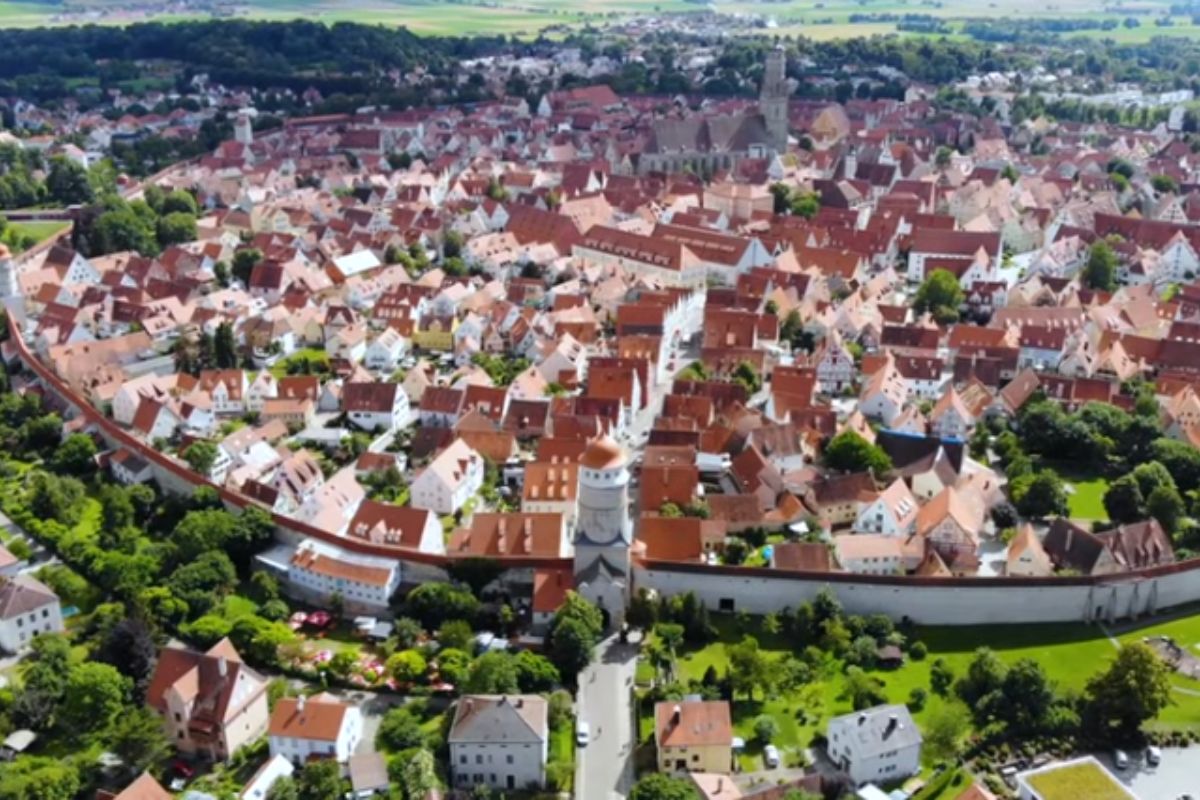


The City of Nördlingen Is Inside the Nördlinger Ries, a 25 km Crater, and Was Built with Suevite Filled with Microdiamonds Invisible to the Naked Eye
The city of Nördlingen in Bavaria looks exactly like what you expect to see in Germany: intact medieval walls, well-preserved stone houses, and a Gothic church dominating the historical center. However, this city is not just “on top of different soil.” It is literally inside an impact, occupying the interior of a crater created by an asteroid.
The most absurd detail does not appear in tourist photos. The city walls shine with millions of microdiamonds embedded in the stones, so small that they do not become jewelry and enrich no one. Still, the estimated total of diamonds in the region reaches 72,000 tons, a number that turns Nördlingen into a medieval city with a geological signature that is nearly impossible to replicate.
The Crater That Became an Address: The Nördlinger Ries
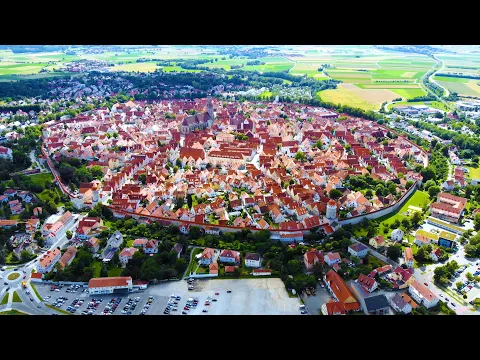
The city of Nördlingen was built within the Nördlinger Ries, an impact crater 25 km in diameter. For centuries, the local population treated that depression as if it were an ancient volcanic crater, an explanation that made sense to those living there who saw the circular shape in the terrain.
-
Explorers find Roman treasure trapped between rocks on the seabed for nearly 1,600 years and reveal a desperate attempt to hide 53 gold coins during the invasions of the Empire.

-
Archaeologists discover Roman vase buried for over 2,000 years with more than 175 intact gold and silver coins, revealing a desperate strategy to protect wealth during the collapse of the Empire.

-
With 241 meters, 48 thousand tons, and a structure designed to accompany aircraft carriers at sea, the Chinese ship that refuels fleets in motion was born to push Beijing away from the coast and has become the hidden gear of its naval projection.

-
“Discreet” city in the interior of SP stands out among the smartest in Brazil thanks to a national ranking.

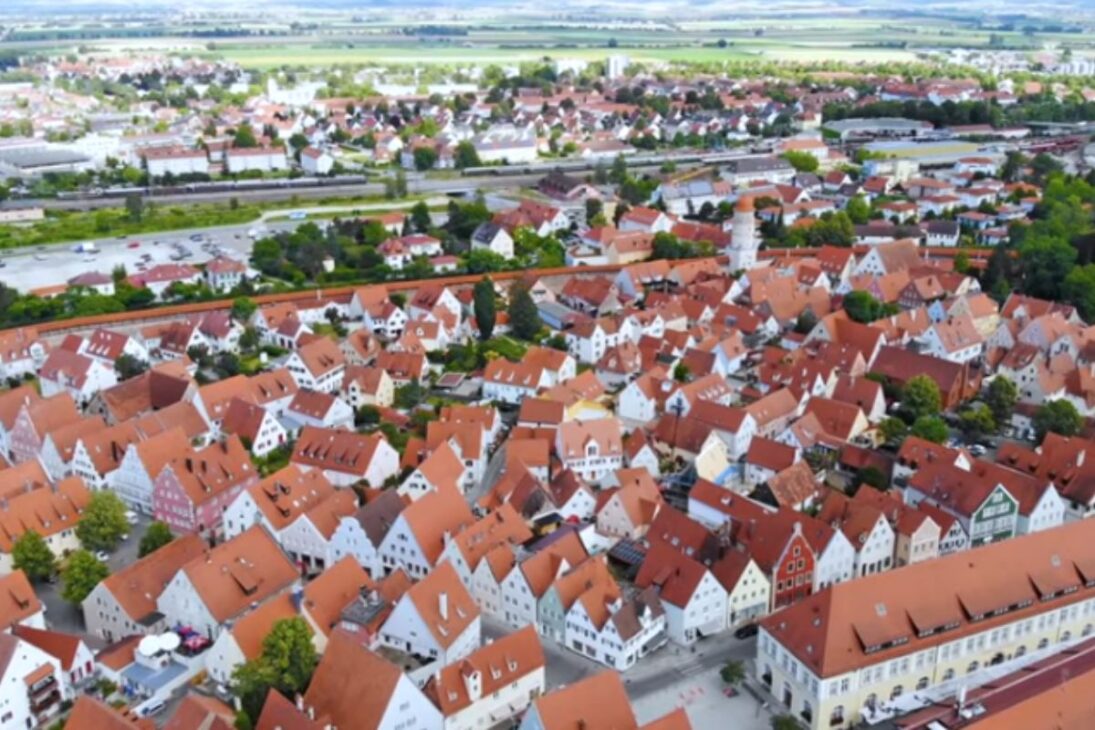
What makes this city different is that the circle is not a quirk of the terrain. It is a direct consequence of an extreme event in geological history, and that changes the reading of everything: from the stones used in construction to the design of the historical center. The city is medieval, but its “ground” is cosmic.
The Impact That Created Bavaria’s Most Unlikely City
The text describes that, around 14.8 million years ago, a rocky asteroid about 1.5 km in diameter struck southern Germany at an estimated speed of 70,000 km/h. The impact excavated a crater 500 meters deep and 25 km wide, which explains the shape that today “molds” the city.
The text also states that the explosion released energy equivalent to 1.8 million Hiroshima bombs and extinguished all forms of life within a 100 km radius.
Even if you don’t see it on the current streets of the city, this past explains why the region is so unique: the event was large enough to transform rock, create rare minerals, and spread material throughout the crater. The city was born on top of a giant scar.
When the City Discovered It Wasn’t a Volcano
The scientific confirmation only emerged in 1960. That was when American geologists Eugene Shoemaker and Edward Chao visited Nördlingen and found coesite, a mineral that, according to the text, only forms under extreme pressure from meteorite impacts. This discovery rewrote the geological history of the region and removed the Nördlinger Ries from the realm of speculation.
From then on, the city ceased to be “just” a well-preserved medieval center and became a reference point for understanding geological impacts. The city remained the same on the outside, but gained a different explanation on the inside.
How Diamonds Ended Up Inside the City Walls
The text explains that at the moment of impact, a pressure of 60 gigapascals transformed underground deposits of graphite into microscopic diamonds. At the same time, melted rocks, glass, and mineral fragments fused and formed a type of rock called suevite, described as spread throughout the entire crater.
This sequence is what makes the city so unlikely: the material that now appears in walls and buildings is not “common stone.” It is the result of a violent mix of minerals and transformations under pressure, with microdiamonds “trapped” within the suevite. The city was built with a rock that was already born with history.
Suevite Became Building Material and No One Knew What Was Inside
In the Middle Ages, the builders of Nördlingen used suevite as building material without knowing what it contained.
The choice did not come off as a “mystical” decision but rather a practical one: it was a rock available in the region, ready to become walls, towers, and fortifications.
Thus, the city was built with stones that hid microdiamonds in every block, invisible to the naked eye and irrelevant for jewelry, but enormous as geological curiosity.
This is the perfect irony: the city coexisted for centuries with diamonds in its walls without being aware of it. Only much later, with the geological explanation of the impact and the understanding of suevite, did the microscopic shine become part of Nördlingen’s identity.
The Church in the Center of the City and the “Invisible Carats”
The St. George’s Church is one of the most striking points of the city, and the text provides a specific detail: the 90-meter tower, called Daniel, dominates the center. Inside the stones used there, the text states that there are about 5,000 carats of embedded diamonds, with crystals of a maximum of 0.3 mm.
These diamonds have no commercial value because they are microscopic, but they reinforce the sense of absurdity: a medieval city with a Gothic church that, by geological chance, houses a “count” of diamonds in its very building material. It is wealth without a market, but with history.
72,000 Tons of Diamonds in the Region and the City That Shines Without Knowing

The number that blows your mind is in the total estimate: 72,000 tons of diamonds in the region, according to geologist Gisela Pösges, deputy director of the RiesKraterMuseum.
It is not something you “collect”, nor is it something you “extract” to become a fortune on the corner. It is a volume distributed on a micro scale, trapped in the rocks that form the material base of the city.
For this reason, the experience in Nördlingen takes on a curious meaning: most tourists photograph walls, houses, and the Daniel tower without realizing that there are microdiamonds there. The city shines, but does not shout.
The Intact Medieval Wall and the Circular Shape of the City
The text describes Nördlingen as one of the few German cities that maintain the medieval wall completely intact. Built in the 14th century with suevite stones, it completely surrounds the historical center, reinforcing the circular geometry that comes from the crater.
The text also provides measurements: there are 2,632 meters of continuous walkway, with 5 gates and 14 towers. It is possible to walk the wall in just over an hour, observing from above how the city “fits” into the circle. The shape of the city is not aesthetic: it is geology turning into urbanism.
Three Wars, Isolation, and the Inadvertent Preservation of the City
The text states that the city withstood two battles during the Thirty Years’ War (1618-1648) and endured the War of the Spanish Succession in the early 18th century. The text also mentions an ironic point: the economic isolation caused by the wars helped preserve the historical center almost untouched.
In other words, what prevented large-scale modernizations ended up protecting the city. The same stagnation that halted urban transformations ensured that medieval constructions, made of suevite filled with microdiamonds, made it to the 21st century standing tall. The city was frozen in time for harsh reasons, but the result is rare.
The Crater Where Astronauts Trained Before Stepping on the Moon
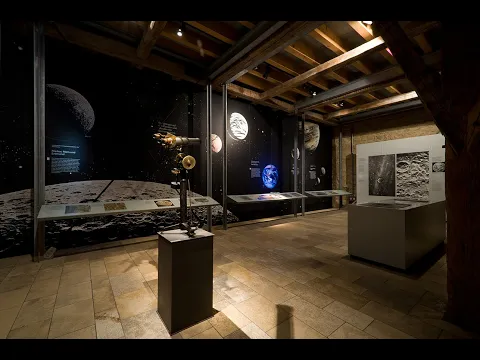
The resemblance between the city‘s crater and lunar craters caught NASA’s attention. In August 1970, astronauts Alan Shepard and Edgar Mitchell of the Apollo 14 mission trained in the area to learn how to identify impact rocks before going to the Moon. Eugene Cernan and Joe Engle, reserves of the same mission, also participated.
As a thank you, the Apollo 16 crew gifted the local museum with a lunar rock sample. According to the text, this fragment is on permanent display at the Ries Crater Museum in Nördlingen, one of the few places outside the United States where you can see a piece of the Moon up close. The medieval city briefly became a space classroom.
What to See in One Day in the City Inside the Meteor Crater
The text describes Nördlingen as having about 20,000 inhabitants and suggests that a visit can fit within a day. Almost everything worthwhile is related to the crater and the fact that the city was built with suevite.
RiesKraterMuseum
Housed in a barn from 1503, the museum features meteorites, fossils, and the mentioned lunar rock sample. The text provides the address: Eugene-Shoemaker-Platz 1. It is the type of place that gives context to look at the city walls through a different filter.
Daniel Tower
The 90-meter tower of St. George’s Church offers a view of the circular city. The text mentions a tradition: a watchman still shouts every half hour between 10 PM and midnight, keeping a centuries-old ritual at the heart of the historical center.
Medieval Wall
The continuous walkway of 2,632 meters, with 5 gates and 14 towers, allows you to see the city from above and understand how the crater shapes the urban design. It is an experience that blends history and geology without needing complex explanations.
Geopark Ries
A network of trails and quarries around the crater, with outdoor suevite exhibits. It is the “outside” of the city, where the impact becomes more didactic in the terrain and in the type of rock that appears.
Movie Set
The text mentions that the final scene of the movie Willy Wonka & the Chocolate Factory (1971) shows Nördlingen from above, precisely because the circular shape of the city caught the production’s attention.
In the end, Nördlingen is the type of city that rewards those who look at the walls, not just the shop windows: geology, impact, and chance hidden within a perfect medieval aesthetic.
Would you go to this city more for its medieval history or for the absurd fact that there is an entire city built inside an asteroid crater?






IREI, VISITAR ESSA MARAVILHOSA CIDADE NÖRDLIGEN DA ALEMANHA, SE O GOVERNO LOCAL OU DO PAÍS, DISPONIBILIZAR-ME UMA VERBA DE VALOR PARA CUSTEAR DESPESAS DE TRANSPORTE (DESLOCAMENTO, DE IDA E VOLTA,INCLUSIVE VIA AVIÃO), ESTADIA EM HOTEL 5 ESTRELAS LOCAL(COMPATÍVEL COM HOTEL DE MESMA CATEGORIA EXISTENTE NA MELHOR CIDADE DA EUROPA), ALIMENTAÇÃO DIÁRIA INTEGRAL Fornecida E INDICADA POR NUTRICIONISTA, COM PRESCRIÇÃO DE PLANO TERAPÊUTICO (CUSTEADA TODA MEDICAÇÃO)PARA TRATAMENTO ASSISTIDO POR MÉDICO CIRURGIAO ONCOLÓGICO, COM ESPECIALIDADE EM Dermatologia ONCOLÓGICA, ALÉM CLARO, DE GARANTIR, Acompanhante FEMININA DE MINHA ESCOLHA, COM AS MESMAS VANTAGENS SUPRAMENCIONADAS EXIGIDAS PARA MIM, ALÉM DE UMA BOLSA DIÁRIA FINANCEIRA NO VALOR DE R$ 2.000,00(DEPOSITADA EM CONTA CORRENTE EXISTENTE NO BRASIL EM MEU NOME, ISENTO DE RECOLHIMENTO DO RESPECTIVOS IMPOSTO DE RENDA, Indicada POR MIM ! EM CONTRAPARTIDA CONTRATUAL ESCREVEREI E PUBLICAREI(SEM ÔNUS PRA MIM)A HISTÓRIA SOBRE A Cidade DE NÖRDLIGEN, QUE TRATA DA COLOSSAL IMPORTÂNCIA TURÍSTICA ABRANGENTE NA FENOMENALITICA Sociológica CULTURAL, INCLUSIVE CONSIDERADA A Característica das PEDRAS RARAS NA GEOPOLÍTICA UNIVERSAL ! TODO EXPOSTO DEVERÁ SER FORMALIZADO EM CONTRATOS COM AS REGRAS FO DIREITOS INTERNACIONAL Aplicado AO CASO, APÓS A MINHA CIÊNCIA E AUTORIZAÇÃO ! ATENÇÃO A AUTORA SRTA CARLA TELES DO TEXTO REF PUBLICAÇÃO SOBRE A CIDADE DE NÖRDLIGEN Construída NUMA CRATERA, DEVERÁ SER CONTEMPLADA COM UM PRÊMIO(PELO INEDITISMO, OUSADIA E ATIPIA)EM DINHEIRO(AVALIADO POR MIM E UMA COMISSÃO DA CIDADE DE NÖRDLIGEN, Composta POR ERUDITOS INTELECTUAIS ALEMÃES) DE COLABORADORA EM Valor E TMB COM OUTORGA DE TÍTULO HONORRIFICENTISSIMO (ASSINADO POR MIM E Pelo GOV ALEMÃO , SE INTERESSAR POSSAM !