





 Português
  Inglês
  Espanhol
 5 min de leitura
  0 comentários


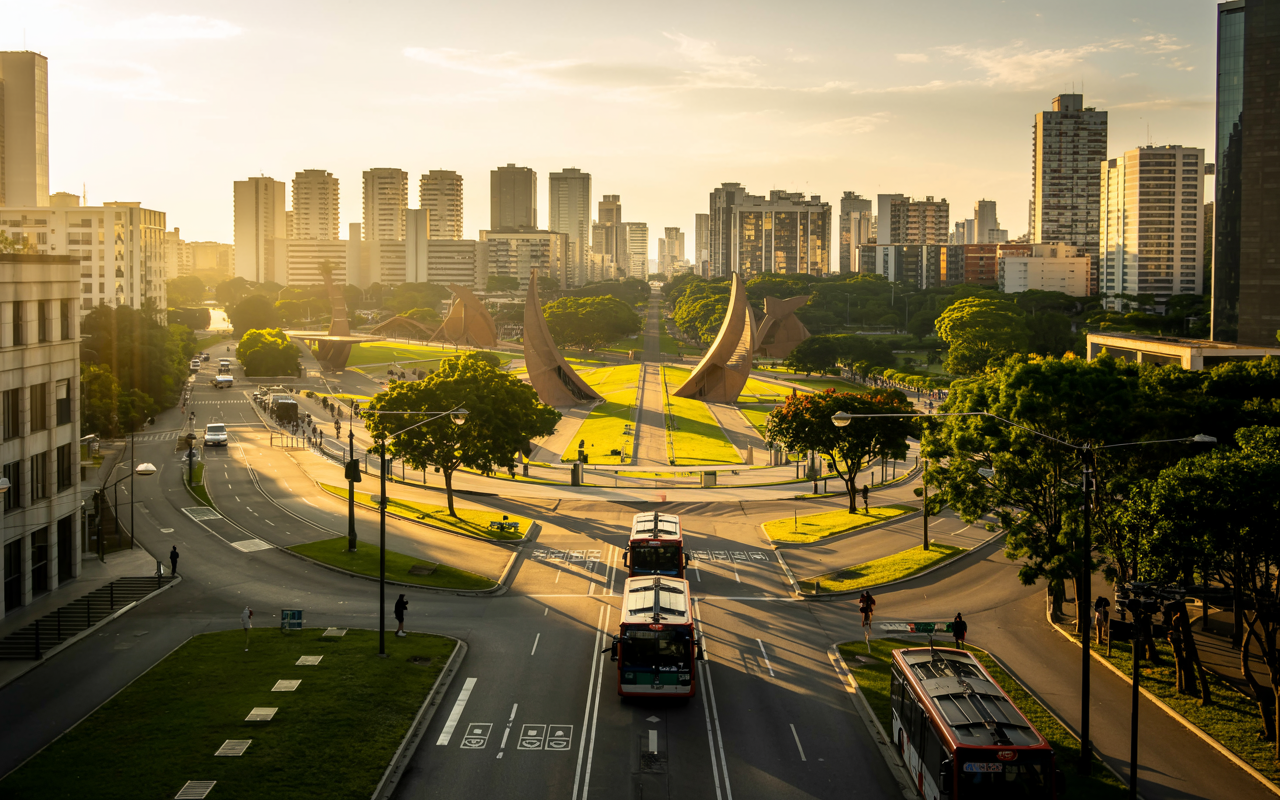
Known for Its Discreet Past, Curitiba Transforms Into a Global Model of Sustainable City, with Clean Transportation, Green Technology and Smart Urban Management That Captivates the World.
Curitiba, capital of Paraná, surprises the planet. Once remembered only for its cold climate, orderly urban layout, and exemplary planning from the 20th century, the Brazilian city is emerging as a global protagonist in a silent revolution: the large-scale adoption of green technologies, sustainable policies, and smart urban models.
Now recognized as one of the most sustainable cities in the world, Curitiba has become an example of how technology can transform urban realities without compromising the environment. With investments in clean transportation, renewable energy, regenerative urbanism, and waste management, it earns awards, attracts international attention, and inspires other capitals to follow the same path.
Curitiba and Pioneering in Urban Sustainability
Long before “sustainability” became a buzzword in international conferences, Curitiba was already taking bold steps. In the 1970s, under the leadership of then-mayor Jaime Lerner, the city created an innovative public transportation system, with exclusive bus corridors, urban planning focused on densification, and large-scale green areas.
-
Renewable energy advances over protected areas in Brazil, and a survey by the Energy Transition Observatory reveals silent impacts that challenge environmental conservation and pressure sensitive traditional territories.

-
Rio Grande do Sul accelerates energy transition: State invests in renewable technologies and consolidates decarbonization strategies and pathways to attract billions in new industrial investments.

-
With 160,000 m² of collectors, an area larger than 20 football fields, Silkeborg, in Denmark, hosts a solar thermal plant that heats 19,500 homes and could become the largest solar heating plant in the world.

-
A study reveals the expansion of renewable energy procurement in Brazil and shows how companies are taking advantage of opportunities to reduce expenses, ensure energy efficiency, and strengthen strategic environmental commitments.


These decisions not only transformed Curitiba into a model of urban organization but also laid the foundations for the city to become, in the following decades, a living laboratory of sustainable technologies. The most recent turn, however, lies in clean technologies and integrated environmental solutions in the daily lives of the population.
The New Era of Curitiba: Smart and Green City
Since 2019, Curitiba has been part of the international network of smart cities of the World Economic Forum. In 2022, it was named the “Smartest City in Brazil” by iCities, thanks to the progress of projects that combine digitalization, clean urban mobility, sustainable energy, and efficient environmental management.
The city’s master plan was restructured to include climate goals and emission reduction objectives. The Curitiba 2035 program establishes commitments such as:
- 50% reduction of CO₂ emissions by 2030
- Increase in clean energy generation in public buildings
- Expansion of green coverage in urban areas
- Digitalization of services focused on energy efficiency
With this, Curitiba has consolidated its position as a real reference of a smart Brazilian city — not just in discourse, but in practice.
Clean Transportation and Electric Mobility Take to the Streets
Curitiba is among the first Brazilian capitals to implement a structured plan for the electrification of public transportation. With support from the Inter-American Development Bank (IDB) and the French Development Agency (AFD), the city acquired its first 100% electric buses in 2023, which now operate on the BRT express corridors.
Additionally:
- The city launched its first electric mobility laboratory, focused on fleet testing with zero emissions.
- Free charging points for electric cars are being installed in public and private locations.
- The Curitiba E+ plan aims to replace the entire bus fleet by 2030 with vehicles powered by clean energy.
Another highlight is the investment in bike lanes and active mobility routes. With over 250 km of cycling infrastructure, Curitiba records significant growth in bicycle usage and micromobility applications.
Keywords: clean transportation Curitiba, electric mobility Brazil
Clean Energy: From Solar Pyramid to School Biogas
The energy transition in Curitiba is visible in every corner of the city. In 2023, the city hall inaugurated one of the most symbolic projects of the capital’s new phase: the Caximba Solar Pyramid. The site, once a landfill, is now covered with photovoltaic panels that generate enough energy to supply more than 3,000 homes.
Other initiatives stand out:
- The Solar School project, which transforms school rooftops into clean energy plants.
- Installation of solar panels in health units, community centers, and public libraries.
- Generation of biogas from the composting of organic waste, used to fuel light vehicles in the public fleet.
These measures place Curitiba among the national leaders in urban renewable energy use.
Keywords: Brazilian city model in clean energy, renewable energy Curitiba
Waste Management and Circular Economy
The sustainable urban management of Curitiba also extends to waste. The city was a pioneer in creating the “Waste That Is Not Waste” program, which is still a national reference in selective collection.
In recent years, the municipality has taken a step further by adopting the concept of circular economy in public policies:
- Encouragement of domestic and community composting
- Workshops for material reuse in schools
- Creation of the “EcoCitizen” app, which connects independent waste pickers to companies generating recyclable waste
In partnership with UN-Habitat, Curitiba has also developed a plan to transform urban waste into negotiable carbon assets, creating new sources of income and reducing emissions.
Keywords: sustainable urban management, circular economy Brazil
Green Technology Applied to Urbanism
The urbanization of Curitiba includes technological solutions to reduce environmental impact and optimize natural resources. One example is the Pine Valley program, which connects innovation, green entrepreneurship, and startups focused on sustainability.
The Pine Valley ecosystem brings together:
- Startups in renewable energy and green architecture
- Technological parks focused on waste, agroecology, and water efficiency
- Events like the Smart City Expo Curitiba, the largest fair for smart cities in Latin America
Among the solutions already implemented based on this innovation hub, the following stand out:
- Real-time climate monitoring sensors
- Rainwater harvesting and reuse in public areas
- Rain gardens and bioarchitecture in new developments
Keywords: urban innovation in Brazil, green technology in Brazil
International Recognition
Curitiba has been awarded and recognized globally for its environmental and technological leadership. Here are some of the main awards and rankings:
- “Smart City LatAm 2023” award for excellence in sustainable urban planning
- Nominated by UN-Habitat as an example of a resilient and carbon-neutral city
- Siemens ranking placed Curitiba among the 20 most sustainable cities in the Americas
Besides, the city maintains partnerships with municipalities in Europe and Asia for the exchange of experiences in clean technology and sustainable urbanism.
Can Curitiba Be a Model for Other Brazilian Cities?
Yes — and with regional adaptations, the curitiban model is replicable in other capitals and medium-sized municipalities. The key lies in the articulation between:
- Integrated public policies
- Population participation
- Incentives for local innovation
- Support from international financial institutions
Curitiba has proven that it is possible to break away from the commonplace, overcome resource scarcity, and reinvent itself as a city of the future in Brazil. Instead of isolated mega-works, the focus is on intelligentsolutions that are smart, scalable, and socially inclusive.
Brazil often appears in the international news for its urban problems, but Curitiba shows that there is another possible narrative. With planning, technology, and strategic vision, a city can transform into an example of ecological innovation and smart development — even while often being forgotten in major national debates.
Curitiba, with its bike lanes, electric buses, solar panels, and efficient environmental policies, has become more than just the capital of Paraná: it is, today, the capital of green technology in Brazil — and the world is starting to notice.







Seja o primeiro a reagir!