





 Portuguese
  English
  Spanish
  3 min of reading
  0 comments


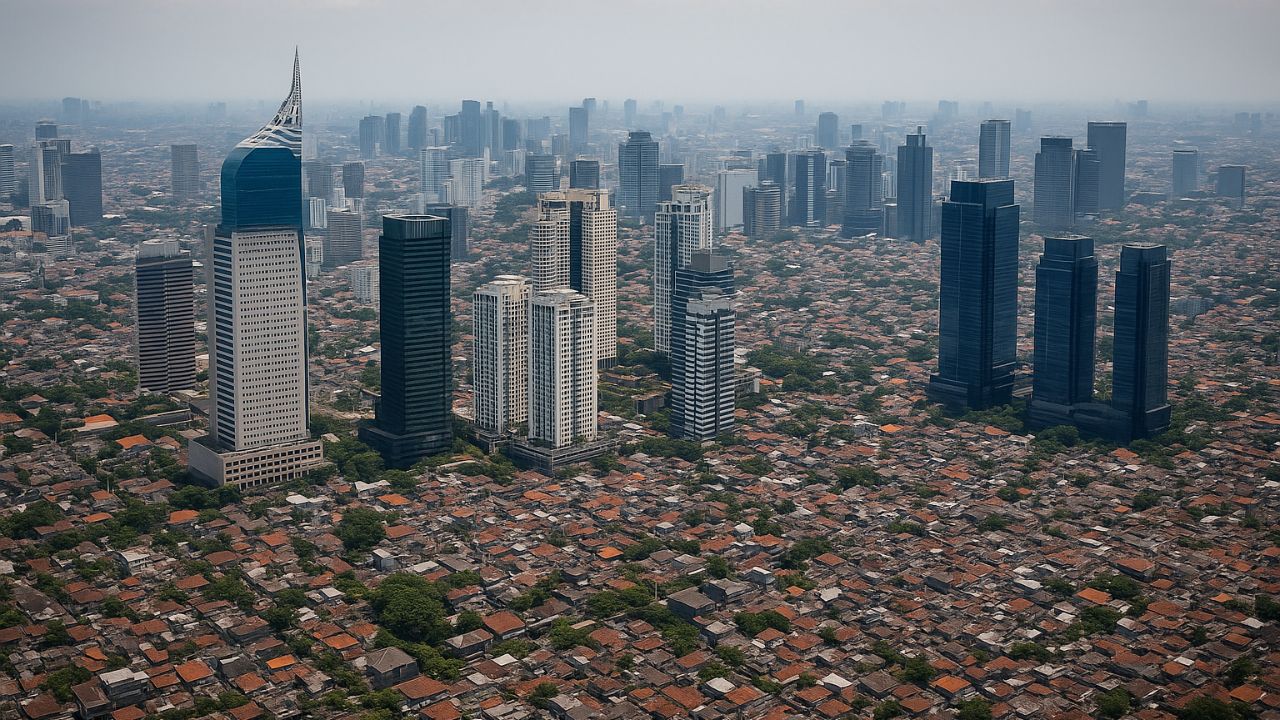
Jakarta Surpasses Tokyo and Leads Global Ranking of Most Populous Megacities, Says Updated UN Report.
The capital of the Indonesia has just become the most populous city on the planet, according to a new report released by the UN last week.
The study reveals what changed in the global urban landscape: Jakarta has reached nearly 42 million inhabitants, surpassing many traditional megacities.
The update was made by the Department of Economic and Social Affairs of the United Nations, which shows who leads the global urban ranking.
-
If the USA were to go to war with Brazil, Washington’s greatest fear would not be the attack itself, but facing a vast territory, prolonged resistance, and a costly, chaotic, and unpredictable occupation.

-
In 2013, Nicaragua sold the concession for a canal to rival Panama to a Chinese billionaire who lost 85% of his fortune, disappeared, and was declared bankrupt. Now the project resurfaces with a new route, a new Chinese partner, and a cost of $64.5 billion.
-
The USA announces a mysterious billion-dollar vault project to store critical minerals, but what intrigues experts is not just the plan itself, but why Latin America, including Brazil, has entered the center of this global dispute against China.

-
Trump Announces Bombing of U.S. Military Targets on Iranian Island Responsible for About 90% of Iran’s Oil Exports, Warns of Further Attacks if Navigation in Strategic Strait of Hormuz Is Threatened


The information was published following an analysis of urban centers worldwide, when the UN confirmed the new demographic picture.
The survey indicates that the advancement occurred where urbanization is growing the fastest: in Asia. The change happens as a result of decades of accelerated expansion in Asian metropolises.
Finally, the phenomenon is confirmed because the growth rate in cities like Tokyo has consistently slowed down over the past 25 years.
As a result, the configuration of megacities — a term used to define urban areas with more than 10 million inhabitants — is undergoing a significant transformation.
Thus, the world witnesses a new urban order, marked by the growing population concentration in Asia.
Dhaka and Tokyo Complete the Top of the Global Megacities Ranking After Jakarta
Right after Jakarta, Dhaka, the capital of Bangladesh, follows with nearly 40 million inhabitants. Next comes Tokyo, which maintains a strong global presence but now ranks third, with around 33 million people.
The Japanese capital was the largest city on the planet in the year 2000. However, the report indicates that the slower population growth over the past decades has resulted in Tokyo being surpassed.
While Asian countries like Indonesia and Bangladesh have maintained rapid urbanization rates, Japan is experiencing a demographic aging process and a reduction in its population.
Megacities Quadruple Since 1975 and Concentrate in Asia
The UN document also highlights that the number of megacities has jumped from 8 to 33 since 1975, representing a fourfold increase.
More than half of them are located in Asia — 19 in total — reinforcing the shift in the axis of global urbanization.
Among the ten largest cities, only Cairo, in Egypt, is not on the Asian continent, highlighting the region’s strength in the demographic landscape.
Urban Expansion Expected to Create Four New Megacities by 2050
The experts involved in the report project that, by 2050, at least four new cities are expected to surpass the 10 million inhabitant mark. They are:
Addis Ababa (Ethiopia);
Dar es Salaam (Tanzania);
Kuala Lumpur (Malaysia);
Hajipur (India).
On the other hand, some large cities are beginning to experience population declines, such as Mexico City and Chengdu, in China, indicating that the phenomenon does not advance uniformly.
Urbanization Accelerates: Nearly Half of the Global Population Already Lives in Cities
The report also reveals that 45% of the global population, estimated at 8.2 billion people, already lives in urban areas. In 1950, this number was less than 20%.
Furthermore, experts predict that two-thirds of global population growth by 2050 will occur precisely in cities.
For the UN, any location with at least 50,000 inhabitants can already be considered a city.
Small and Medium Cities Grow Faster Than Megacities
Although global attention is focused on enormous metropolises, the report shows that smaller cities have been advancing at an even faster pace.
This movement has already caused a majority of the global urban population to be concentrated in these locations.
Today, there are about 12,000 cities in the world — a number that has more than doubled since 1975. The expectation is that this total will exceed 15,000 by 2050.
Of this set, 96% of the cities have fewer than one million inhabitants.










-

Uma pessoa reagiu a isso.