





 Portuguese
  English
  Spanish
  3 min of reading
  3 comments


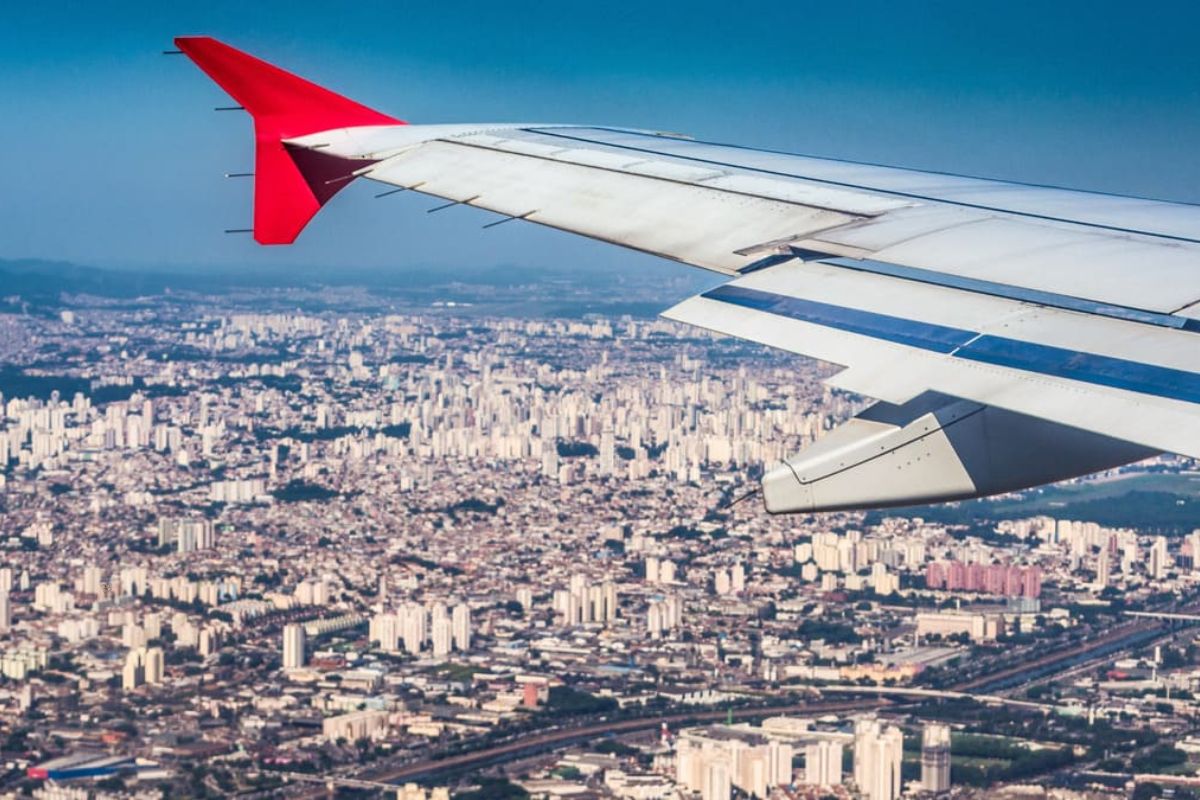


Guarulhos, known as the city that connects Brazil to the world, goes far beyond the international airport and holds history, culture, and a growing economy.
Many Brazilians know Guarulhos only because of the São Paulo/Guarulhos International Airport, one of the busiest in Latin America. But the city that connects Brazil to the world has much more to offer, combining economic development, cultural diversity, and natural attractions.
With over 1.3 million residents, Guarulhos is the second largest city in São Paulo and features a dynamic economic landscape, prominent urban parks, and a culture that values its historical roots. Therefore, it is increasingly recognized as a strategic hub that goes beyond aviation.
How Did Guarulhos Become the City That Connects Brazil to the World?
The history of Guarulhos dates back to the 16th century when it was founded by bandeirantes as a passing point. However, its major turning point occurred in 1985 with the construction of the International Airport, which transformed the city into a global logistics hub.
-
Larger than entire cities in Brazil: BYD is building a 4.6 km² complex in Bahia with a capacity for 600,000 vehicles per year, but the discovery of 163 workers in conditions analogous to slavery has shaken the entire project.

-
With an investment of R$ 612 million, a capacity to process 1.2 million liters of milk per day, Piracanjuba inaugurates a mega cheese factory that increases national production, reduces dependence on imports, and repositions Brazil on the global dairy map.

-
Brazilian city gains industrial hub for 85 companies that is equivalent to 55 football fields.

-
Peugeot and Citroën factory in Argentina cuts production by half and opens a layoff program for more than 2,000 employees after Brazil drastically reduced purchases of Argentine vehicles.


Today, the airport ensures that the city that connects Brazil to the world also serves as an entry point for tourists, investors, and international companies, strengthening its strategic role in the national economy.
What Are the Attractions of the City?
Despite its fame linked to the airport, the city that connects Brazil to the world has leisure and tourism options. The Cantareira State Park offers trails amid the Atlantic Forest, while the Bosque Maia, the largest urban park in the city, is a meeting point for families and sports enthusiasts.
The Historical Museum of Guarulhos is also noteworthy, preserving artifacts that tell the region’s evolution. Additionally, popular festivals and cultural events reinforce the local identity, marked by diversity.
How Is the Economy of Guarulhos?
The city that connects Brazil to the world does not rely solely on the airport. Guarulhos has a diversified economy, with industries in the automotive, pharmaceutical, technology, and services sectors.
Trade is also strong, highlighted by the Guarulhos International Shopping Mall, one of the largest in the state. This combination of logistics, industry, and commerce generates jobs and attracts investments, solidifying the municipality as one of the most important in Brazil.
What Challenges Does the City Face?
Like other large cities, Guarulhos faces social and urban pressures. Rapid growth brings challenges in areas such as health, transportation, and education. Traffic is one of the biggest problems, exacerbated by the constant flow to the airport and to São Paulo.
Environmental issues are also a concern, especially regarding waste management and the preservation of green areas. Nevertheless, the municipality invests in sustainable solutions and seeks to balance urban expansion with quality of life.
The Role of Education and Culture in Guarulhos
The city that connects Brazil to the world also strengthens itself through education and culture. Projects in cultural centers, theaters, and libraries expand access to the arts. Local universities and schools train professionals in different fields, ensuring a qualified workforce for the market.
This investment reflects Guarulhos’ commitment to grow inclusively, valuing both the economy and the cultural identity of its population.
More than just a transit point, Guarulhos establishes itself as the city that connects Brazil to the world, revealing its own history, nature, economy, and culture. It is a space that unites tradition and modernity, with challenges and opportunities shaping its future.
And you, did you already know Guarulhos beyond the airport? Do you think the city that connects Brazil to the world deserves more recognition for its strategic role? Share your opinion in the comments!









Sim, com certeza. Merece seu lugar de destaque no cenário nacional
Terra dos Mamonas Assassinas
o povo de Guarulhos é acolhedor assim como um bom brasileiro que é viva guarulhos viva brasil🇧🇷❤️🇧🇷🇧🇷❤️❤️🇧🇷❤️🙏