





 Português
  Inglês
  Espanhol
  3 min de leitura
  0 comentários


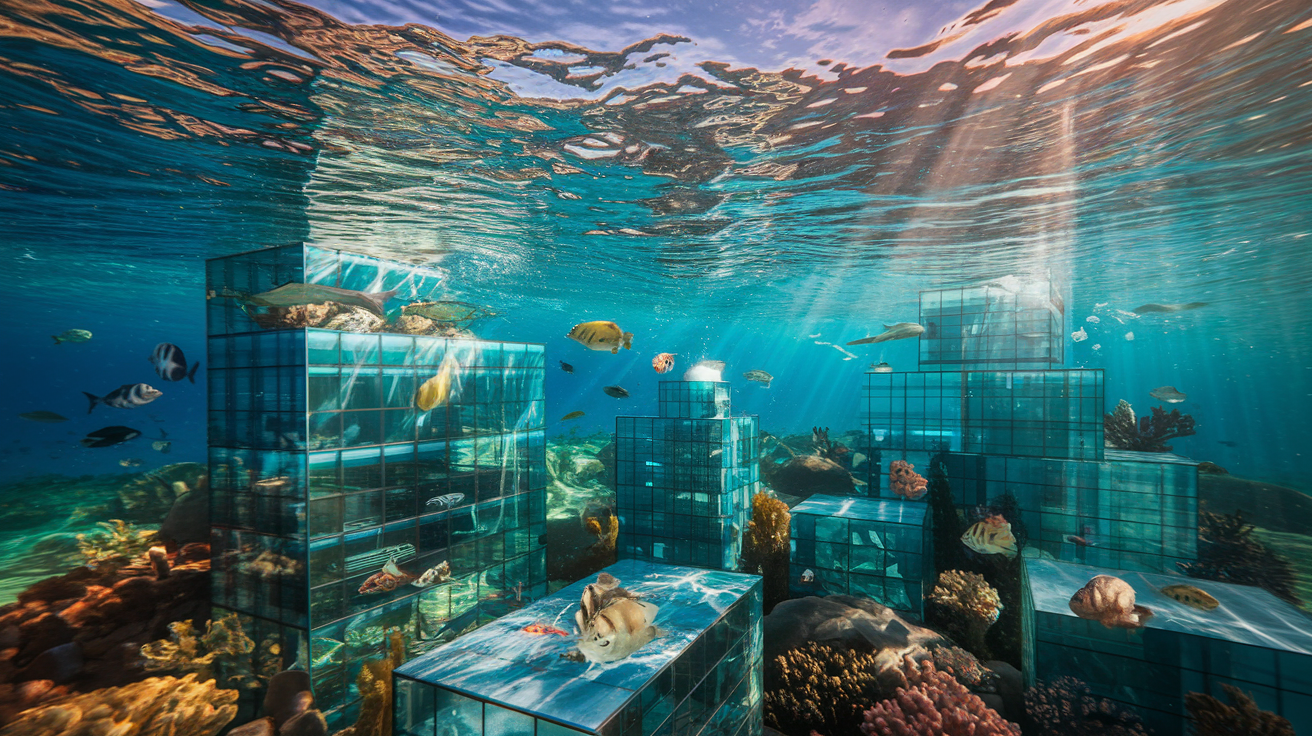
Showcasing Technology, United Kingdom Is Developing Its First Subaquatic City: Submerged City, Called Project Deep, Could Be Finished in 2027.
Inspired by science fiction scenarios, the Deep Project – submerged city aims to establish a permanent human presence beneath the oceans by 2027. Located near Chepstow, on the border of Wales, the future subaquatic city is transforming an old flooded quarry into a cutting-edge facility that will include modular underwater habitats called “Sentinels.” These underwater city structures will allow scientists to live and work at depths of up to 200 meters for extended periods, facilitating advanced research on marine ecosystems. Funded by an anonymous investor willing to invest hundreds of millions of pounds, the Deep Project represents a significant advance in underwater exploration.
The initiative highlights the growing importance of understanding and preserving the oceans, which play a crucial role in climate regulation and sustaining life on Earth. Combining cutting-edge technology and innovative design, the project aims to push the boundaries of human habitation and scientific research in the marine environment.
Submerged City Is Not As Innovative As It Seems
Funded by an anonymous investor, the subaquatic city aims to establish a permanent human presence beneath the ocean by 2027. This underwater city is bold and combines state-of-the-art technology and scientific research to explore the extensively unknown ocean depths.
-
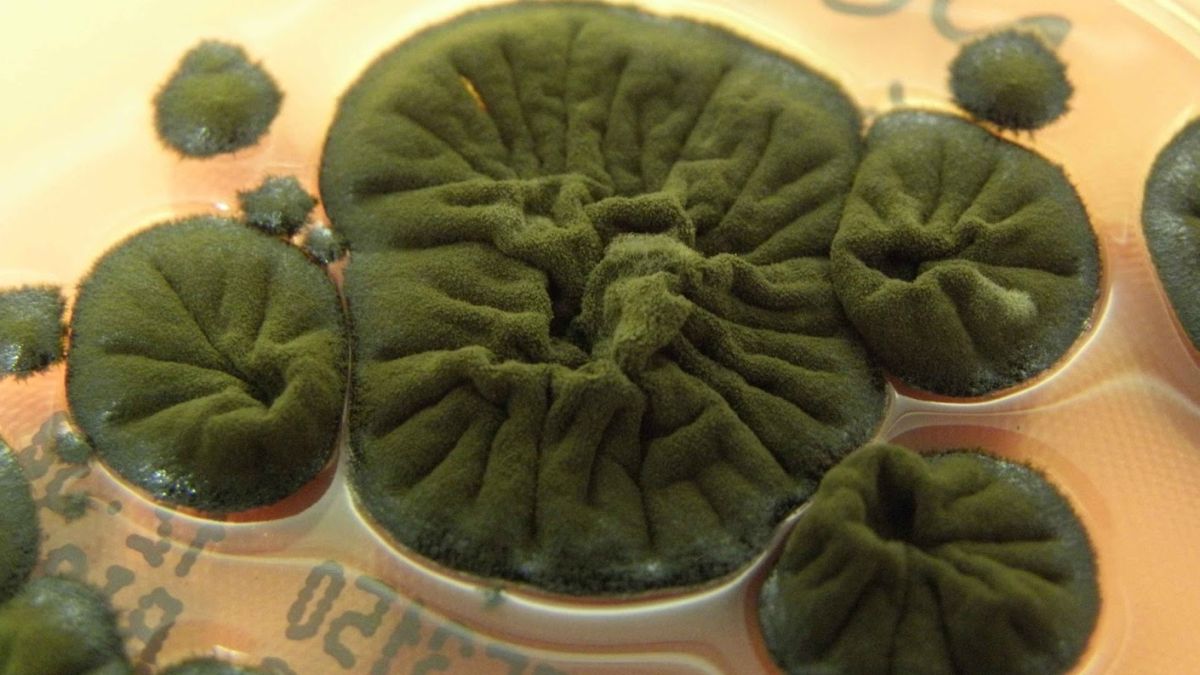
Found in one of the most radioactive places on Earth, this Chernobyl fungus may be doing something with radiation that no one has been able to explain to this day.
-
A bright yellow mushroom imported from Asia escaped from a cultivation farm in the United States in 2010 and is now aggressively spreading across 25 states, destroying entire communities of native fungi in American forests.

-
Buried under China, a colossal machine weighing 20,000 tons began operating as the largest neutrino detector on the planet and, in just 59 days, surpassed results that science took half a century to achieve.

-
Iran enters the center of a climate alert after the war emitted 5.6 million tons of CO2 in two weeks, surpassing the annual pollution of entire countries.


The idea of a submerged city is not new and dates back to the 1960s, with Jacques-Yves Cousteau’s tests. Although these projects have never been set aside, they inspire initiatives like the Aquarius Reef, still used by the National Aeronautics and Space Administration (NASA) to train its astronauts.
The subaquatic city takes this concept with even greater ambitions. Unlike the fixed habitats of the past, its modules, called Sentinels, are modular and deployable at various depths, offering unprecedented flexibility for research.
The underwater city modules are designed to withstand extreme pressures of up to 200 meters deep. Developed with special steel, they feature portholes that offer stunning views of marine life, as well as comfortable living spaces.
Every detail of the submerged city has been designed to ensure the comfort and well-being of the occupants, from spacious bedrooms to modern bathrooms. A bioreactor is also under construction to manage waste, allowing extended autonomy underwater.
Deep Project Also Involves 18-Month Training for Future Residents
Living in a subaquatic city requires rigorous physical and psychological preparation. The Deep uses simulators to assess future residents’ ability to cope with isolation and proximity for long periods.
Training to reside in the submerged city can last up to 18 months for newcomers. Special menus, rich in bold flavors, are also being developed to compensate for the loss of taste sensitivity due to pressure.
The Deep is not limited to scientific research and technology development. In the long term, the underwater city could host tourists or even serve as a base for permanent human colonies. This project opens unprecedented prospects for the exploration and understanding of the world that exists beneath the oceans.
With strong partnerships, such as the safety agency DNV, the subaquatic city is a project that ensures every aspect is tested and certified. The focus is to make the ocean a livable and accessible place while expanding the boundaries of science.
Understand How the Submerged City Protects Humans from Underwater Pressure
First of all, it’s important to know that underwater pressure is the force exerted by water on any submerged object or living being. It increases with depth; at 10 meters, for example, it is already double the atmospheric pressure at the surface.
This pressure affects the human body in various ways, as it compresses air-filled cavities, such as the lungs and sinuses, which can cause pain or injury if descent is too rapid. Thus, divers must gradually adapt.
Subaquatic habitats, such as the underwater city, are designed to neutralize these effects. They maintain a stable internal pressure, allowing occupants to live and work comfortably, even at 200 meters deep.







Seja o primeiro a reagir!