





 Portuguese
  English
  Spanish
  4 min of reading
  0 comments


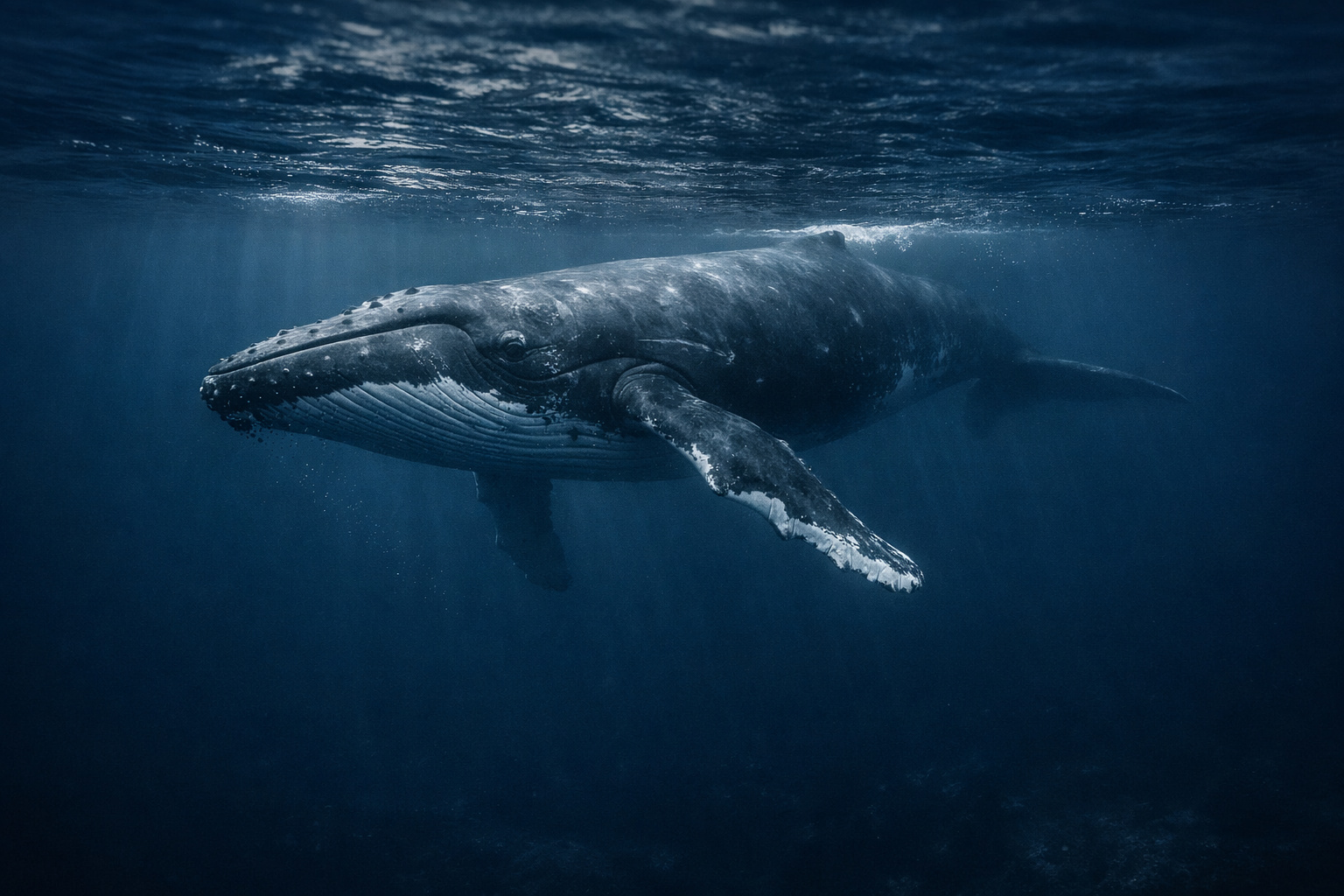
A Forgotten Recording For Decades Reveals What The Oceans Sounded Like Before The Industrial Noise Era And Why That Ancient Sound Could Change Marine Science
For decades, whale songs have sparked fascination, scientific curiosity, and even unexpected applications. They have been studied for environmental conservation purposes, used in research on animal communication, explored as a tool for relaxation and sleep, and even sent into space as one of the auditory representations of life on Earth. However, no one imagined that one of the most important recordings of this phenomenon had been kept in silence since 1949.
The discovery occurred when archivists at the Woods Hole Oceanographic Institution (WHOI) were analyzing old audio discs known as audograph discs. Initially, the material seemed just another technical record of post-war acoustic experiments. However, upon playing the sound, researchers realized they were facing something extraordinary: the song of a whale recorded over 75 years ago, possibly the oldest ever documented in the world.
The information was released by international scientific publications and channels linked to the institution itself, based on technical analyses carried out from the historical collection of WHOI, rekindling the debate about how the ocean sounded before the intensification of human activities.
-
Friends have been building a small “town” for 30 years to grow old together, with compact houses, a common area, nature surrounding it, and a collective life project designed for friendship, coexistence, and simplicity.

-
This small town in Germany created its own currency 24 years ago, today it circulates millions per year, is accepted in over 300 stores, and the German government allowed all of this to happen under one condition.

-
Curitiba is shrinking and is expected to lose 97,000 residents by 2050, while inland cities in Paraná such as Sarandi, Araucária, and Toledo are experiencing accelerated growth that is changing the entire state’s map.

-
Tourists were poisoned on Everest in a million-dollar fraud scheme involving helicopters that diverted over $19 million and shocked international authorities.


How a Military Recording from 1949 Became the Oldest Whale Song Ever Identified
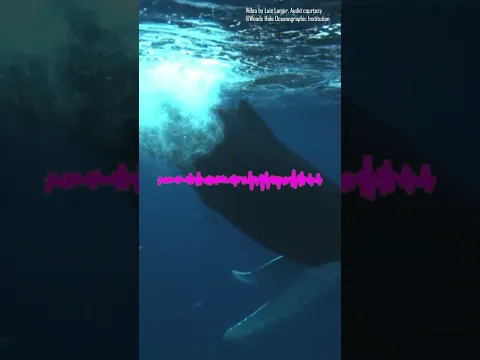

To understand the importance of this discovery, we need to go back in time. The disc was recorded by researchers aboard the R/V Atlantis, who at the time conducted acoustic experiments in partnership with the Office of Naval Research of the United States. These tests included measurements of underwater explosive volumes and initial evaluations of sonar systems, technologies considered strategic in the post-World War II period.
At that moment, the scientists did not intend to record sounds from marine animals. Still, the equipment captured something unexpected. Decades later, upon revisiting the material, WHOI archivists could not immediately identify the sound. It was only after collaborating with Ocean Alliance that the mystery began to be unraveled.
The recording was compared with a database that gathers more than 2,400 audio records of whales and other oceanic noises, collected between the 1950s and 1990s. From this detailed analysis, researchers confirmed that the sound recorded on March 7, 1949, near the Bermuda Islands, belongs to the song of a humpback whale.
According to Laela Sayigh, a marine bioacoustician and senior researcher at WHOI, data from this period is practically non-existent. In an official statement, she explained that the current ocean is much noisier, with a significant increase in both the number and diversity of sound sources. Therefore, this ancient recording serves as a historical baseline, allowing for comparisons of how whale sounds have changed over time.
Why This Recording Survived and What It Reveals About The Future of Ocean Research
The reason this recording has stood the test of time is directly linked to the technology used. The sound was recorded with a Gray Audograph, a device that records audio by physically etching the sound onto plastic discs, rather than using magnetic tape. This method, though rudimentary by today’s standards, turned out to be crucial for preserving the material, since many tape recordings have degraded over the decades.
Moreover, the device was likely part of the so-called “WHOI suitcase”, one of the first portable underwater acoustic recording systems ever developed. Interestingly, since the original researchers did not fully understand what they were hearing, the disc was not correctly cataloged and remained stored for nearly 80 years, going unnoticed.
For Ashley Jester, director of Research Data Services and Library at WHOI, the survival of these discs is the result of both the material and careful preservation. According to her, the collection reflects a continuous chain of scientific curiosity: first from the engineers who recorded inexplicable sounds and now from the archivists determined to understand their significance.
Today, whale songs are an essential tool to understand how these animals communicate over long distances. Studies show, for example, that sperm whales use sounds similar to vowels, forming something comparable to a phonetic alphabet, while blue whales alter the frequency of their songs to avoid detection of their calves by orcas.
According to Peter Tyack, a marine bioacoustician and emeritus researcher at WHOI, underwater recordings are crucial to protect vulnerable populations. They enable the detection of whales even when they cannot be seen and, at the same time, monitor how ship noises, industrial activities, and maritime traffic alter the soundscape of the oceans, affecting navigation, communication, and the survival of these animals.
Recently, WHOI received funding to digitize its entire collection of audograph discs. Once the process is completed, the material will be accessible to both researchers and the general public, expanding the scientific and educational impact of this historical collection.
According to Jester, preserving data at the moment it is created is an investment in the future of science. These records, even when they seem incomprehensible at first glance, can become key pieces decades later.
Source: iflscience









-

Uma pessoa reagiu a isso.