





 Portuguese
  English
  Spanish
  4 min of reading
  3 comments


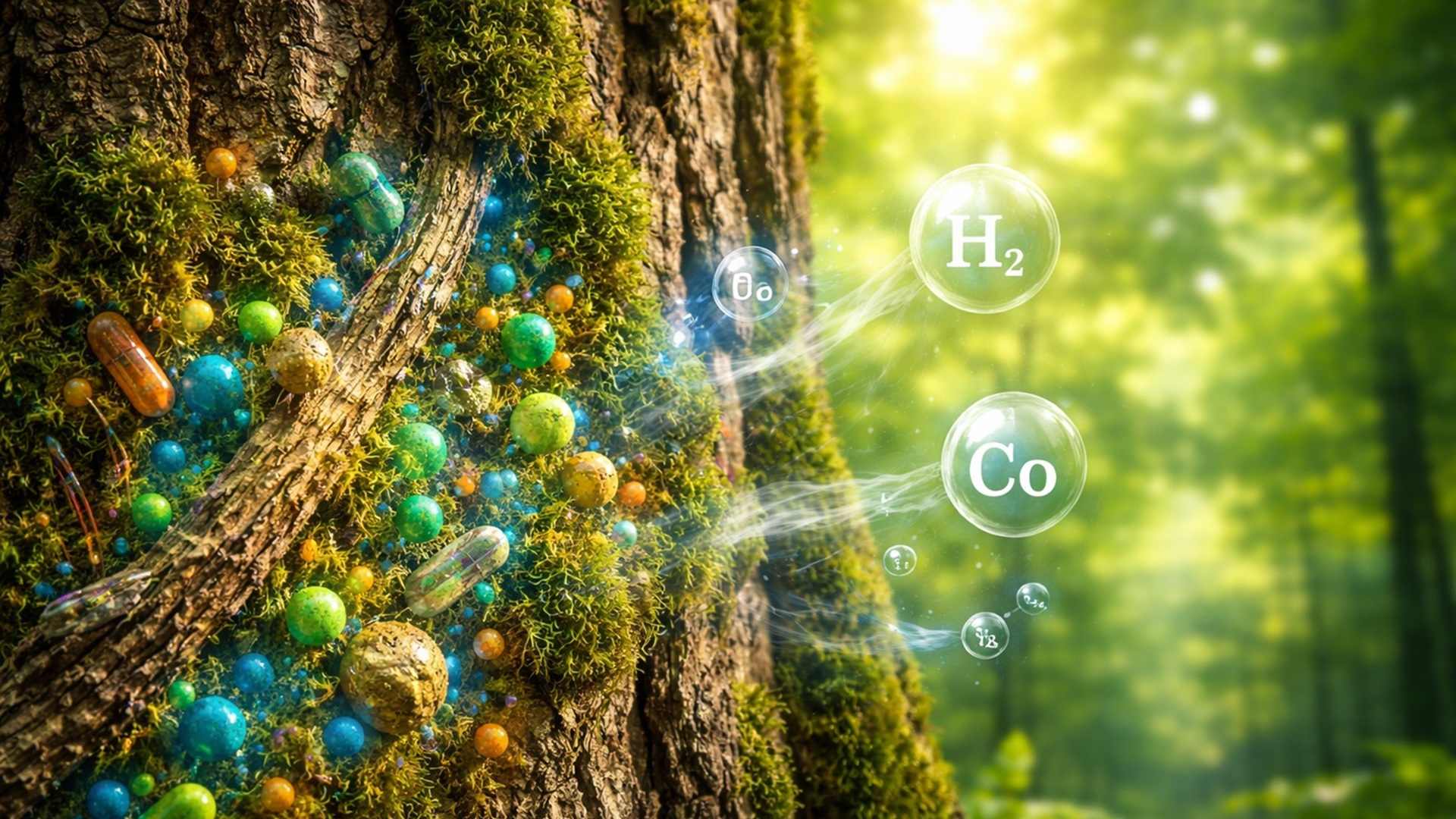


Study Reveals That Microbes in Tree Bark Remove Between 25 and 50 Million Tons of Methane Per Year in 41 Million km² of Forest Surface, Expanding the Climate Role of Forests Beyond CO₂ Sequestration and Introducing a New Invisible Ecosystem Service
A study revealed that microbes in tree bark consume up to 50 million tons of methane per year, along with hydrogen and carbon monoxide, enhancing the climate role of forests in 41 million km² of land surface.
For decades, it was thought that the main contribution of trees to the climate was carbon dioxide capture. The research published in the journal Science demonstrates that the bark of trees harbors microbial communities capable of consuming methane, hydrogen, and carbon monoxide.
Methane has a global warming potential about 28 times greater than that of CO₂ over a 100-year horizon. Hydrogen and carbon monoxide indirectly influence the climate by prolonging the atmospheric residence time of methane.
-
Motorola launched the Signature with a gold seal from DxOMark, tying with the iPhone 17 Pro in camera performance, Snapdragon 8 Gen 5 that surpassed 3 million in benchmarks, and a zoom that impresses even at night.

-
Satellites reveal beneath the Sahara a giant river buried for thousands of kilometers: study shows that the largest hot desert on the planet was once traversed by a river system comparable to the largest on Earth.

-
Scientists have captured something never seen in space: newly born stars are creating gigantic rings of light a thousand times larger than the distance between the Earth and the Sun, and this changes everything we knew about stellar birth.

-
Geologists find traces of a continent that disappeared 155 million years ago after separating from Australia and reveal that it did not sink, but broke into fragments scattered across Southeast Asia.

It is estimated that there are approximately 41 million square kilometers of tree bark on the planet. In each square meter, around 6 trillion microorganisms live, configuring a global biological infrastructure that has gone unnoticed for decades.
Tree Bark Houses a Microbiome Capable of Consuming Methane, Hydrogen, and Carbon Monoxide
The starting point was a mystery related to methane emissions in flooded areas of the Amazon. Satellite measurements did not match the data collected on the ground, indicating that about half of the gas was missing.
In 2017, it was found that some of the methane was not escaping directly from the soil, but was moving through the tree trunks. Initially, it was believed that the trunks functioned as passive conduits, similar to chimneys.
In 2021, a team studying the species Melaleuca quinquenervia in Australia observed that the amount of methane escaping through the bark was about 35% lower than the amount entering from the ground.
The identified explanation was biological. Microbes present in tree bark oxidized methane for energy before it reached the atmosphere. The gas was consumed along the way, reducing its release.
Planetary Scale Indicates Removal of Between 25 and 50 Million Tons of Methane Per Year
Subsequent studies included genomic analysis of thousands of microbial species present in eight types of trees. The results showed that hydrogen-consuming microbes were even more abundant than methane consumers.
Carbon monoxide-oxidizing microbes were also frequently identified. Experiments with living trees demonstrated that these microorganisms capture gases directly from the air, even at minimal concentrations ranging from 2 parts per million to 40 parts per billion.
By extrapolating the data to a global scale, it was estimated that the microbes present in the Earth’s crust remove between 25 and 50 million tons of methane per year. This phenomenon does not eliminate the climate crisis but represents a measurable portion of the atmospheric balance.
The hidden microbiome in tree bark has altered the understanding of the climate role of forests. What was once seen as a function limited to carbon sequestration now includes the microbial biogeochemical regulation of the atmosphere.
New Invisible Ecosystem Service Expands the Concept of Climate Regulation
The discovery expands the concept of ecosystem services. In addition to water regulation and CO₂ capture, forests play a role associated with microbial activity in tree bark.
The reduction of methane produces almost immediate effects on global temperature, as it is a short-lived gas compared to CO₂. Natural processes that decrease its concentration can slow down warming in the coming decades.
The interaction between trees and microorganisms demonstrates that forests do not act as passive sinks. They operate as dynamic systems where plants and microbes cooperate in atmospheric regulation.
In the context of increasing agricultural emissions, especially from livestock and rice fields, understanding these mechanisms can help balance methane levels in areas where the gas is particularly abundant.
Forest conservation now includes invisible communities living in tree bark. The microbial composition may change with rising temperatures or drought, affecting the effectiveness of these biological filters.
Reforestation with Microbiological Criteria Integrates Practical Application
Among the eight species analyzed, differences were observed in the microbial composition of tree bark and in the ability to consume gases. This data opens the possibility of incorporating microbiological criteria into restoration programs.
The selection of species could consider not only fast growth or carbon capture capability but also the associated microbiomes and the gases mitigated by these communities.
In Europe, where the European Union Forest Strategy promotes the restoration of degraded ecosystems, this knowledge can be integrated into adaptive management plans. In tropical regions, species choice may influence emissions associated with wetlands.
The application does not involve science fiction, but refinement of planting decisions based on more precise biological data. Recognizing this invisible ecosystem service reconfigures the understanding of how forests function climatically.
Tree bark, once seen as a simple outer covering, reveals itself as an active space of biochemical processes on a global scale. This phenomenon represents a new layer of complexity in the relationship between vegetation and atmosphere.
This body of evidence consolidates the idea that approximately 41 million km² of tree surface functions as a microbial interface with the atmosphere. It is a vast, distributed, and biologically active system.
The study reinforces that microbes hidden in tree bark play a measurable role in the removal of methane, hydrogen, and carbon monoxide, redefining the contribution of forests to global climate balance.








Además del hidrógeno y el Monóxido de Carbono, los árboles suman ya al metano, contribuyendo de esta manera en la mejora de la calidad de vida, sin embargo en mi país, alegremente se tala árboles en la Amazonía para dar lugar a otro tipo de actividad, generalmente la minería artesanal y explotación de hidrocarburos. Saludamos haya sido publicado este nuevo aporte de los árboles a la sostenibilidad del medio ambiente y calidad de recursos naturales.
Acá en Venezuela la devastación en el arco minero es asombroso debido a la explotación de minerales sin control alguno
Então plantemos mais árvores para salvarmos o planeta …e o ecossistema.