





 Portuguese
  English
  Spanish
  4 min of reading
  0 comments


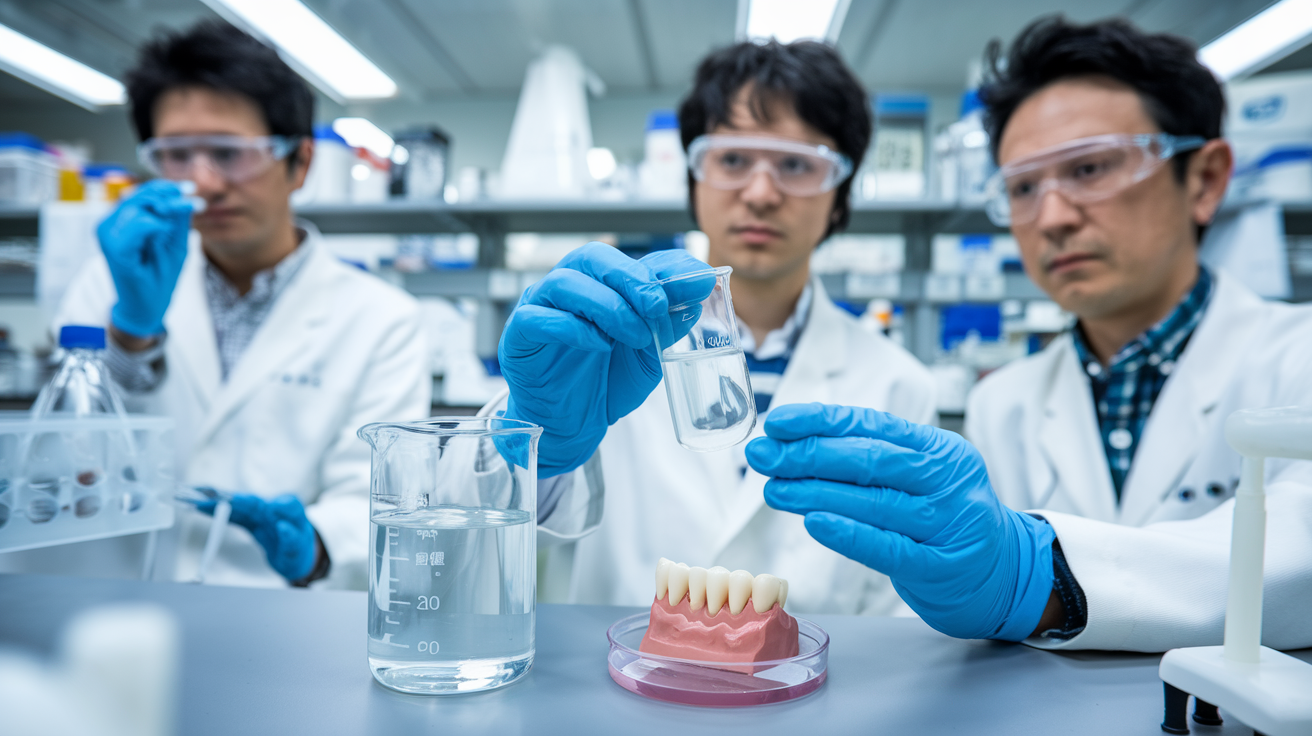
Inspired by Sharks, Study Led by Dr. Katsu Takahashi Advances in the Creation of Revolutionary Treatment with Human Trials Expected in the Coming Years.
A pioneering research in Japan could forever change the way we deal with tooth loss. Led by scientist Dr. Katsu Takahashi, the study aims to develop a medication capable of stimulating dental regeneration in adults, something previously considered impossible in modern dentistry. Inspired by the natural mechanism of tooth regeneration in sharks, the medication that promotes new tooth growth in adults has already shown promising results in animal tests and is about to be tested on humans, with the expectation that it could be available for clinical use by 2030.
A New Chapter in Dentistry: Dental Regeneration Through Medication
For centuries, the main solution for those losing teeth was replacement with dentures, false teeth, or dental implants. But Dr. Takahashi’s approach is radically different: instead of replacing lost teeth, the goal is to grow new teeth from the patient’s own body.
The secret of the technique lies in the inhibition of a gene called USAG-1, which naturally blocks the development of additional teeth in humans. By disabling this gene through an injectable medication, the Japanese team was able to stimulate the formation of new teeth in rats and ferrets, without causing notable side effects.
-
Motorola launched the Signature with a gold seal from DxOMark, tying with the iPhone 17 Pro in camera performance, Snapdragon 8 Gen 5 that surpassed 3 million in benchmarks, and a zoom that impresses even at night.

-
Satellites reveal beneath the Sahara a giant river buried for thousands of kilometers: study shows that the largest hot desert on the planet was once traversed by a river system comparable to the largest on Earth.

-
Scientists have captured something never seen in space: newly born stars are creating gigantic rings of light a thousand times larger than the distance between the Earth and the Sun, and this changes everything we knew about stellar birth.

-
Geologists find traces of a continent that disappeared 155 million years ago after separating from Australia and reveal that it did not sink, but broke into fragments scattered across Southeast Asia.

Japan Announces that Human Trials Will Begin as Early as 2025
The research is now ready to enter the clinical trials phase in humans. The study will be conducted at Kyoto University Hospital, and the first tests are scheduled for August 2025.
In the first phase, 30 healthy men aged between 30 and 64 years will participate. The goal is to assess the safety of the medication and monitor the initial treatment results. The administration of the medication that promotes new tooth growth in adults will be done intravenously.
In the second phase, the trials will be expanded to children aged 2 to 7 years, who have at least four missing teeth, a condition generally caused by congenital diseases. “We want to meet the expectations of people who have difficulty living because they have no teeth,” stated Dr. Takahashi to Japan Times.
Prospects for 2030: Treatment May Be Available
If the clinical trials are successful and pose no risks to human health, the medication for dental regeneration could be approved and made available for medical use by around 2030. The expectation is that the treatment could be applied to both adults who have lost teeth over their lifetime and to children with congenital tooth absence.
This new approach could benefit millions of people around the world suffering from edentulism (tooth absence), in addition to representing a less invasive and more natural alternative compared to traditional restorative dentistry solutions.
Teeth: Why Is the Treatment So Innovative
Human teeth develop in three phases: baby teeth, permanent teeth, and a third dentition that usually does not develop. The research in Japan precisely targets the activation of this latent third dentition, something that had not been clinically explored in humans until now.
The intervention on the USAG-1 gene, as demonstrated in animal tests, allows for this dental potential to be reactivated, resulting in the formation of new functional teeth.
Brazil and the World Follow the Advances in Japan
The international scientific community, including experts in dentistry, genetics, and biotechnology, is closely following the developments of the study. Countries like Brazil, where tooth loss still affects a significant portion of the adult and elderly population, view dental regeneration as a revolutionary alternative that could make dental implants obsolete in the future.
Japan Highlights the Impact of Dental Regeneration on Quality of Life
The possibility of recovering natural teeth through medication represents an advancement that goes far beyond aesthetics. The absence of teeth can affect chewing, speech, self-esteem, and overall health, especially among people with limited access to dental treatments.
With the advancement of new Japanese technology, the expectation is that access to dental regeneration could significantly improve the quality of life for millions of people, including in regions where traditional treatments are economically unfeasible.
Source: UOL








Seja o primeiro a reagir!