





 English
  Francês
  Alemão
  Italiano
  Japonês
  Norueguês
  Portuguese
  Spanish
  3 min of reading


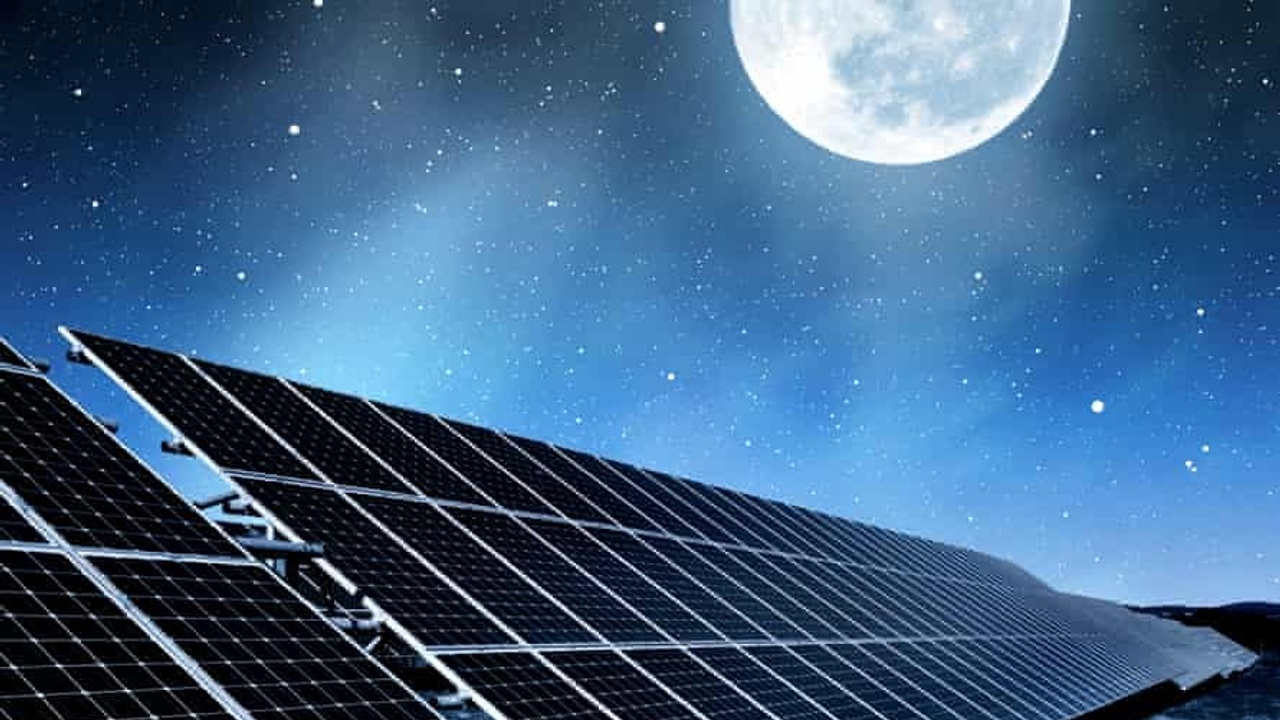
Scientists From Stanford University in the United States Developed a Solar Panel That Uses the Temperature Difference During the Early Morning for Energy Generation
Scientists have discovered that it is possible to generate energy through solar panels and with the help of a photovoltaic cell at night using the temperature difference in the early morning, when the air is cooler. The research was conducted by scientists from Stanford University in the United States.
Basically, solar energy is generated when sunlight is irradiated to a solar panel at a lower temperature. Subsequently, the solar cells of the panel, made with layers of a semiconductor material, generate an electric current.
Differential of the Solar Panel Developed by Stanford Scientists
What differentiates the solar panel created by the Stanford scientists is the presence of a device capable of incorporating a thermoelectric generator that extracts electricity from the temperature difference between the environment and the photovoltaic cell of the panel.
-
With 160,000 m² of collectors, an area larger than 20 football fields, Silkeborg, in Denmark, hosts a solar thermal plant that heats 19,500 homes and could become the largest solar heating plant in the world.

-
A study reveals the expansion of renewable energy procurement in Brazil and shows how companies are taking advantage of opportunities to reduce expenses, ensure energy efficiency, and strengthen strategic environmental commitments.

-
Roraima bets on the sun to escape high tariffs: Amid the energy crisis and price hikes, solar energy is growing in Roraima and transforming consumption in the North region.
-
Mato Grosso do Sul excels in the sugar-energy sector: the state reaches a milestone of 22 operating mills and accelerates the production of clean energy in MS with a focus on sustainability.


Sid Assawaworrarit, the lead author of the study, explains that the approach can provide lighting and renewable energy from nighttime stations, for home applications or off the conventional distribution grid, in locations where solar cell installations are gaining more popularity.
According to Tecmundo, not much energy is produced through these solar panels at night, but it is enough to charge an LED light or a cellphone. Although it may seem little compared to the easy access to electricity, the scientists reinforced in the study summary that in remote areas the panels can be very useful, as they provide a renewable source of electricity off the traditional distribution grid. During laboratory tests, the scientists were able to generate a power of 50 mV/m².
“In many rural areas that need independent electricity generation systems, power supply at night often requires battery installation for storage, adding complexity to the device and increasing production costs,” Sid adds.
Advantages of the Solar Panel
The solar panels developed by the scientists also have the advantage of eliminating the need to store energy in batteries in off-grid locations.
The Stanford scientist team informed New Scientist magazine that the solar panel’s configuration can still be improved to generate more energy and that there are no intrinsic difficulties in scaling the system into a commercial product.
Sid concludes by stating that due to the long lifespan of thermoelectric generators, the configuration of the solar panels may have a lower maintenance cost compared to conventional storage devices. Furthermore, the solar panels can be used for nighttime lighting, and the scientists’ system can also power sensors in remote locations, reducing the size or eliminating the need for batteries.
Scientists Develop Molecule That Allows Storing Solar Energy for Up to 18 Years
Scientists from Chalmers University of Technology in Sweden have developed a solar energy storage system that can store electricity for years using a liquid containing hydrogen, carbon, and nitrogen.
A group of scientists from the University of Technology in Sweden has been developing solutions for the solar energy storage problem for about 10 years. The scientists developed a liquid that, when exposed to light, changes its molecular structure, remaining in that state for years. Thus, it is possible to store electric energy at any time through simple reactions, making the development promising for powering a wide range of devices. To learn more, check out the full article by clicking here.







Seja o primeiro a reagir!