





 Portuguese
  English
  Spanish
  4 min of reading
  0 comments


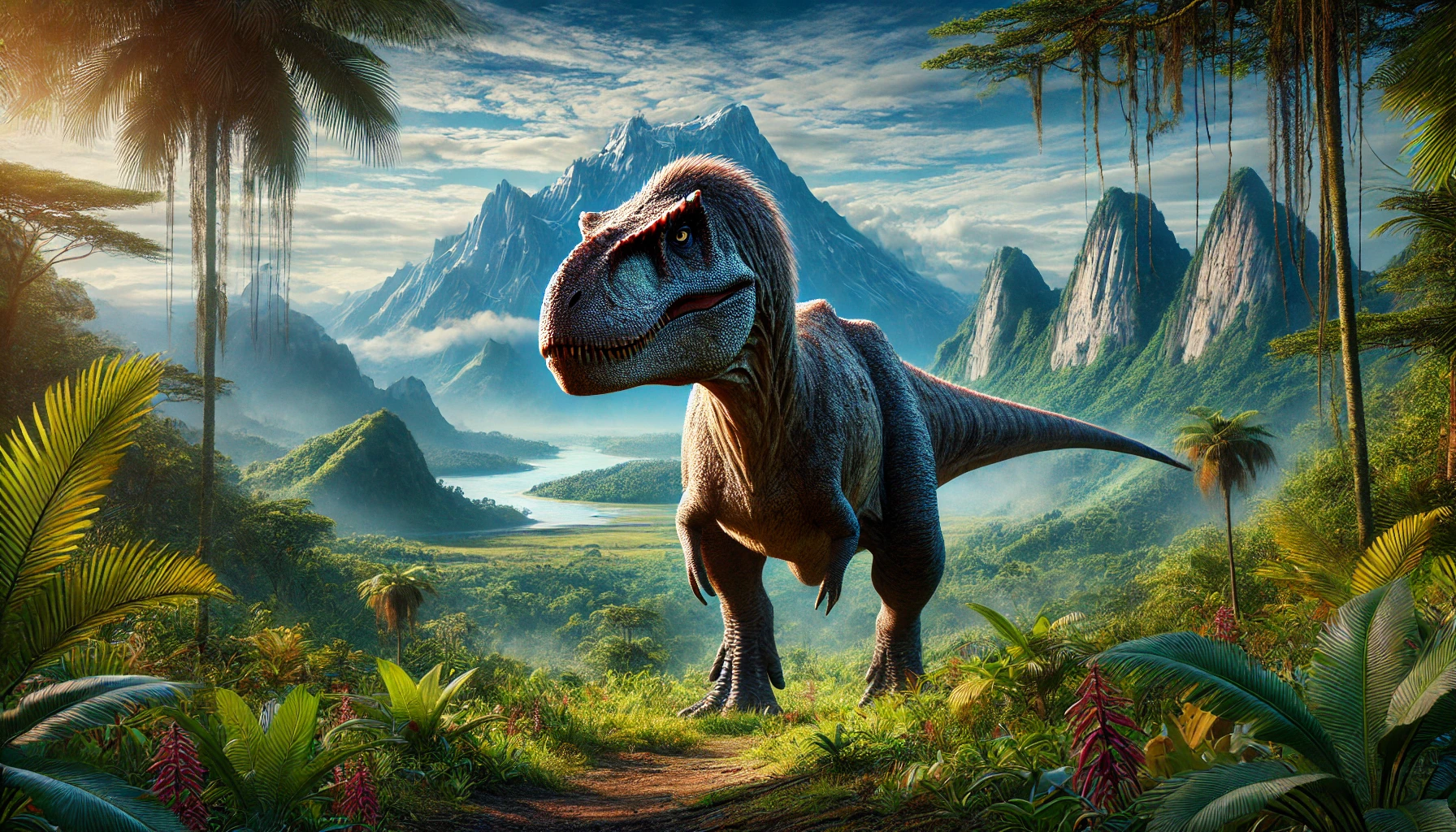
Studies Indicate That, Without The Impact Of The Asteroid, Dinosaurs Could Have Evolved Differently, Richly Influencing The Ecosystem And The Evolution Of Mammals And Humans
66 million years ago, a catastrophic event wiped out the dinosaurs and changed the course of life on Earth. A 15-kilometer-wide asteroid hit the area that is now Mexico. The impact generated tsunamis, wildfires, and acid rain.
The dust thrown into the atmosphere blocked the sun, plunging the planet into darkness. In a few months, about 75% of species, including non-avian dinosaurs, were extinct.
If that asteroid had never fallen, the dinosaurs might have continued to dominate the world and even evolved into more intelligent creatures.
-
Motorola launched the Signature with a gold seal from DxOMark, tying with the iPhone 17 Pro in camera performance, Snapdragon 8 Gen 5 that surpassed 3 million in benchmarks, and a zoom that impresses even at night.

-
Satellites reveal beneath the Sahara a giant river buried for thousands of kilometers: study shows that the largest hot desert on the planet was once traversed by a river system comparable to the largest on Earth.

-
Scientists have captured something never seen in space: newly born stars are creating gigantic rings of light a thousand times larger than the distance between the Earth and the Sun, and this changes everything we knew about stellar birth.

-
Geologists find traces of a continent that disappeared 155 million years ago after separating from Australia and reveal that it did not sink, but broke into fragments scattered across Southeast Asia.

Dinosaurs: Resilient Rulers Of The Earth
Dinosaurs inhabited the Earth for about 165 million years. During that time, they survived rises and falls in sea level, extreme temperature variations, and volcanic eruptions.
Steve Brusatte, a paleontologist at the University of Edinburgh, believes they could have continued to evolve and rule the planet.
“For those of us who collect fossils of the last dinosaurs, we can clearly see that everywhere in the world… there was a great diversity and abundance of dinosaurs,” Brusatte said. For him, dinosaurs were strong, successful, and at their peak when the asteroid hit the Earth.
Some scientists, however, argued that the dinosaurs were destined for extinction, as new species emerged at a slower rate than those that went extinct. Even so, Brusatte remains astonished by the resilience of these prehistoric animals.
Dinosaurs In Icy Times
Another question arises: Did dinosaurs survive the ice ages? Most lived in warmer climates, although some inhabited cold regions. According to Brusatte, some dinosaurs might have adapted to the new extreme conditions.
“Many of them had feathers, [so] they could insulate themselves like mammals,” he explained. Additionally, research indicates that species like Tyrannosaurus rex were warm-blooded. This would allow them to cope with climate changes without being completely vulnerable.
The adaptation process might have followed examples like those of mammoths. These animals evolved about 5 million years ago. During the last ice age, 800,000 years ago, some mammoths developed woolly coats to survive in the cold regions of Eurasia.
Dinosaur Intelligence: A Possibility
Dinosaurs might have evolved into more intelligent beings. In 1982, paleontologist Dale Russell proposed a thought experiment. He suggested that troodontid dinosaurs could have developed sentience if they had not gone extinct.
According to Russell, these dinosaurs had large brains, stereoscopic vision, and opposable fingers. If the species had survived, it would have been possible to achieve a level of intelligence comparable to Homo sapiens.
Ron Séguin, a collaborator of Russell, created an artistic representation of the “dinosauroid” — a green bipedal creature. However, modern paleontologists dismissed this idea, considering it overly anthropomorphic.
A study from 2023 concluded that neither the troodon nor any other dinosaur would have initiated a lineage with intelligence similar to humans.
Despite this, Brusatte reminds us that dinosaurs living today — birds — are quite intelligent. “The dinosaurs living today — birds — are really smart,” he emphasized. Still, he ponders: “They do have more neurons in their brains than mammals on average. [But] could birds one day achieve human-like cognition? I don’t know.”
The Fate Of Mammals In A World Of Dinosaurs
If the asteroid had not hit the Earth, mammals would have had a very different evolutionary path. Brusatte suggests that small rodent-like mammals, which already coexisted with dinosaurs, would likely remain small for millions of years.
However, the ice ages might have provided an opportunity. “Although with lower temperatures and the last Ice Age, this may have given small mammals — like furry warm-blooded creatures that could handle the cold — an opportunity to grow larger, and perhaps the giant dinosaurs would have been left behind,” Brusatte said.
But this would not mean the emergence of humans. Paul Sereno, a paleontologist at the University of Chicago, is categorical: “We evolved in a mammalian world that could not have occurred with large non-avian dinosaurs running around.”
Humans May Not Exist
A 2021 study strengthens this view. It points out that it was the extinction of large land dinosaurs that allowed primate ancestors to thrive. Without the impact of the asteroid, humans, at least in the form we know, probably would never have emerged.
Brusatte concludes: “The history would have been completely different. Our ancestors would certainly never have had the chance to evolve.”
Thus, the absence of the asteroid could have resulted in a world where dinosaurs still dominated. Humanity, in that scenario, would be a remote possibility — or nonexistent.
With information from Live Science.







Seja o primeiro a reagir!