





 Português
  Inglês
  Espanhol
  3 min de leitura
  1 comentário


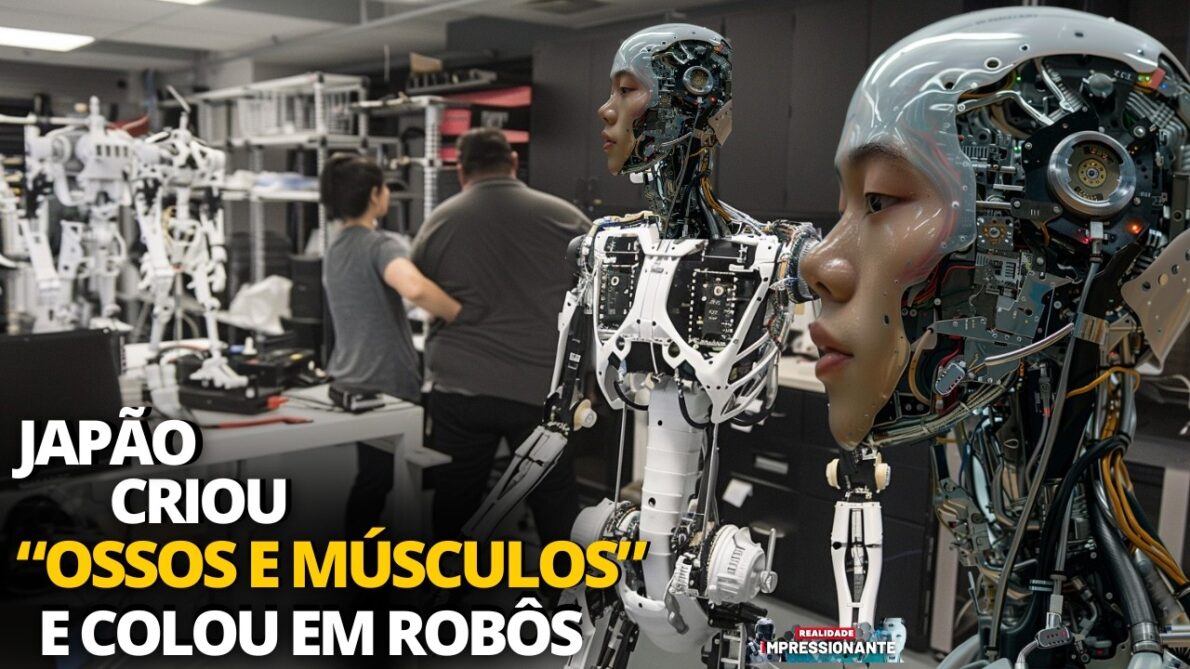

Researchers From Japan Develop Robotic Muscles, Bones, and Tendons for Humanoids. The New Technology Promises to Accurately Imitate the Movements of a Real Human Arm.
Have you ever imagined a humanoid robot that not only looks like a human being but is also capable of reproducing complex movements with the same precision? Researchers from JSK Lab, at the University of Tokyo, Japan, are making this a reality. They have developed robotic muscles, bones, and tendons that promise to revolutionize the humanoid robot market.
This innovation represents a significant advance in the creation of robots capable of perfectly imitating human movements, opening new possibilities for robotics in sectors such as medicine, industry, and entertainment.
Japan Develops Robotic Muscles, Bones, and Tendons Similar to Humans
This is a robotic forearm that accurately mimics the proportions of the human body, weight, muscle arrangement, and joint performance.
-
Found in one of the most radioactive places on Earth, this Chernobyl fungus may be doing something with radiation that no one has been able to explain to this day.

-
A bright yellow mushroom imported from Asia escaped from a cultivation farm in the United States in 2010 and is now aggressively spreading across 25 states, destroying entire communities of native fungi in American forests.

-
Buried under China, a colossal machine weighing 20,000 tons began operating as the largest neutrino detector on the planet and, in just 59 days, surpassed results that science took half a century to achieve.

-
Iran enters the center of a climate alert after the war emitted 5.6 million tons of CO2 in two weeks, surpassing the annual pollution of entire countries.


The robotic muscles, bones, and tendons from Japan were designed with a radioulnar joint, a structure that faithfully reflects human anatomy, allowing for complex movements like those we perform when writing, turning a doorknob, or even swinging a badminton racket.
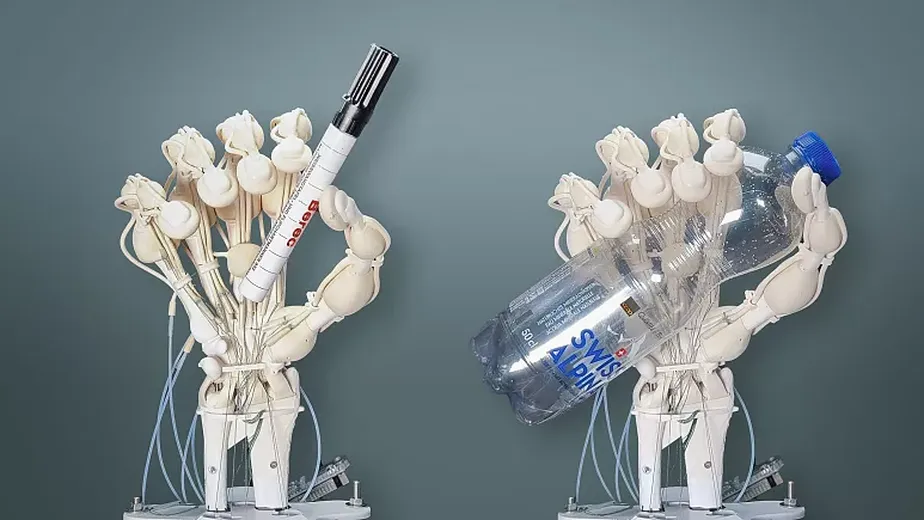
This humanoid innovation from Japan was made possible by the creation of miniaturized bone-muscle modules that integrate two motors into a single component, saving space and maximizing efficiency.
These miniaturized motors were developed with an advanced heat dissipation system using the bone structure to keep the motors cool, ensuring stable performance.
This resulted in robotic muscles, bones, and tendons that not only have the appearance and function similar to those of a human arm but also possess the ability to perform precise and skillful movements.
Japanese Humanoid Robot Performs Various Tests

To demonstrate the potential of this humanoid technology from Japan, the robot equipped with this forearm was tested in a series of tasks requiring high precision. It was able to perform actions such as welding, opening books, turning screws, and even swinging a badminton racket, all with the same dexterity one would expect from a human being.
This radioulnar joint specially designed by researchers in Japan allowed the robot to perform smooth and controlled movements with low stiffness and high efficiency in torque transfer, which is crucial for activities that require both precision and speed.
The next step for researchers in Japan will be to create a complete humanoid powered by tendons using these miniaturized bone-muscle modules, expanding this technology to other parts of the robotic body. Additionally, they are interested in further exploring the biological significance of the radioulnar joint, seeking to discover even more complex and skillful movements.
This advancement could change the way we view the interaction between humans and robots, bringing these machines even closer to the physical capabilities we considered solely human. The future of humanoid robots appears to be approaching rapidly, and it is undoubtedly impressive.
Japan Invests Heavily in Robotics
In addition to these robotic muscles, bones, and tendons, researchers also developed a facial robot with real skin made from human cells. Apparently, the device will help clarify the process of wrinkle formation and reduce animal testing in the development of cosmetics and medications.
The researchers even managed to develop a unique structure that mimics the way muscle movement is transmitted to the skin, allowing the robot to smile.
In most conventional humanoid robots, silicone rubber is used as skin. To develop a facial robot that resembles a human, the team cultivated human skin cells and created facial skin approximately 2mm thick and 25mm in diameter, consisting of a dermal and an epidermal layer. Previously, the team developed a finger-shaped robot covered with similar skin.








É um sinal que a vinda de Cristo está próxima