





 Portuguese
  English
  Spanish
  3 min of reading
  1 comment


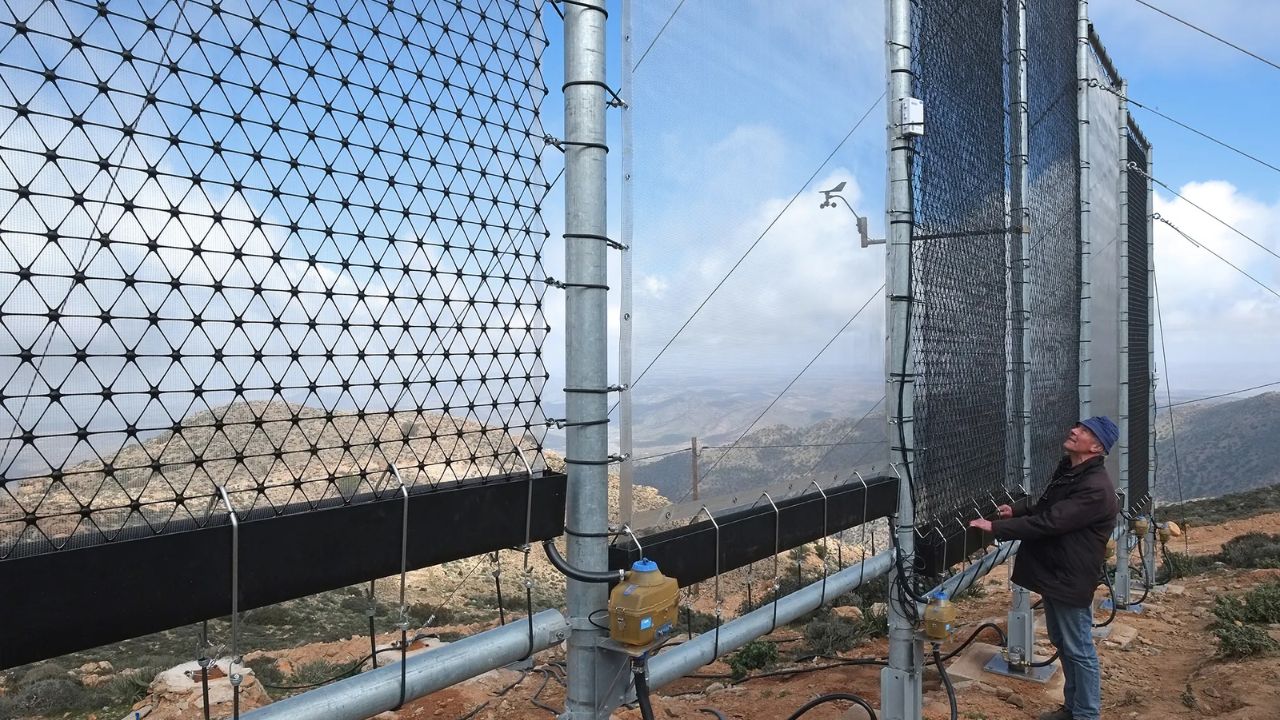


Water scarcity is one of the greatest challenges faced by communities living in extremely arid regions. In the Atacama Desert in Chile, where the annual rainfall average is only 1.4 millimeters, survival depends on extracting water from underground rocks that were supplied thousands of years ago. Now, scientists have developed a new innovative technique to extract water in the desert using fog collectors.
The Atacama Desert is considered one of the driest places on the planet. In some areas, soil moisture is so low that plant life is almost nonexistent. The lack of rainfall makes obtaining water in the desert a huge challenge for local inhabitants.
Currently, much of the water consumed in the region comes from underground rock layers. However, this resource is finite, as these reserves were formed thousands of years ago. Only 1.6% of the population living in the informal settlements of Alto Hospicio have access to water distribution networks. Most depend on water trucks for supply.
The New Technique for Extracting Water in the Desert
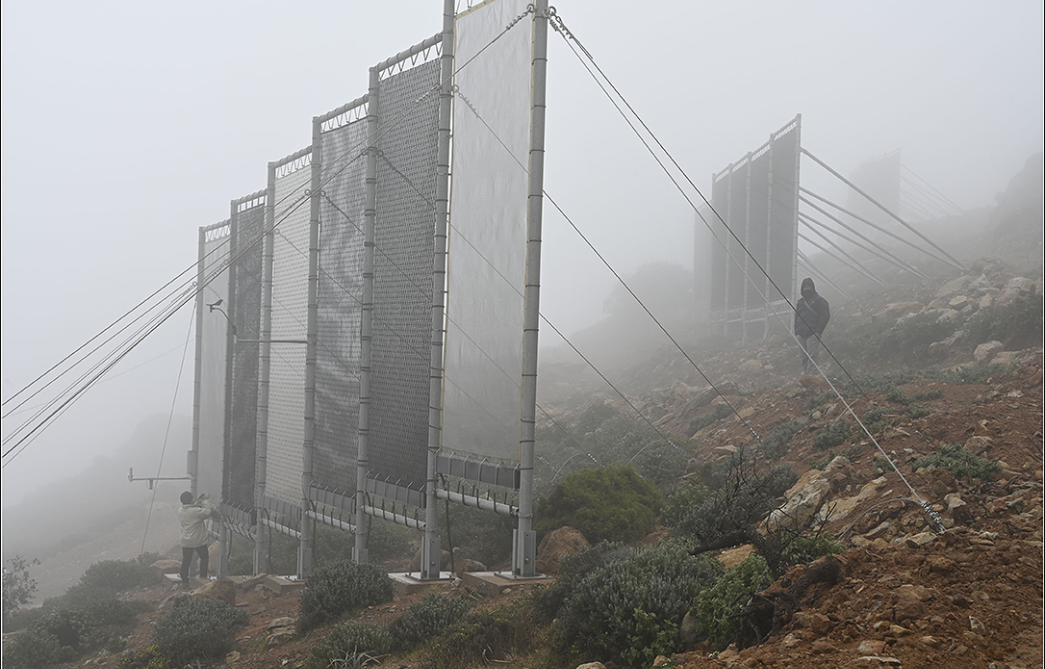
In light of this reality, an international team of scientists proposed an innovative method: collecting fog to obtain water in the desert. The study published on the 20th revealed the effectiveness of this approach in the Atacama Desert.
-
Millions of people have been eating yam for centuries without knowing that this humble tuber contains a compound called diosgenin, which scientists have now discovered can improve memory and help control blood sugar levels.

-
Scientists from an international project drill 1,800 meters of ice in Antarctica using hot water and discover details about one of the most intriguing places on planet Earth.
-
Seen from space, a colossal volcano nearly 5,000 meters high in Russia has released 1,600 km of smoke over the Pacific, forming “devil’s horns” of lava and revealing the brutal force of the Ring of Fire.
-
Expedition 501: Scientists drill into the ocean floor and discover a giant reserve of fresh water hidden beneath the sea, extracting nearly 50,000 liters and revealing an invisible system that could reshape the map of water scarcity.


The technique involves using fog collectors, which are suspended panels designed to capture moisture from fog. These structures do not require external energy, making the process sustainable. The moisture captured by the panels condenses and is stored for later use.
The tests were conducted in the city of Alto Hospicio, where about 10,000 people live under precarious supply conditions. The scientists identified an area of 100 square kilometers where it is possible to collect from 0.2 to 5 liters of water per square meter daily. During August and September 2024, this number reached 10 liters per square meter, highlighting the potential of the technique.
The Potential and Challenges of Fog Collection
Although the technique has shown good results, its efficiency depends on altitude and weather conditions. The higher the altitude, the better the fog harvesting. However, many suitable areas for installing the collectors are outside urban limits, which may complicate the transportation and storage of the collected water.
As it does not rely on electricity, fog harvesting is a sustainable alternative for arid regions. However, for the technique to be implemented on a large scale, significant investments in infrastructure and storage systems are required.






NÃO FORAM ESTES CIENTISTAS Q CRIARAM O APARELHO. Nos Andes tem nome de Atraplaneblas e já existem há uns 20 anos feitos com telas tipo sombrite.