





 Português
  Inglês
  Espanhol
  4 min de leitura
  0 comentários


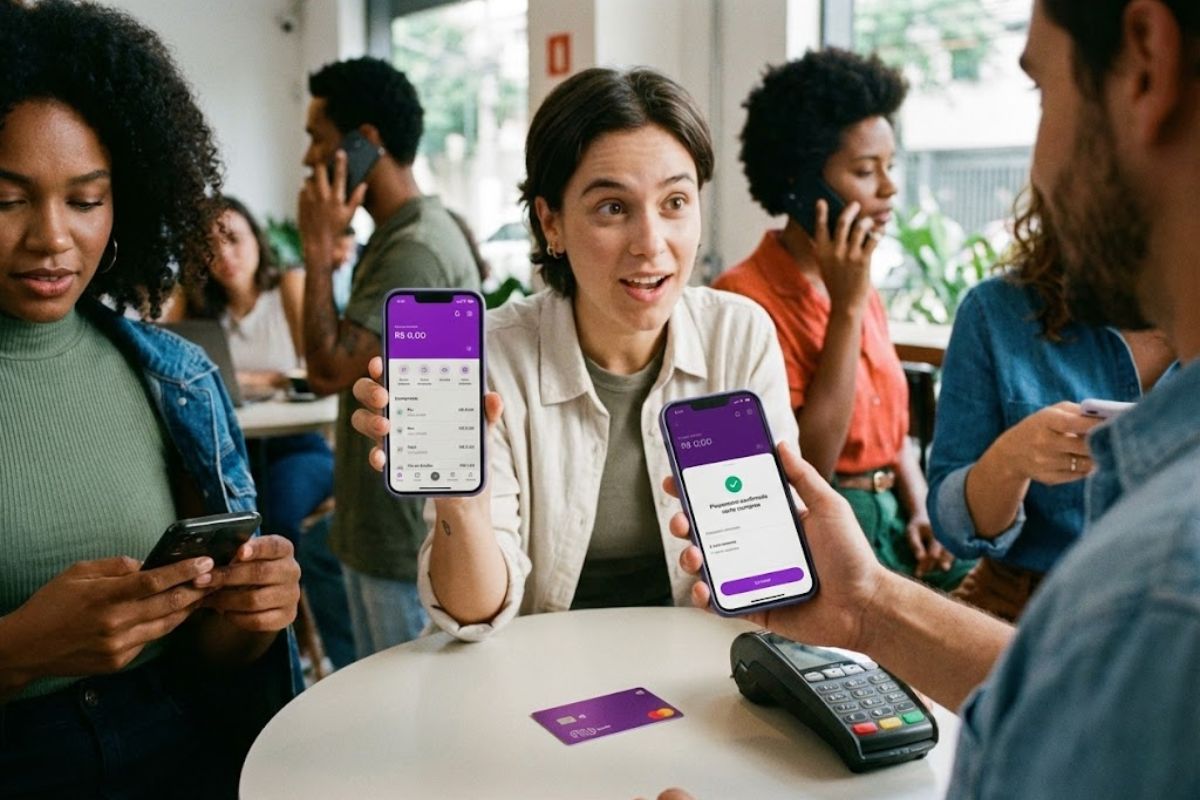
With Credit Pix, Nubank Customers Can Transfer Via Pix Even with a Zero Balance, Using the Credit Card Limit and Choosing to Installment in Up to Twelve Times, with Charges Concentrated on the Invoice and Detailing of Interest Before Confirming, Requiring Planning to Avoid Overindebtedness in Daily Life
Nubank customers have begun to face a situation that, until recently, was simple: without funds in the account, there is no Pix. Since 2022, Credit Pix has changed this scenario by allowing transfers even with a zero balance, as long as there is available credit on the card.
In practice, the promise is convenience in tight spots, especially when bills pile up. But the same mechanism that solves an urgent payment can extend the debt for months, as the amount is charged to the credit limit and can be split into up to twelve installments.
What Happens When Pix Becomes Credit, Even with a Zero Balance
For Nubank customers, Credit Pix works as a change of payment source: instead of debiting the money from the balance, the transfer is charged to the credit card limit.
-
Brazilian city gains industrial hub for 85 companies that is equivalent to 55 football fields.

-
Peugeot and Citroën factory in Argentina cuts production by half and opens a layoff program for more than 2,000 employees after Brazil drastically reduced purchases of Argentine vehicles.

-
A Brazilian city gains a factory worth R$ 300 million with the capacity to process 200 thousand tons of wheat per year, a mill of 660 tons/day, silos for 42 thousand tons, and an industrial area of 276 thousand m².

-
Havan will leave the shopping mall in Blumenau to inaugurate something that the chain has never done before: a megastore in half-timbered style in the Historic Center of the city, which is expected to be completed in May and change the landscape of local retail.


Pix remains Pix for the receiver, but for the sender, it turns into a card purchase, with a direct impact on the limit and the bill.
This logic explains why the tool allows payments without balance.
The “money” comes from available credit, not the checking account.
The utility is obvious in emergencies and scheduled commitments, but the real cost depends on the conditions displayed before confirmation, as the system informs about interest and any additional costs for each transaction.
Installing in Up to Twelve Times Changes the Weight of Commitment
The option to split into up to 12 times significantly alters the behavior of Nubank customers.
By dividing the amount, the transfer ceases to be an immediate expense and competes with other card expenses, taking up space on the invoice for a longer time.
There is an important side effect: the feeling of “it fit today” can turn into “it doesn’t fit tomorrow”.
As Nubank concentrates this payment on the card bill, the user can reorganize expenses and, in some scenarios, push the impact to up to two bills ahead.
This provides short-term relief but requires careful reading of the total cost before choosing the number of installments.
Why the Resource Gains Strength When Bills Pile Up
The usage by Nubank customers tends to increase during periods of high bill concentration, such as the beginning of the year, when financial obligations stack up and the margin in the balance can disappear.
In this context, paying via Pix using credit becomes a quick bridge to avoid delays, fines, or service interruptions.
The “where” also matters: the use occurs in everyday life, within the app, without depending on a branch and with the same experience of sending a regular Pix.
This convenience accelerates decision-making, and that’s where the risk lies: the less friction there is, the higher the chance that a person will confirm a transaction without realizing the accumulated cost on the card.
The Silent Risk of the Limit: Debt That Grows Without Being Noticed
For Nubank customers, the credit card limit acts as both a technical and psychological ceiling.
When Pix enters credit, it consumes this ceiling and can reduce the ability to pay other essential expenses that depend on the card, creating a cascading effect within the month.
The main warning is simple and not glamorous: installments do not eliminate debt, they only distribute it.
If the user repeatedly uses Credit Pix to cover recurring expenses, they may fall into a cycle where the card becomes the main source of liquidity, increasing the risk of overindebtedness with the passing bills.
How to Use Without Turning Urgency into a Future Problem
For Nubank customers considering the resource, the first practical rule is to look at what the app shows before confirming: fees, interest, and additional costs.
Quick decisions with incomplete information tend to be expensive, especially when the installment seems small and the total gets diluted over time.
The second rule is to define purpose: Credit Pix makes more sense in specific situations, with a clear payment plan, than as a substitute for balance.
If the choice is to split, reducing the number of installments tends to decrease the time exposure to debt, keeping the budget more predictable over the next bills.
In your daily life, have you seen Nubank customers using Credit Pix to resolve emergencies, or has it become a habit to close the month? And, if you could choose, would you prefer to split into fewer times with more pressure now, or stretch it over twelve times and live with the debt for longer?










-

-

2 pessoas reagiram a isso.