





 Portuguese
  English
  Spanish
  6 min of reading
  0 comments


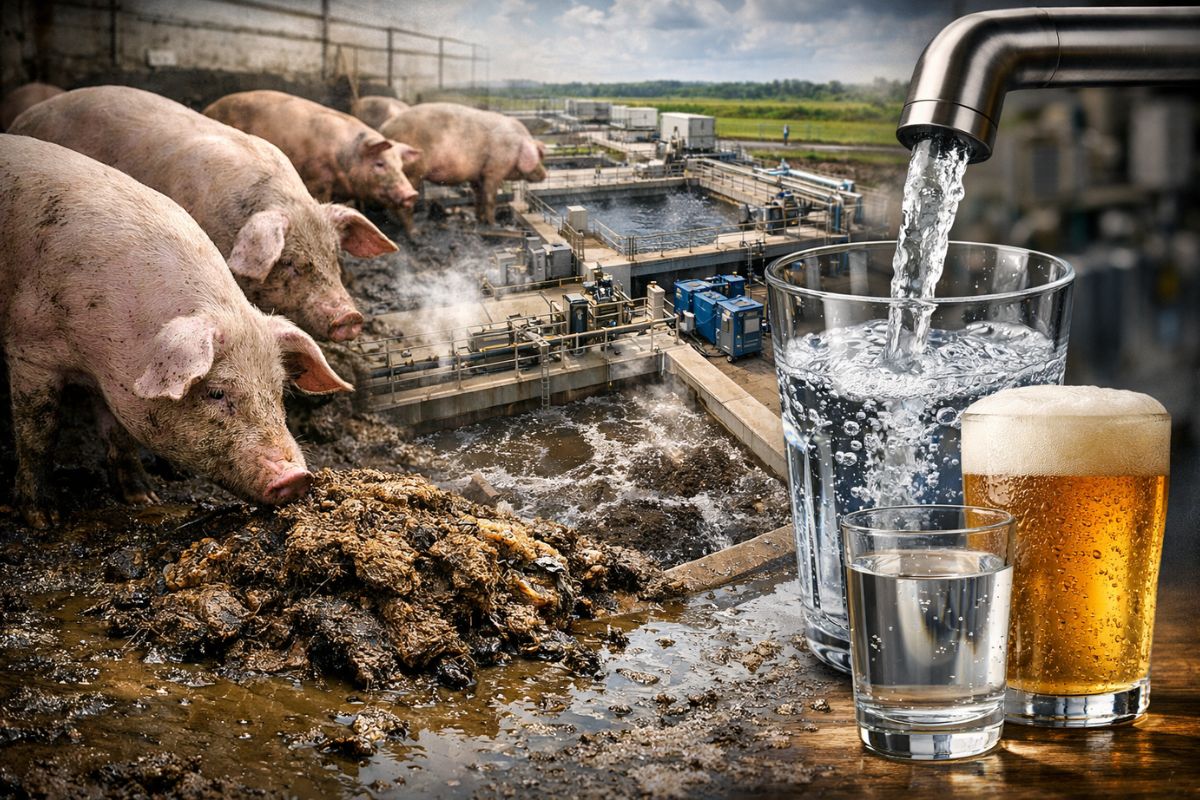
Developed By Embrapa, Sistrates Deals With Swine Waste, Removes Pathogens, And Generates Water For Reuse On Farms, Reducing Pollution That Would Go To Rivers. To Showcase The Potential, Researchers Took The Process To Potable Water And Tested 40 Liters In Craft Beer, Tasted At Scientific Events In 2024 And 2025.
The Idea Of Transforming Pig Feces And Urine Into Potable Water Seems, At First Glance, Like One Of Those Limits That Science Provokes Just To Test Our Reaction. But Behind The Initial Shock, There Is A Practical Logic: Preventing Waste From Reaching Rivers And Reducing The Consumption Of “New Water” Within Farms.
It Is In This Frontier Between Sanitation, Animal Production, And Water Crisis That Embrapa Developed A System Capable Of Treating And Recycling Effluents From Swine Production. Potable Water Here Serves As A Demonstration Of Potential, While Everyday Use On Farms Aims At Safe Reuse And Compliance With Environmental Standards.
Why The Discussion About Potable Water Reached The Pigsty
The World Has Entered A Stage Described As “Water Bankruptcy,” According To An Institute Linked To The United Nations University Focused On Water, Environment, And Health.
-
Motorola launched the Signature with a gold seal from DxOMark, tying with the iPhone 17 Pro in camera performance, Snapdragon 8 Gen 5 that surpassed 3 million in benchmarks, and a zoom that impresses even at night.

-
Satellites reveal beneath the Sahara a giant river buried for thousands of kilometers: study shows that the largest hot desert on the planet was once traversed by a river system comparable to the largest on Earth.

-
Scientists have captured something never seen in space: newly born stars are creating gigantic rings of light a thousand times larger than the distance between the Earth and the Sun, and this changes everything we knew about stellar birth.

-
Geologists find traces of a continent that disappeared 155 million years ago after separating from Australia and reveal that it did not sink, but broke into fragments scattered across Southeast Asia.

In Practice, The Message Is Harsh: It Is Not Just About Temporary Crises, Because Many Systems Can No Longer Return To Historical Natural Conditions.
In This Scenario, The Pressure On Potable Water And Quality Water Gains Another Weight When Looking At The Field. Agriculture Accounts For About 70% Of The Planet’s Freshwater Intake, According To The UN World Water Development Report.
Reducing The Demand For “Good” Water Becomes A Strategy, Especially Where There Is Continuous High Consumption, Such As In Intensive Production Systems.
What Sistrates Changes Within The Farm And Where This Water Will End Up
The Swine Waste Treatment System, Known As Sistrates, Was Developed By Embrapa And Is Already Being Adopted By Some Producers.
The Central Proposal Is To Treat Waste So That The Farm Reduces Its Pollutant Load And At The Same Time Recycles Water Within The Operation. The Focus Of Daily Use Is Not Drinking, But To Reuse Safely.
On Farms, Treated Water Is Intended For Reuse, Such As In Cleaning Facilities, Or Returned To Rivers Within Environmental Standards.
Even When Not Seeking Potable Water, There Is A Crucial Technical Requirement: The Water Goes Through Pathogen Removal To Prevent Animals From Getting Sick. It Is A System Designed To Reduce Sanitary Risk And Environmental Impact At The Same Time, Without Turning Reuse Into A Dangerous Shortcut.
From Yellow To Transparent: What Separates Water For Reuse From Potable Water
Even After The Stages Aimed At Reuse, The Liquid Can Still Retain Yellow Coloring And, In This Condition, Should Not Be Consumed.
This Is Where The Part That Changes The Game For Scientific Demonstration Comes In: To Become Potable Water, The Liquid Goes Through A Chemical Clarification Process.
The Choice To Take The Process To Potable Water Was A Way To Demonstrate Technical Reach And Test Limits, Not To Propose Human Consumption On Farms.
Potable Water Serves As Proof Of Concept, While The Real Application Focuses On Saving “New Water,” Keeping Production Operating With Greater Water Efficiency And Reducing The Chance Of Contaminating Bodies Of Water.
How Much Is Saved And How Much It Costs To Set Up The System

By Reducing Dependence On “New Water,” The System Can Cut Water Use In Production By 40% To 50%.
For Researcher Airton Kunz, The Logic Is Direct: Reduce The Demand For Quality Water Resources.
In Other Words, When The Farm Safely Reuses Water, It Preserves Potable Water And Better Quality Water For More Sensitive Uses Outside The Farm Gate.
There Is Also The Economic Side Of The Investment. To Install Modules Only Up To The Reuse Stage, The Cost Can Represent 8% To 10% Of The Investment In The Farm, According To Kunz, With Maintenance Costs Described As Low.
In Addition To Water For Reuse, The Process Also Generates Fertilizers And Electric Power. Potable Water, When It Appears, Is The Showcase Of Potential; Reuse Is The Routine That Balances The Accounts.
What Happens When Treatment Fails And Waste Reaches The River
When Treatment Is Not Done And Waste Reaches Rivers, The Effect Is Not Just “Pollution.”
There Is Pollution That Can Stimulate The Proliferation Of Algae And Bacteria, Altering The Appearance And Quality Of Water, With That Greenish Coloring That Often Signals An Imbalance. The Problem Is Not Just Aesthetic: It Is Ecological And Sanitary.
And The Volume In Question Is Significant. In Fattening Farms, Each Pig Produces About 7 Liters Of Excrement Per Day. In Breeding Farms, The Volume Reaches 20 Liters Per Female.
When Placing This On The Scale Of An Operation, It Becomes Easier To Understand Why Recycling And Control Technologies Are Addressed As Part Of The Debate On Potable Water And Water Security, Even If The Main Objective Is To Prevent The Pollutant Load From Leaving The Farm.
The “Test” Beer And What It Proves, And What It Does Not Prove
To Make The Demonstration More Concrete, There Was An Experiment Using Treated Water In The Production Of Craft Beer.
The Experimental Batch Produced 40 Liters, And The Beverage Was Tasted At Scientific Events In 2024 And 2025. Brewmaster Fernando Cavassin, Who Tasted The Beverage, Stated That He Did Not Notice A Difference In Flavor Caused By The Water.
Still, The Main Message Is Not The Creation Of An “Exotic” Product For The Market.
It Is Not Something To Appear On Shelves, And The Declared Intention Is Another: To Show That The Technology Can Reach Potable Water Standards As Evidence Of Robustness, While The Real Use On Farms Remains Focused On Safe Reuse And Reducing Pollution.
Outside Of Swine Production, Water Conservation Also Passes Through The Sink And Laundry

The Logic Of Reusing Water Is Not Limited To Pig Farming. Another Technology Cited As An Alternative Is The Use Of Bio-Water, Or Gray Water, Which Comes From Dish And Laundry Washing, For Example, And Can Be Treated For Irrigation.
In The Project Developed By Embrapa Semiárido, The Producer Builds A System At Home That Directs This Water To A Filter, Treats It, And Then Pumps The Water Again To The Plantation.
The Treatment Prevents Contamination Of The Water Table And Also Results In A Nutrient-Rich Solution For The Plant. However, There Is A Practical Limitation: The Volume Depends On How Much The Family Uses, Thus Only Serving A Small Area Of Plantation.
In The End, The Same Logic Repeats Itself: Protect Potable Water And Prevent Effluents From Becoming Pollution, Adjusting Reuse To What Is Safe And Viable In Each Context.
The Transformation Of Waste Into Potable Water Attracts Attention Because It Touches On A Psychological Limit, But The Real Story Is More Down To Earth: Reducing Pollution In Rivers, Lowering The Need For “New Water” In Farms, And Reinforcing A Culture Of Safe Reuse In Times Of Scarcity.
When Technology Can Go Beyond And Demonstrate Potability Standards, It Is Not Saying “Drink This,” But Rather “Look At How Far We Can Treat It, With Control And Safety.”
If This Solution Were To Come Close To Where You Live, What Would Make You Trust It More: Transparency Of Environmental Standards, Oversight, Or Seeing The Water Being Used Only For Reuse First?
And Thinking About The Challenge Of The Test, Would You Try A Craft Beer Made With Potable Water Obtained From This Kind Of Treatment, Or Would That Still Be A Limit For You, Even With Technical Proof?








-

-

2 pessoas reagiram a isso.