





 English
  Francês
  Alemão
  Italiano
  Japonês
  Norueguês
  Portuguese
  Spanish
  5 min of reading
  0 comments


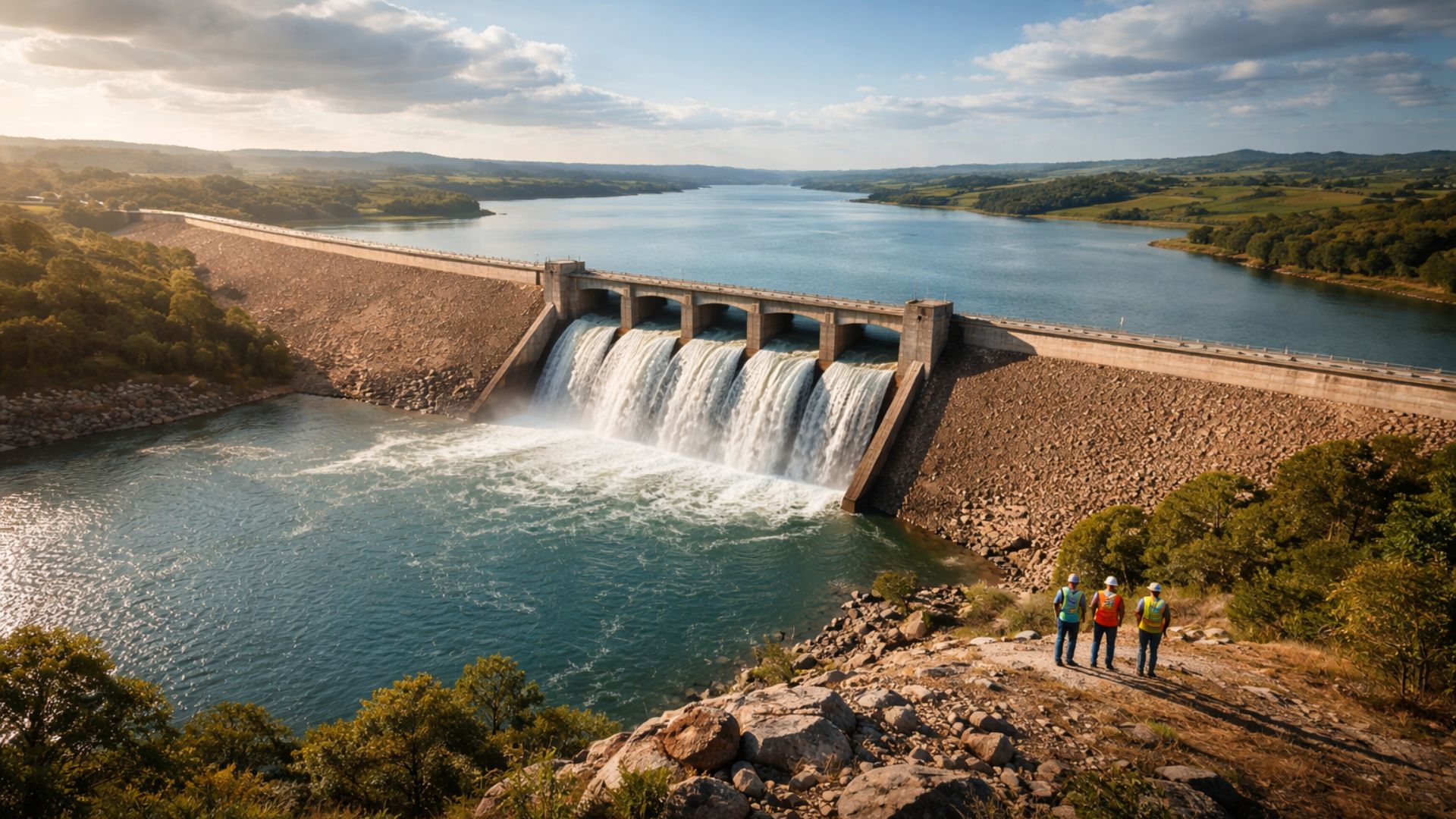
Billion-dollar project in the interior of Rio Grande do Sul alters hydric and agricultural scenario of the Campaign after almost two decades of delays, resumptions, and public investments, with direct impact on rural production, urban supply, and flood control in strategic municipalities.
After 17 years of construction, interruptions, and resumptions, the Jaguari stream dam was completed in the Campaign region, between Lavras do Sul, Rosário do Sul, and São Gabriel.
The project received R$ 365.7 million from state and federal governments and, according to the state government, is expected to reinforce water supply during drought periods, reduce the effects of floods, and provide direct support to local agricultural production.
The delivery ends a wait that began in 2009, when the construction started, but lost momentum over the years and went through stoppages before being resumed through new bids.
-
Expansion of Federal Institutes: 38 new campuses and R$ 200 million for public education; see the cities included.

-
Lula’s government changes rule in important benefit and thousands of Brazilians will no longer receive it; see what has changed.

-
New Gripen fighter makes Argentines surrender to Brazil, and the heavy reaction exposes envy, frustration, and shock at Brazil’s technological leap.

-
This discovered deposit near the Andes could change the future of Argentina, attract billions, and even shake up the global metals market.


The structure is treated by the State as one of the main hydric interventions in the Campaign for bringing together two sensitive functions for the region: reserving water during droughts and helping to regulate the river’s flow during intense rainfall phases.
In practice, the reservoir was designed to serve an area where climate fluctuations weigh on urban daily life and agricultural performance.
The state government claims that more than 100,000 people will be directly benefited by the system, with expected impact on supply and on economic activities that depend on a stable water supply throughout the year.
Importance of the dam for the Gaucha Campaign
The relevance of the dam goes beyond engineering.
In a stretch of Rio Grande do Sul accustomed to dealing with successive droughts and episodes of excessive rain, the capacity to store water has become a strategic asset for municipalities whose economy has a strong connection with primary production and water security.
The project is expected to have a direct impact on 65,000 hectares of rice and soybean crops, in addition to livestock, with water supply estimated starting from the 2027/28 harvest.
In São Gabriel, these crops dominate the agricultural area, which helps explain why the completion of the project was treated as a regional milestone for both the field and long-term planning.
Data released by the São Gabriel city hall shows a similar dimension of this productive dependence.
The municipality reports about 32,000 hectares of soybeans and 30,000 hectares of rice, a level that confirms the weight of these chains in the territory and reinforces the potential effect of infrastructure aimed at regularizing water supply for crops and livestock.
Still, the expected benefit is not limited to irrigation.
The dam also enters the debate on climate adaptation, a topic that has gained strength in the State after a series of extreme events.
By increasing the capacity for water retention and management, the structure becomes part of the set of responses sought by the public authorities to reduce historical vulnerabilities in the region.
History of the project and evolution of costs
The trajectory of the project was marked by delays and cost revisions.
In August 2025, the state government reported a forecast for completion in the first half of 2026 and estimated the total investment of the Jaguari dam at R$ 330 million, with R$ 213.3 million from the State and R$ 116.7 million from the Union.
At the announcement of completion on March 24, 2026, the disclosed amount rose to R$ 365.7 million, with R$ 249 million attributed to the State and maintaining the federal share at R$ 116.7 million.
This difference highlights how the final cost was redefined throughout the execution, in a process marked by stoppages, re-bids, and adjustments.
The state government itself acknowledged, in official material, that the project needed new bids to move forward.
At another point, the state administration also associated the delay with the abandonment of responsible companies and the need to alter the project.
Even with this history, the dam arrives completed with significant dimensions.
According to the information released about the structure, it spans more than 1 kilometer in length, with a maximum height of 25 meters, a base width of 100 meters, and a top width of eight meters, forming an artificial lake with a maximum inundation area of 1,798 hectares.
The construction was made with compacted clay, an internal protection layer, sand filter, and drainage system.
On one side, the slope received stone covering to prevent erosion caused by waves; on the other, vegetation cover was used to support the stability of the structure, in a typical design of an earth dam aimed at containment and durability.
Impacts on agribusiness and water supply
The economic weight of agribusiness helps to dimension why the completion of the dam mobilized regional attention.
São Gabriel is among the agricultural hubs of the Campaign, and the combination of rice, soybeans, and livestock makes water availability a factor directly linked to productivity, crop planning, and reducing losses during adverse weather periods.
In the case of crops, water regularity can influence everything from the production calendar to the producers’ ability to react to recurring droughts.
For the benefiting municipalities, the project is presented as an additional guarantee of security in supply, especially in a basin where the fluctuation between drought and flood has already imposed social and economic costs at different times.
The Jaguari dam also fits into a broader system designed for the region, alongside the Taquarembó dam in Dom Pedrito.
In August 2025, the state government projected that the two structures together would serve about 235,000 inhabitants in six municipalities and allow irrigation of approximately 117,000 hectares.
With Jaguari completed, the official expectation is that a significant part of this system will begin to gain effectiveness as operational stages advance and water supply for crops increases.
The completion, therefore, closes a stage of civil construction but opens another, related to operation, agricultural use, and the concrete response that the dam can offer in a territory accustomed to measuring the impact of weather on each harvest and in each period of drought or flood.








Seja o primeiro a reagir!