





 Portuguese
  English
  Spanish
  6 min of reading
  0 comments


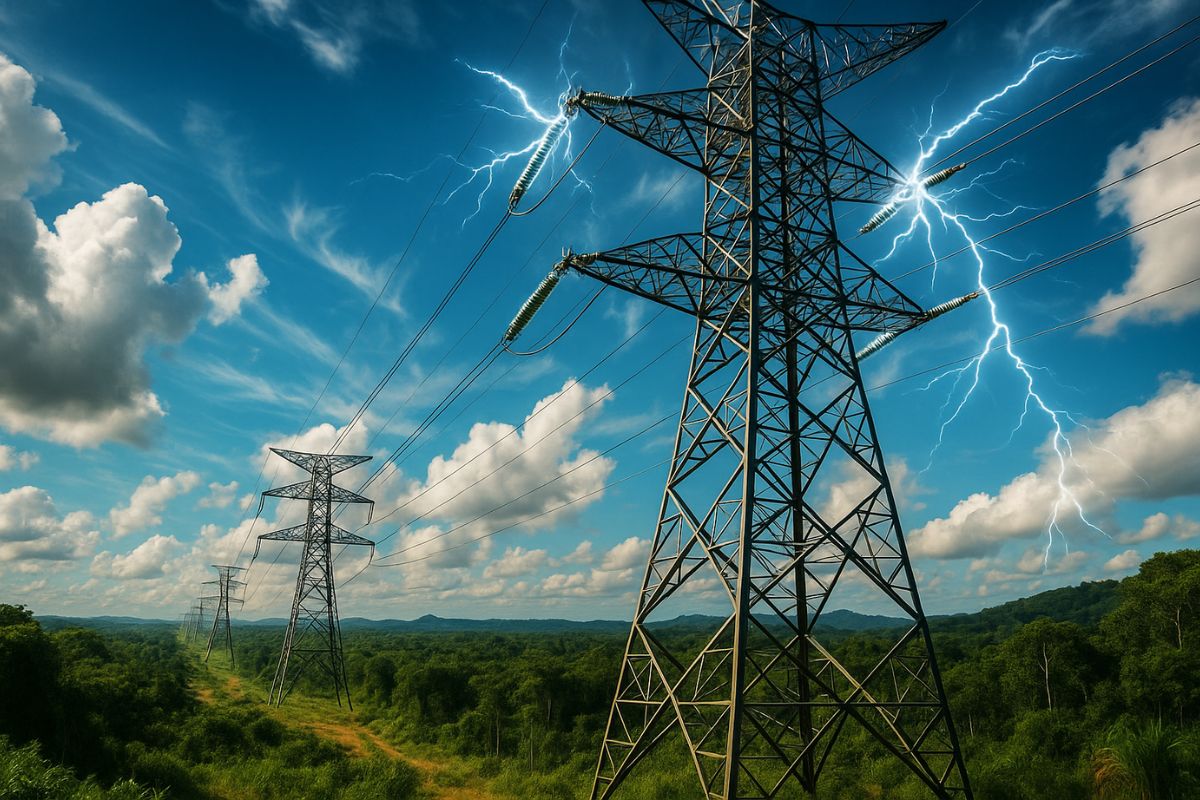
With more than 1,800 km of extension, giant towers of about 300 meters, and direct connection to the Tucuruí hydroelectric power plant, the Tucuruí high-voltage line promises to connect Roraima to the National Interconnected System, cut costs with diesel power plants, and provide more stable energy to the Amazon by 2027.
The Tucurui High-Voltage Line marks one of the most important phases of the electrical integration of Northern Brazil into the National Interconnected System. The project, which had a milestone inauguration of a section in 2025, connects the Tucurui hydroelectric power plant in Pará to different states in the region, with over 1,800 kilometers of extension in high-voltage transmission lines. The goal is simple to understand but complex to execute: to use the plant’s potential to leave behind decades of energy instability and frequent blackouts.
For many years, states like Roraima and Amapá dealt with fragile networks, dependence on diesel power plants, and serious episodes of power outages. With the advancement of the Tucurui High-Voltage Line, the expectation is to reduce blackouts, lower generation costs, and ensure a cleaner and more predictable supply of electricity for the Amazon, completing the integration of the North with the rest of the country by 2027.
What Is the Tucurui High-Voltage Line and Why Is It So Strategic
The Tucurui hydroelectric power plant in Pará is one of Brazil’s largest energy generation projects, with an installed capacity of 8,370 MW.
-
A megaproject worth R$ 89 billion is advancing in Iraq and promises to change the game in global trade by creating a new corridor between Asia and Europe, reducing traditional routes and repositioning the country as a logistics powerhouse.
-
Goodbye bedside table: floating shelves become a trend in 2026 by freeing up space in the bedroom, improving circulation, bringing visual lightness, and integrating technology without taking up floor space.

-
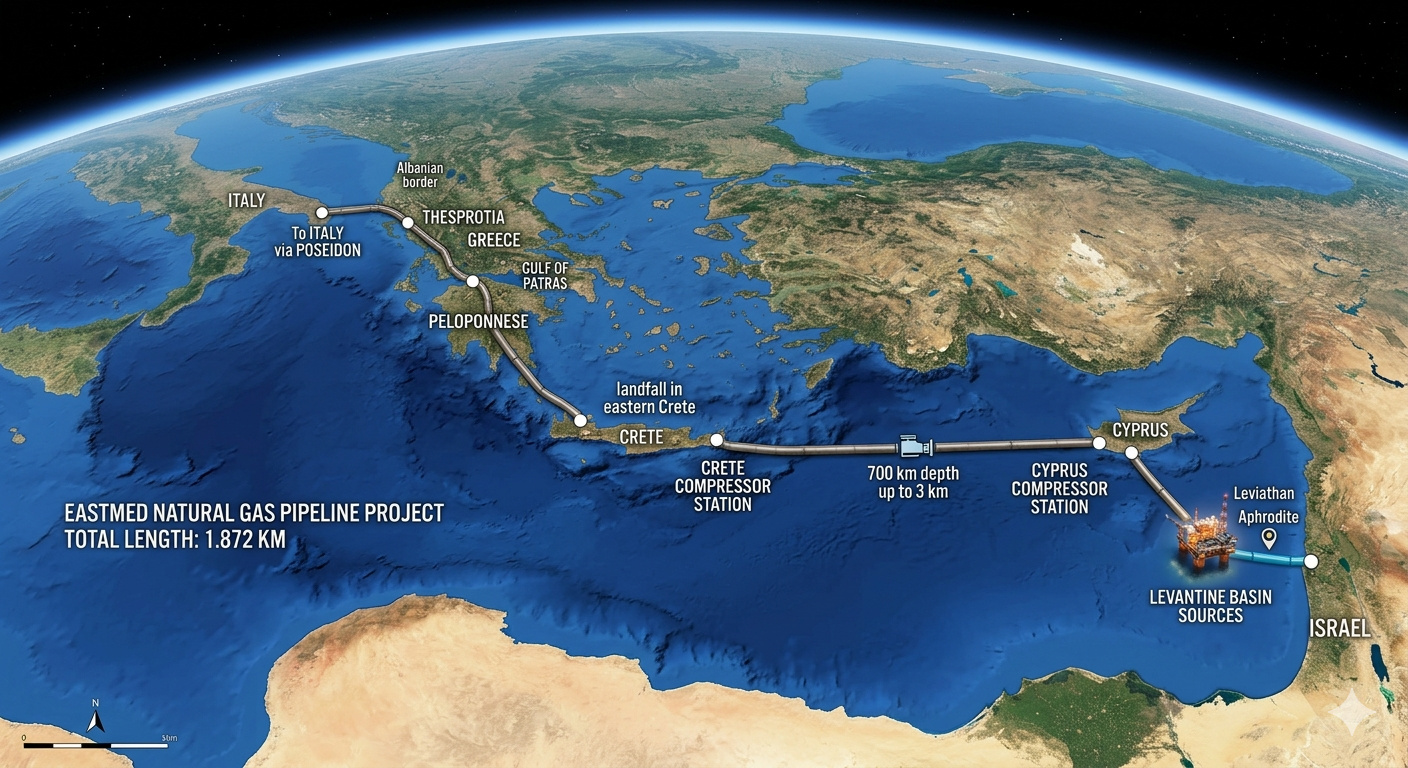
Israel, Greece, and Cyprus signed an agreement in 2020 to transport gas from the Mediterranean to Europe via a 1,872 km pipeline, but Turkey claimed sovereignty over part of the maritime route, and the project never materialized.
-
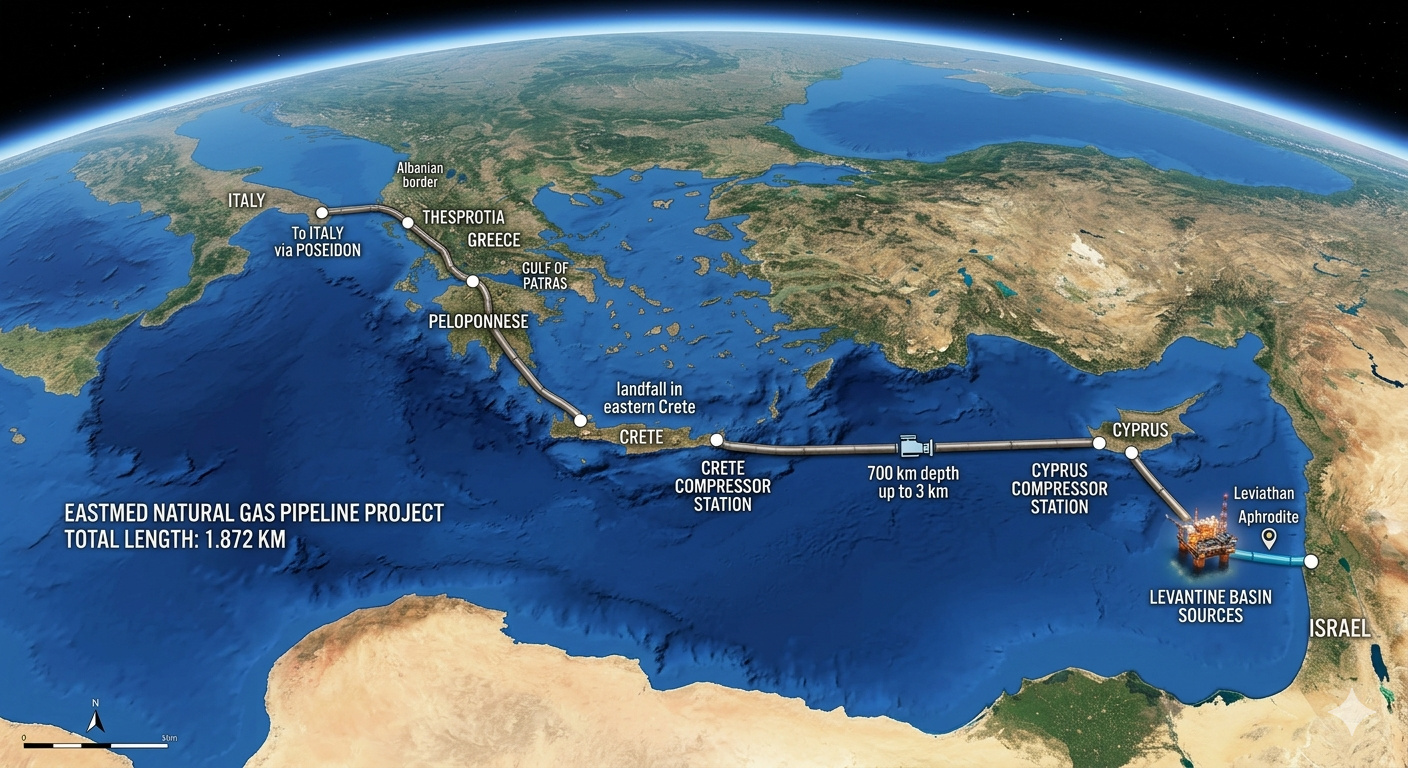
Israel, Greece, and Cyprus signed an agreement in 2020 to transport gas from the Mediterranean to Europe via a 1,872 km pipeline, but Turkey claimed sovereignty over part of the maritime route, and the project never materialized.

For many years, this capacity was primarily used to serve regions like the Southeast and Northeast, while the North itself continued with its underutilized potential.
The Tucurui High-Voltage Line was born precisely to reverse this scenario, connecting Tucurui to states that were previously isolated or partially integrated.
The great differential lies in the ability to fully harness the energy generated, bringing cheaper, cleaner, and more stable electricity to a vast area of the Amazon.
With this interconnection, Roraima, which is currently the only Brazilian state outside the National Interconnected System and has depended on diesel plants since 2019, gains access to the same transmission grid that supplies the rest of the country.
Amapá, which has suffered severe blackouts due to a lack of reliable interconnection, is also included in the energy integration map.
Main Technical Characteristics of the Tucurui High-Voltage Line
Behind the narrative of “the end of blackouts” lies a set of technical data that illustrates the scale of the challenge. Among the most important points of the Tucurui High-Voltage Line are:
- Origin at the Tucurui hydroelectric power plant in Pará
- Branches extending to Macapá (Amapá) to the east and Manaus (Amazonas) to the west
- Extension of about 1,800 kilometers in the main project
- Additional section Manaus–Boa Vista (Roraima) with approximately 724 km
- Operating voltage of 500 kV in the main section
- Transmission capacity of about 2,400 MW, allowing for the transport of large volumes of energy to the North
In addition to energy, part of the infrastructure is used to install fiber optic cables, which opens up opportunities for bringing broadband to remote areas, connecting communities that currently have limited internet access.
Thus, the Tucurui High-Voltage Line is not just a transmission line: it is also a corridor for communication and development.
Giant Towers of 300 Meters: The Symbol of the Crossing Over the Amazon
Along the route, the Tucurui High-Voltage Line demands unconventional solutions. This is the case for the special towers installed for the crossing of the Amazon River.
Two of them, known as towers 238 and 241, were built to be about 300 meters tall, reaching almost the same height as the Eiffel Tower.
These giant structures have critical functions:
- Allow the crossing of large rivers without the need for extensive deforestation
- Ensure that the cables pass above the treetops of the Amazon rainforest
- Maintain safe distances in flooded areas and complex soil
The combination of special foundations in flooded sections, towering towers, and extreme natural conditions make the Tucurui High-Voltage Line one of the most challenging projects ever undertaken in energy transmission in the country.
Environmental Challenges and Passing Through Indigenous Land
Another sensitive point of the Tucurui High-Voltage Line is the passage through conservation areas and indigenous lands. One of the most delicate sections crosses approximately 122 km of the Waimiri Atroari Indigenous Land.
To make the project feasible, it was necessary to:
- Negotiate with indigenous communities and their representatives
- Judicial mediation and rigorous environmental licensing
- Agreements for socio-environmental compensation
- Continuous monitoring of the project’s impacts
Additionally, the project foresees targeted deforestation for the installation of towers, which increases the responsibility for planning routes, choosing accesses, and mitigating environmental damage.
At the same time, the replacement of diesel power plants with hydroelectric energy reduces pollutant emissions, which represents an environmental gain in the medium and long term.
What Has Been Done and What Is the Deadline for Completion
The estimated investment in the Tucurui High-Voltage Line is around R$ 3.3 billion, under the responsibility of the concessionaire Transnorte Energia, a consortium formed by Eletrobras and Alupar.
By March 2025, the construction between Manaus and Boa Vista had already surpassed 70% completion, with authorization for commercial operation of the Manaus–Boa Vista section starting in September 2025. This indicates that:
- Important parts of the infrastructure are already operational or in the final stages of testing
- The official schedule points to complete integration of the region by 2027, consolidating Roraima’s connection to the National Interconnected System
The expectation is that, after complete completion, power outage episodes will become much rarer, and the dependence on diesel power plants will be gradually reduced.
Economic and Social Impact in the Northern Region
The full operation of the Tucurui High-Voltage Line is expected to generate a series of economic effects for the North:
- Reduction in energy generation costs, with substitution of diesel for hydroelectric
- Greater security in supply, attracting new productive investments
- Improved competitiveness of industries and services
- Expansion of direct and indirect jobs during and after construction
Additionally, the use of the infrastructure for fiber optics brings internet access to regions that were previously disconnected, influencing:
- Education, with the possibility of distance learning in isolated communities
- Health, with telemedicine and rapid communication with urban centers
- Trade and digital services, which start to reach more people
Stable energy and connectivity together are expected to change the developmental landscape of the Amazon, opening up opportunities for businesses that were previously unviable due to lack of basic infrastructure.
Will the Tucurui High-Voltage Line Really End Blackouts?
Even with all the technical power and the expected impact, the Tucurui High-Voltage Line is not a magical solution. It significantly reduces the chance of major blackouts caused by electrical isolation and weakness of local networks, but it will still be necessary to:
- Invest in continuous maintenance of the line and substations
- Reinforce distribution networks within towns and communities
- Ensure good operational and regulatory management of the system
In any case, the interconnection of Roraima and the strengthening of the network in Amapá represent a historic leap, moving from a costly, polluting, and unstable model to a structure aligned with the rest of the country.
The challenge that comes after the project is to ensure that management, regulation, and local investments keep pace with transmission infrastructure, so that the benefit reaches the end user, at the homes of those who still live in fear of the next blackout.
And you, do you believe that the Tucurui High-Voltage Line will be the endpoint of blackouts in the North, or that the biggest challenge now will be to maintain and manage this gigantic infrastructure in the coming years?







-

-

2 pessoas reagiram a isso.