





 English
  Francês
  Alemão
  Italiano
  Japonês
  Norueguês
  Portuguese
  Spanish
 5 min of reading


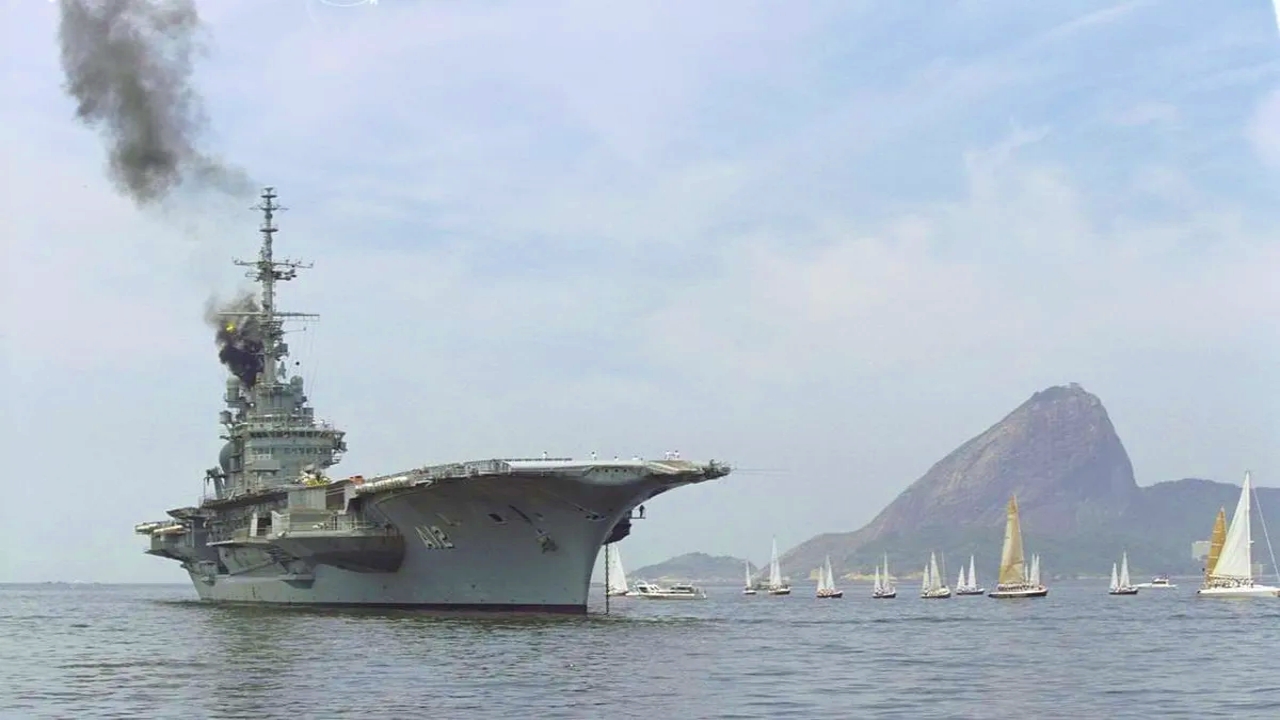
Nobody Knows What to Do with the Gigantic Decommissioned Ship of the Brazilian Navy That Became a Kind of Ghost That No One Wants Near Because It Is Carrying More Than 10 Tons of Toxic Products!
The largest warship of the Brazilian Navy, the former aircraft carrier São Paulo is circling in the sea off Pernambuco after being prevented from entering Turkey due to uncertainty regarding how much toxic material is still on board (especially asbestos, a cancer-causing material globally condemned that, according to international conventions, cannot be transported, let alone exported).
Once back in the country, the former aircraft carrier of the Brazilian Navy was not granted permission to dock at any port – not even in Rio de Janeiro, from where it departed three months ago – for the same reason that led to the Turkish refusal: the unknown quantity of toxic material on board.
Unprecedented Endless Back and Forth in the History of Brazilian Maritime Navigation!
For a month now, the 16 crew members of the Dutch tugboat, under the command of Russian Captain Dmitry Nefedov, have been awaiting a response that never comes. The ship cannot be anchored and no longer has engines or means of mobility in case of need, for safety reasons, the crew spends days and nights dragging that giant hull weighing 33,000 tons back and forth near the port of Suape.
-
New shoe factory in Ceará is expected to create 400 jobs and strengthen the local economy.
-
No one imagined it, but a mixture of sawdust with a mineral that fights fires surprises scientists with a result that changes the course of fire-resistant construction.

-
From empty land to a high-end house, wooden construction uses a lightweight system, metal structure for the foundation, ventilated ceramic cladding, and special windows to create an efficient and comfortable living space throughout the year.

-
From vacant land to a high-end house, wooden construction uses a lightweight system, a metal structure for support, ventilated ceramic cladding, and special windows to create an efficient and comfortable living space throughout the year.


“The tugboat still seems to have fuel, but its captain has already requested more food and supplies for the crew, which has also been partially replaced, as they had already been at sea for quite some time,” says a maritime agent from the Pernambuco port responsible for assisting the convoy, who also dares not say how this case, unprecedented in the history of Brazilian maritime navigation, will end.
Ship Contains 9.6 Tons of Asbestos
According to the inventory of the NAe São Paulo, the ship does not have PCBs on board but has 9.6 tons of asbestos.
Megan Corton Scott, a political activist from Greenpeace UK, said: “Our shared oceans, like our atmosphere, need collective international action to be properly protected.”
“We agree with international legal instruments such as the Basel Convention to regulate risks like this, but it requires nation-states to fulfill their legal duty and enforce the convention. That is all we are asking the Minister to do – ensure that DEFRA fulfills its legal duties under the Basel Convention.”
After All, How to Solve the Problem?
The first solution is for the Turkish company that bid on the ship to return the aircraft carrier to the Brazilian Navy, as this “game” has already cost more than R$ 15 million, also relinquishing what it paid for the ship at the auction: R$ 10.5 million – less than the cost of its useless transport so far and, according to experts, a value well below what the former aircraft carrier São Paulo would be worth, even as mere scrap.
The second alternative, to get rid of the mess as large as the ship itself that the former aircraft carrier of the Brazilian Navy has become, would be to sell it to another dismantling company in its current state.
The third would be to somehow overcome environmental restrictions (especially from state environmental agencies, like those in Pernambuco, which have already opposed the convoy’s stop in Suape) and dock the convoy at some Brazilian port to remove the asbestos that still exists on board the old warship.
Understand the Case of the Giant Aircraft Carrier São Paulo, 226 Meters Long and About 33,000 Tons of the Brazilian Navy
The giant aircraft carrier São Paulo, 226 meters long and about 33,000 tons, was the largest warship in the Brazilian Navy fleet, capable of carrying more than 1,000 crew members and 40 aircraft.
The vessel was decommissioned in 2018, auctioned in 2020, and purchased for R$ 10.5 million by the Turkish shipyard Sök Denizcilik Tic Sti, specialized in ship dismantling.
In August of this year, the tugboat left Rio de Janeiro with the giant ship headed for Turkey to be dismantled and turned into scrap. The voyage generated protests worldwide and was being monitored in real-time by Greenpeace.
In light of allegations regarding the illegal export of asbestos, the Turkish government revoked the authorization for the vessel’s entry, and shortly thereafter, Ibama (the Brazilian Institute of Environment and Renewable Natural Resources) suspended the export license and ordered the ship’s return to Brazil.
Since then, the vessel returned to Rio de Janeiro, where it did not dock due to a decision by the Navy, and from there moved on to Pernambuco. Prevented from docking at the port of Suape, the ship has been wandering back and forth along the Pernambuco coast since the beginning of October.
The Pernambuco government claims that the docking of the ship poses a health and environmental risk, as it has toxic cargo “infinitely greater” than declared, in addition to navigational risk, given the possibility of the vessel sinking in the access channel or at the port’s berth, which would hinder all of its port operations, along with abandonment risk since the ship was prevented from docking in Turkey.
MSK Maritime Services and Trading, Responsible for the Transport of the Former Aircraft Carrier, Wants to Sue the Port of Pernambuco
MSK Maritime Services and Trading, responsible for the transport of the former aircraft carrier, stated that it complies with international regulations related to ship recycling and is awaiting a resolution from Brazilian authorities.
The company also highlighted that it is considering legal action due to the environmental damage caused by the action taken by the Government of Pernambuco.
“While the ship awaits the authorities’ decision, approximately 20 tons of fuel are being consumed for the tugs to keep the ship afloat,” explains the company’s lawyer Zilan Costa e Silva.
The company further claims that the vessel did not reach its final destination “due to false news that led the Turkish environmental authority, under the precautionary principle, to suspend the authorization, thus complying with the Basel Convention mandate.”







Seja o primeiro a reagir!