





 Portuguese
  English
  Spanish
  4 min of reading
  0 comments


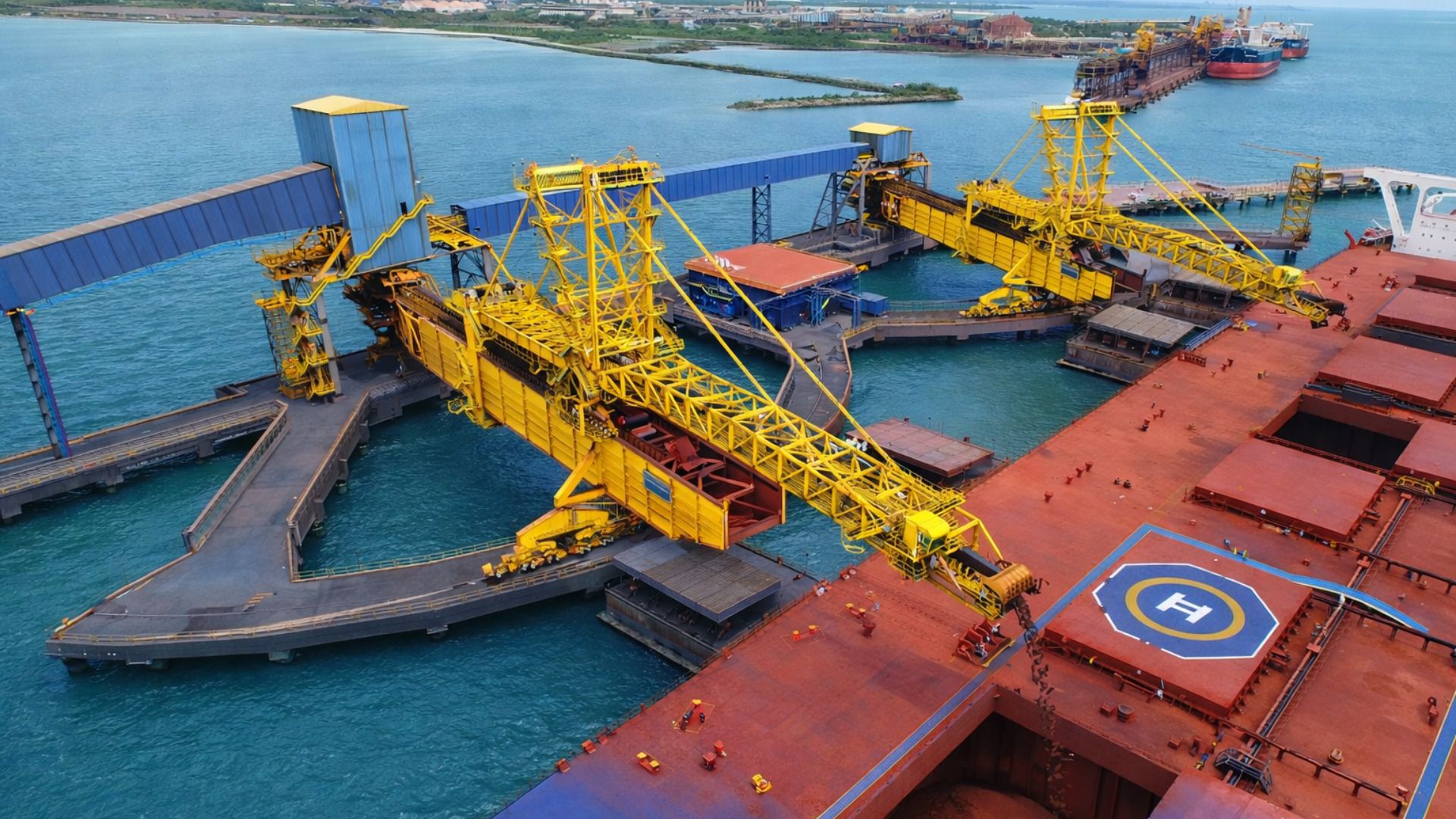
Colossal Engineering And Automation Structure Moves Up To 16,000 Tons Of Ore Per Hour At The Largest Mineral Export Terminal In Brazil, Connecting Railroads, Storage Yards, And Giant Ships In A Continuous Logistical Operation That Sustains A Significant Part Of The International Ore Trade.
At the Ponta da Madeira Maritime Terminal in São Luís, the EP-313K-06 plays a central role in a mechanism that begins at the railroad and ends with export ships, organizing iron ore and manganese in the yard before boarding.
With 45 meters in height and 1,800 tons, the structure is pointed out by Vale as the largest stacker in the world, a condition that has made it a reference among the yard equipment used in Brazilian mining and port logistics.
The size of the machine attracts attention, but its function explains the operational weight of the equipment within the Maranhão port, since it is up to the stackers to distribute and organize the stored cargo, while the reclaimers retrieve the material that will move forward to the ship loaders.
-
From a devastated quarry to an oasis of biodiversity with over 200 species: the incredible transformation of an old mine in Portugal that proves the power of nature to heal when given a chance.

-
This house in Japan has been transformed on the inside and now looks as if it has been excavated from the inside out like a surreal cave.
-
Globo presenter lives in an R$ 8 million mansion in the interior of São Paulo, with a private lake, basketball and tennis courts, a “private hotel,” a condominium costing R$ 4,000, and surprising details in the decor.

-
Want to fall asleep faster and better? This technique reduces the temperature of the extremities, slows down heartbeats, regulates breathing, and can prompt the release of melatonin in minutes, helping to combat nighttime anxiety.


Giant Machine That Organizes Mountains Of Ore
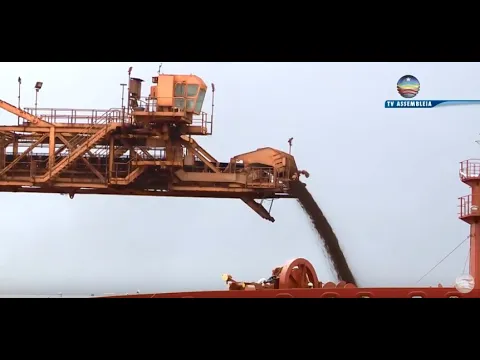

In the case of the EP-313K-06, Vale informs a capacity to move 16,000 tons per hour and highlights a specific feature of the project, which is the simultaneous unloading of two wagon tipplers, increasing productivity in the unloading area of the terminal.
This performance fits into a port structure designed to operate on a continuous scale, with 13 ore yards, a total area of 837,000 square meters, and a storage capacity of up to 9 million tons, according to the company’s institutional information.
In these yards, the ore arrives via the Carajás Railway, passes through the railway unloading system, moves on conveyor belts, and is distributed by a set of 16 machines, consisting of four stackers, five stacker-reclaimers, and seven reclaimers.
Path Of The Ore Between Railroad, Yard, And Ship
The initial stage of this chain occurs at the wagon tipplers, where, according to Vale, eight machines receive the ore transported by the railroad and unload up to 8,000 tons per hour each, with a 180-degree turn.
After this unloading, the material enters the conveyor system and moves to storage, at which point the stacker stops being just a large engineering piece and starts functioning as a direct link between arrival, stock organization, and regularity of boarding.
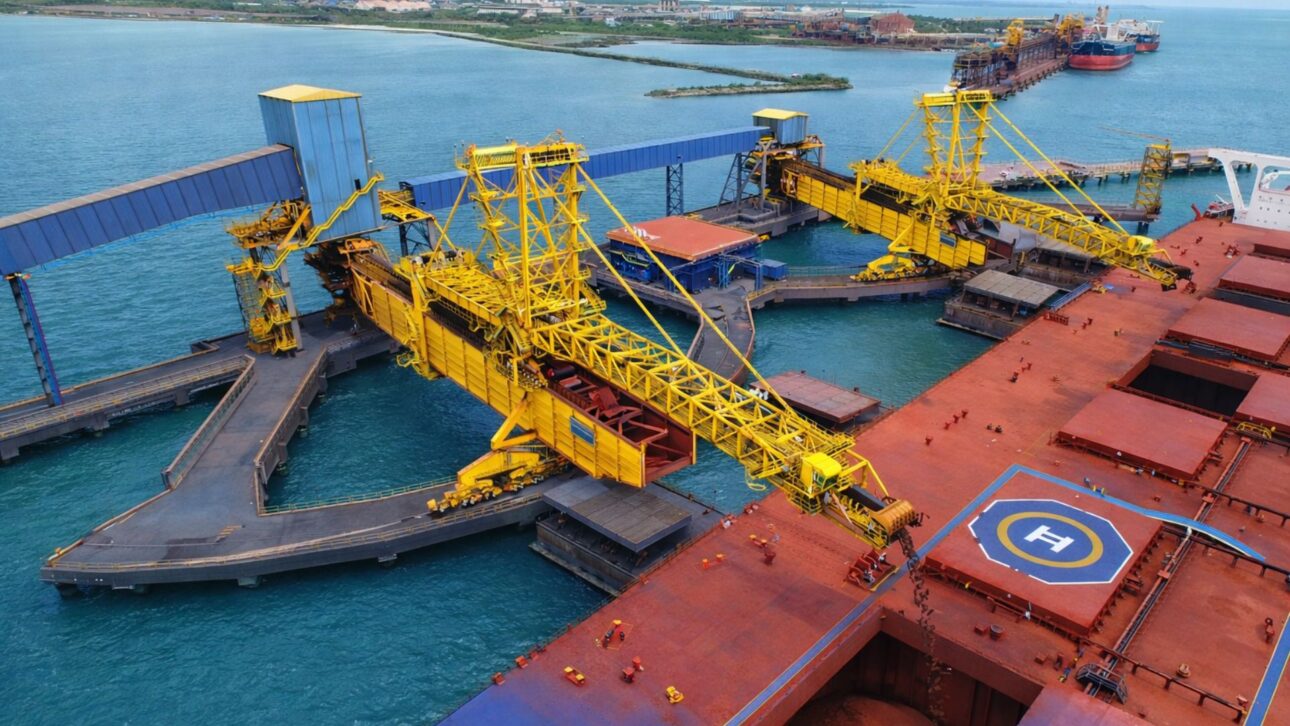
When the ore is already organized in the yard, the operation advances to the seafront of the terminal, which works with three piers and five berths, in a configuration designed to maintain high-volume boarding flow.
Port Structure Prepared For Giant Ships
At Pier I, a ship loader dumps up to 16,000 tons per hour and serves large vessels, including the Valemax ships, described by the company as bulk carriers with a capacity of up to 400,000 tons.
Pier III has two berths and three loaders with a capacity of 8,000 tons per hour each, while Pier IV adds another two berths and integrates the structure used to handle the exported volume.
It is in this context that the size of the EP-313K-06 gains practical shape, because the equipment does not operate in isolation nor serves merely as a symbol of industrial scale, but as a piece of synchronization between railway unloading, stock formation, and the rhythm of supplying ships.
Automation And Remote Control At The Terminal
The operation also stands out for its level of automation incorporated into the terminal, as Vale developed a system to remotely control stackers and reclaimers from the Port Control and Operations Center, reducing the direct exposure of operators in the yard.
At the Operational Control Center, the company claims to monitor in real time the scheduling of ships, unloading operations, stacking, and ore recovery, integrating in one room stages that, when viewed externally, appear spread over a vast industrial area.
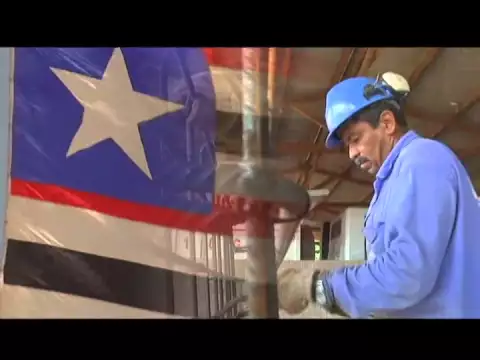
Assembly Of The Largest Stacker In The World
The trajectory of the installation itself helps measure the complexity of the project, as Tecnologística recorded that the machine was developed and supplied by the Italian Tenova Takraf, was assembled by a team of 300 people, and underwent about eight months of work until the final testing phase.
During the same period, Logweb reported that the stacker was part of Vale’s logistics expansion strategy in the Northern System, associated with reinforcing the rail and port infrastructure designed for the outflow of ore produced mainly in Pará.
Installed at the Itaqui Port Complex, on the east bank of the Bay of São Marcos, the EP-313K-06 materializes in steel, automation, and continuous scale a less visible stage of Brazilian mineral export, the one that precedes the more well-known image of the already-loaded ship leaving the dock.
Without this type of equipment, the operation would lose predictability precisely at the point where the ore needs to stop being just bulk volume and transform into organized stock, ready to feed one of the largest mineral cargo boarding routines in the country.






Seja o primeiro a reagir!