





 Portuguese
  English
  Spanish
  4 min of reading
  0 comments



Tamoios Highway, With 22.7 km, Will Be Inaugurated in November After Seven Years of Delay. The R$ 3 Billion Project Promises to Reduce Travel Time on the North Coast of SP and Alleviate Traffic. Will the New Road Solve Traffic Issues in the Region?
The project for the Tamoios Highway, in Serra do Mar, Will Transform Access to Tourist Destinations, But Its Impact Goes Far Beyond Expectations.
The southern bypass, which had a colossal investment of R$ 3 billion, is in the final finishing phase and is expected to be inaugurated on November 17. However, expectations are still surrounded by uncertainties regarding the exact date.
With a length of 22.7 km, the new highway aims to reduce travel time by half, connecting Caraguatatuba to the port of São Sebastião.
-
Unemployment rises again to 5.8% at the beginning of 2026, raising alarms about the end of temporary positions and its impact on the Brazilian job market.

-
Document organization can cut invisible costs in small businesses, a simple step that prevents waste, rework, and losses in daily operations.

-
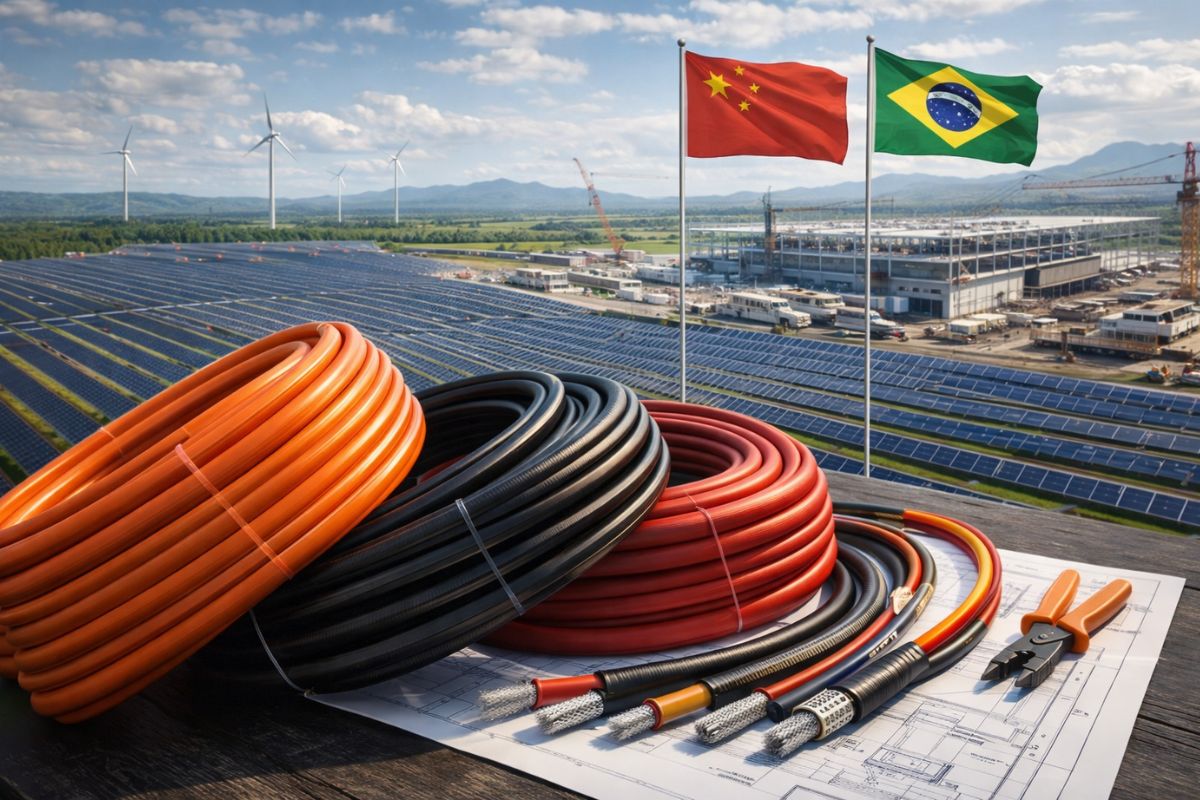
Chinese giant worth nearly R$ 4 billion that manufactures cables for electric cars, solar energy, and robotics wants to open a factory in SC.
-
Many employers do not know, but the law guarantees domestic workers a 25% increase in salary during trips, 50% for overtime, 20% for night shifts, and 17 additional benefits that can lead to labor lawsuits if not paid.

According to the state government, the road is expected to serve 10,200 vehicles daily, but it is still unclear how traffic will be during holidays and weekends, when flow increases exponentially.
The construction of the southern bypass is part of a larger project, which includes the northern bypass, inaugurated in December 2023.
Together, the two stretches total almost 34 km and have the primary goal of diverting heavy traffic from SP-055, especially trucks headed for the port of São Sebastião.
The new road, when finished at the port area and access to the ferry to Ilhabela, is expected to allow drivers to complete the route in just 18 minutes, at a maximum speed of 80 km/h.
For those who have already faced the difficulties of traffic on the urban stretch of SP-055, this is a tempting promise.
According to the newspaper Folha de S. Paulo, the current crossing between Caraguatatuba and São Sebastião can take more than 40 minutes on normal days.
During holidays, the situation worsens, and travel time can reach four hours. Between December 29, 2023, and January 2, 2024, for example, about 213,000 vehicles circulated through Caraguatatuba, and in São Sebastião, the daily average was 45,000 vehicles.
The new highway, in addition to relieving traffic, could boost tourism and the region’s economy.
According to Heloiza Lacerda Franco, president of the Ilhabela Commercial Association, the expectation is that hotel occupancy will grow by up to 15%, compensating for losses caused by problems with the ferries, which experienced lines of up to six hours in July.
A Partial But Promising Solution
Despite the relief that the new highway will bring, not everything is perfect. Half of the southern and northern bypass routes will have only one lane in each direction, which may limit flow during peak days.
Allan Tinôco, engineering manager of the Tamoios concessionaire, states that the single-lane model is part of the original plan and that future changes will depend on government decisions.
The new section will also have tolls in both directions, costing R$ 5 for passenger cars.
The system will be of the free flow type, with automatic charging gantries using cameras, installed at km 13.5 of the southern bypass. For now, the equipment is in testing phases at km 16 of the Tamoios Highway.
A Separate Challenge: Safety on the New Highway
The safety of the new highway is another concern.
During a visit by Folha de S. Paulo reporters to the southern stretch, animals such as horses and cattle were seen near the roadway, posing a potential risk for accidents.
The concessionaire has already notified the owners, and in some areas, fences will be installed to prevent animals from entering the road.
Additionally, the road is equipped with 450 cameras for monitoring, but there are still no speed radars installed.
The expectation is that these devices will become operational after the inauguration to ensure driver safety.
The Impact of the Delay
The works, which began in 2013, were expected to be completed by 2017 but were halted in 2018 after the termination of the contract with the original contractors.
Only in 2021 did the new concessionaire take over and resume construction.
According to the state government, delays and changes in the contract significantly contributed to the increase in costs, which reached the current R$ 3 billion.
Now, with completion imminent, residents and tourists await with expectation and some relief.
After all, the completion of this project promises to facilitate access to the beaches and boost tourism, a crucial sector for the region’s economy.
What to Expect from the Future of the Highway
Even with the inauguration, the future of the highway still raises questions.
The duplication of lanes, for example, is not included in the current project, and potential improvements depend on political decisions and new investments.
However, there is consensus that the new road already represents a significant advance for the northern coast of São Paulo.
With the inauguration date approaching, it remains to be seen whether the highway will be able to fulfill all its promises and truly transform mobility and tourism in the region.
Do you think the new highway will solve traffic problems on the São Paulo coast, or is there still much to be done? Share your thoughts in the comments!









Seja o primeiro a reagir!