





 Portuguese
  English
  Spanish
 4 min of reading
  0 comments


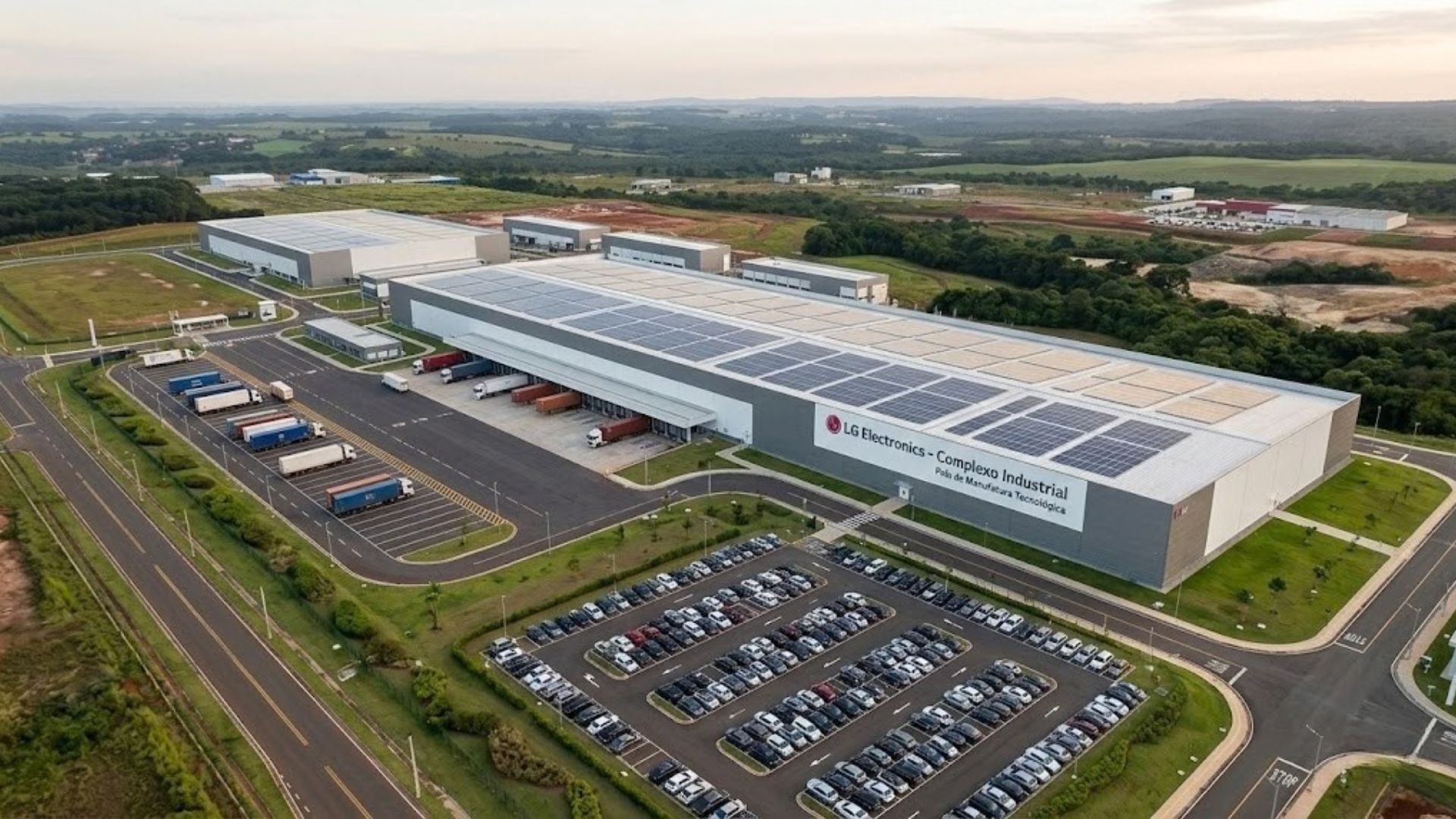
LG’s Billion-Dollar Investment in Paraná Reinforces Industrial Strategy in Brazil and Expands Refrigerator Production to Supply Market of R$ 16.4 Billion Annually
LG announced an investment of R$ 1.5 billion to build a new white goods factory in Fazenda Rio Grande, in the Metropolitan Region of Curitiba, with operations scheduled to begin in July 2026 and an initial capacity of up to 500,000 refrigerators per year.
The land designated for the complex totals 770,000 square meters, and the company presents the project as part of a strategy to consolidate Brazil as a production and regional supply base, focusing on South America.
According to estimates associated with the project, the facility is expected to create about 1,000 jobs between direct and indirect employment, with hiring distributed between the implementation stage and the full operational phase.
-
The government requests the Federal Revenue Service for a new system to automate the income tax declaration, reducing errors, time, and bureaucracy for millions of Brazilians.

-
Pix in installments, international Pix, and contactless payment without internet: the Central Bank revealed the new features coming to the tool that is already used by almost every adult in Brazil.
-
Mercado Livre has just started selling medications with delivery in up to three hours to your door, and this move could completely change the way Brazilians buy medicines on a daily basis.

-
In Dubai, rising tensions from the war in the Middle East are causing super-rich individuals to leave the Gulf and direct their fortunes to a new financial refuge in Asia.

Refrigerator Market in Brazil Generates R$ 16.4 Billion Annually

Although the brand’s portfolio includes TVs, air conditioners, and technology products, the decision to begin local production of refrigerators was presented as a volume movement, aimed at the segment that accounts for the majority of sales in the country.
According to LG, the Brazilian market sells 4.8 million refrigerators per year, with annual revenue of R$ 16.4 billion, which placed the category at the center of the industrial plan announced for Paraná.
Within this universe, the company claims to specifically target the mid-range segment, consisting of models like duplex and inverse, which would represent 82% of sales in Brazil, according to numbers provided by the company itself.
By connecting the new plant to its commercial strategy, LG also linked the investment to the goal of reducing reliance on imports in categories deemed essential for scalability, creating a local production and distribution flow.
Factory Schedule and Expansion to Washer-Dryer in 2027
The projected timeline indicates that the factory will start operations in the second half of 2026, with inauguration planned for July, initially launching with refrigerators before gradually expanding the product mix.
The manufacturing of washer-dryers is expected to be a subsequent step, targeted for 2027, when the unit will undergo adjustments and line expansions to incorporate the new category.
In the meantime, LG describes the complex as a white goods hub focused on large-scale local production, with an initial capacity defined and the possibility of adjustments as commercial and industrial progress occurs.
Second LG Facility in Brazil Beyond the Free Trade Zone of Manaus

The Fazenda Rio Grande plant will be the second manufacturing unit of the multinational in Brazil, which has operated in the Free Trade Zone of Manaus for over 27 years, concentrating part of its manufacturing in the Amazon industrial hub.
With the installation in Paraná, the company will divide its industrial base between two hubs, in regions with distinct logistical profiles, while reinforcing its recent focus on white goods.
Negotiation with the Government of Paraná and Memorandum of Understanding
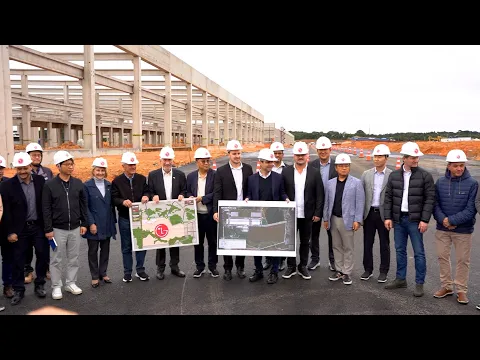
The arrival of LG in Paraná was preceded by a location dispute and negotiations led by the state government, which cited as a milestone the international mission to South Korea in 2023, led by Governor Carlos Massa Ratinho Junior.
The initial formal step took place on February 23, 2024, with the signing of a Memorandum of Understanding between LG Electronics and the Government of Paraná in Curitiba, a document treated as a protocol of intentions to facilitate the installation.
At the time, the state government noted that points such as a detailed schedule and final values would still depend on further definitions, even with the advancement of negotiations and the public announcement of the installation in Fazenda Rio Grande.
From the corporate side, LG’s Global President of Home Appliances and Air Solutions, Jaecheol Lyu, stated that the company assessed the market and investment and identified conditions of infrastructure and logistics in Paraná as suitable for the project.
Economic Impact, Jobs, and Retail Supply

The job creation expectation involves functions directly linked to the production line and support areas, as well as indirect positions associated with suppliers, services, and logistics, in a movement that typically radiates demand for different local segments.
In mentioning the effects of the chain reaction, the Vice Governor Darci Piana associated the factory with reducing imports and retail supply, stating: “Imagine all the stores that will have products manufactured in Paraná.”
The same statement also linked production in Fazenda Rio Grande to commercialization in other South American markets, an argument used to position the plant as part of a regional distribution strategy.
Commercial Strategy and Expansion of Presence in Brazilian Retail
Alongside the industrial investment, LG reported that it has expanded its distribution strategy and that, by July 2025, it would have tripled the number of positions at points of sale, with expectations for further expansion throughout 2026.
This movement is presented as an attempt to gain scale beyond the premium niche, bringing the brand closer to the mid-range segment and connecting product offerings to a broader physical presence in retail networks.
When discussing refrigerators, the company also mentioned technologies being used in white goods communication, such as InstaView, in a combination of product attributes with the goal of increasing market share in specific categories.
With operations expected to start in 2026 and expansion into new categories planned for 2027, the project’s performance will depend on the pace of hiring, commissioning of production lines, and the capacity to meet the announced volume.








-

-

-

-

-

-

41 pessoas reagiram a isso.