





 Portuguese
  English
  Spanish
  3 min of reading
  0 comments


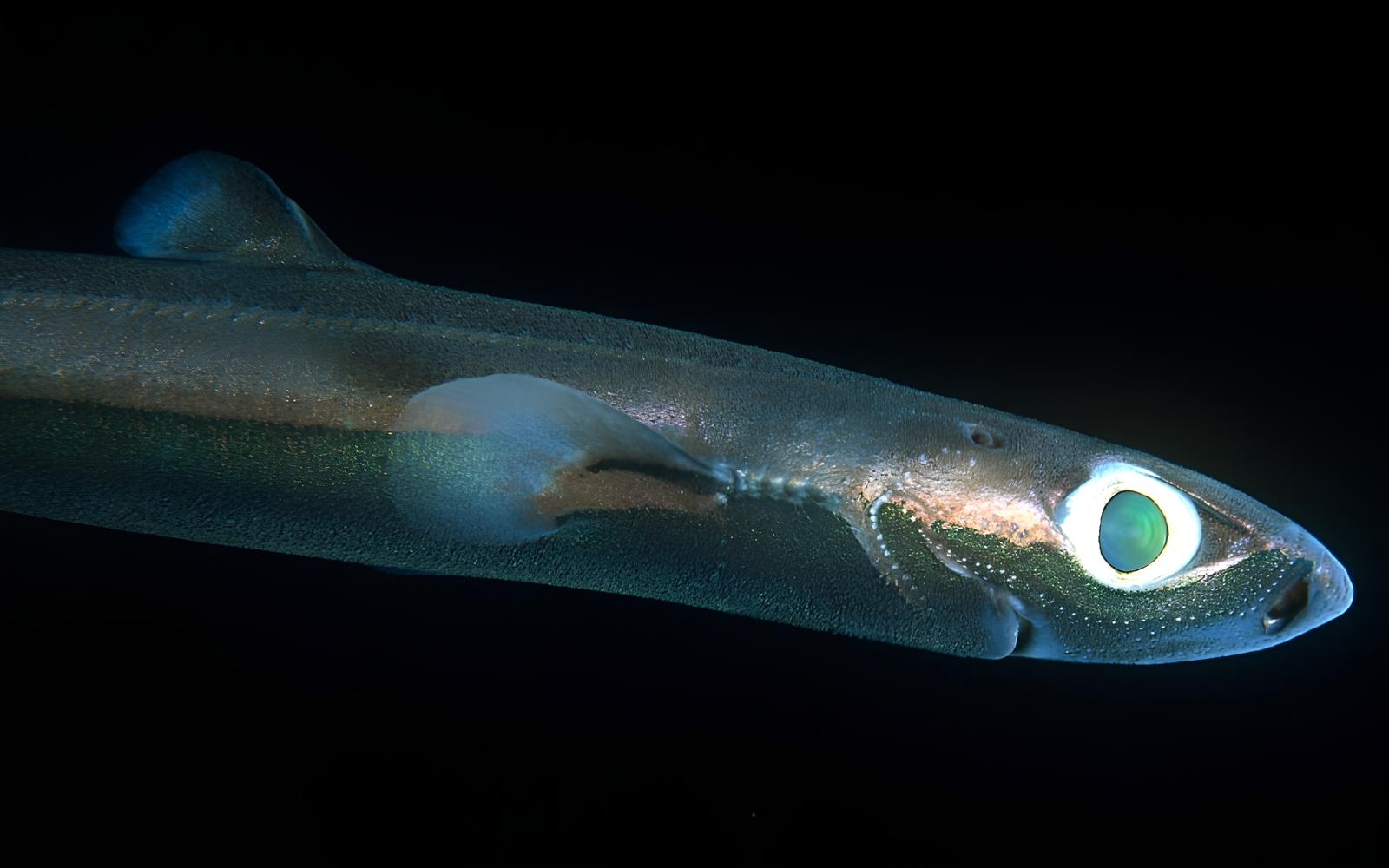
The Smallest Shark In The World Measures Only 16–20 Cm And Lives In The Depths Of Colombia And Venezuela, Intriguing Researchers With Extreme Adaptation.
The ocean still holds secrets that challenge common sense. Among great predators and marine megafauna, there is a shark that fits in the palm of your hand, weighs a few dozen grams, and lives in depths where there is almost no light: the puppy lantern shark, also called dwarf lanternshark or Etmopterus perryi. It occupies such a discreet and restricted niche that, to this day, it is known only in deep regions near Colombia and Venezuela, in the western Caribbean.
To the surprise of many, it is classified as a true shark, belonging to the Etmopteridae family, and not a common bony fish. What sets it apart is a set of physiological characteristics typical of elasmobranchs, including specialized cartilage, functional dentition, and a sensory structure adapted for hunting.
The Smallest Shark In The World: Numbers That Impress
The title of “smallest shark on the planet” is not symbolic, it is literal and documented. Scientific records indicate that:
-
Friends have been building a small “town” for 30 years to grow old together, with compact houses, a common area, nature surrounding it, and a collective life project designed for friendship, coexistence, and simplicity.

-
This small town in Germany created its own currency 24 years ago, today it circulates millions per year, is accepted in over 300 stores, and the German government allowed all of this to happen under one condition.

-
Curitiba is shrinking and is expected to lose 97,000 residents by 2050, while inland cities in Paraná such as Sarandi, Araucária, and Toledo are experiencing accelerated growth that is changing the entire state’s map.

-
Tourists were poisoned on Everest in a million-dollar fraud scheme involving helicopters that diverted over $19 million and shocked international authorities.


• Adult Males: about 16–17.5 cm
• Adult Females: about 19–20 cm
• Estimated Weight: a few dozen grams
• Estimated Depth: 283–439 meters, depending on the literature
• Distribution: Caribbean Sea, near the north of South America
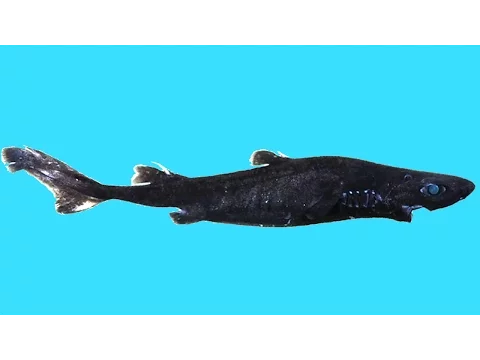

The species was first described in 1964, but through scientific captures and indirect observations, it continues to be a rare case. Due to its extremely small size and deep habitat, it almost never appears in common fishing.
Glow In The Dark: Bioluminescence As A Strategy
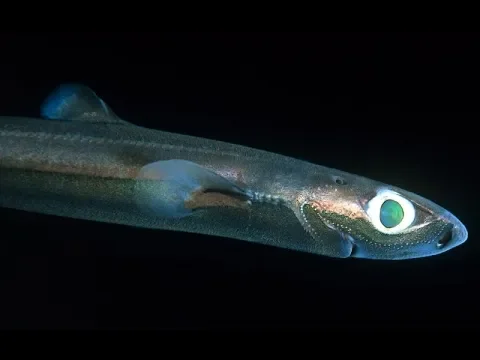
In addition to being tiny, the Etmopterus perryi has another peculiarity: it glows. Like other lantern sharks, its body has photophores, structures responsible for bioluminescence, capable of emitting bluish light. Researchers propose two main functions for this phenomenon:
Counter-illumination:
The emitted light confuses predators looking up from below, reducing the contrast of the animal against the filtered light of the ocean.
Interspecies Communication:
Light patterns may assist in mating or forming small groups.
This strategy is utilized by various deep-sea organisms, from shrimp to giant squids, but in sharks, it adds a rare and intriguing evolutionary layer.
Dependent On The Depths And Rare In Sampling
The habitat of the puppy lantern shark is classified as mesopelagic to shallow bathyal, an oceanic zone poor in light and with cooler temperatures. This explains why:
• it is extremely rare to find it alive,
• it does not appear in fishing trade,
• and it remains poorly studied.
Most available information comes from accidental catches, analyses of preserved specimens, and indirect observations in oceanographic surveys.
Miniature Predator
Even the size of a smartphone, the puppy lantern shark is a carnivorous predator, feeding on:
• small crustaceans,
• fish larvae,
• gelatinous organisms from the zooplankton.
Its teeth are adapted to grasp small prey, and its reduced metabolism favors long periods between meals, something essential at 300+ meters deep, where food is scarce.
Little Giant Of Marine Evolution
For science, this creature represents much more than a size record. It raises questions about:
• evolutionary miniaturization,
• physiological limits of bioluminescence,
• mesopelagic distribution in the Caribbean,
• elasmobranch adaptation to low temperatures,
• invisible conservation — since there is not enough data to assess the real threat.
Conservation Status: Practically Unknown
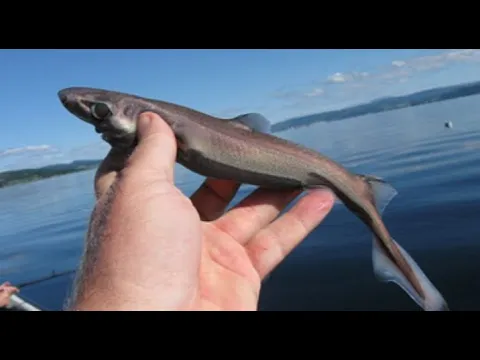
The IUCN classifies the species as DD (Data Deficient) — meaning there is not enough data to determine if it is at risk. This worries researchers because:
• climate change
• trawling
• and oil exploration in the Caribbean
could affect an organism that no one really monitors.
While giant sharks like the great white shark or the basking shark earn title for their size, the Etmopterus perryi marks its name in history for being the smallest, the most discreet, and one of the rarest known, a reminder that, at the bottom of the Caribbean, life can be surprising, silent, and microscopic.










-

-

2 pessoas reagiram a isso.