





 Português
  Inglês
  Espanhol
  4 min de leitura
  27 comentários


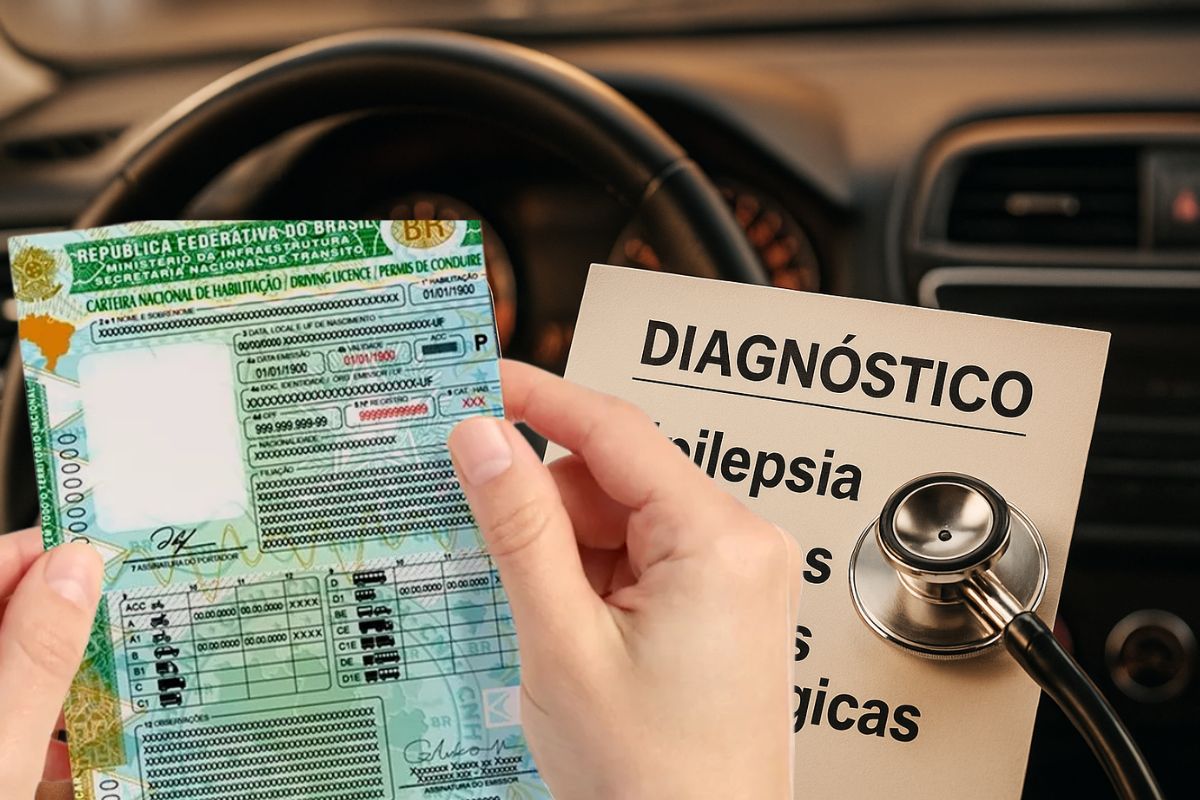


Government Bans Renewal Of Driver’s License For Drivers With Uncontrolled Epilepsy, Schizophrenia, And Severe Visual Deficits.
The decision of the Brazilian government brings significant changes to the driver’s license renewal process. From now on, drivers with certain health conditions may have their requests denied, even if they have been driving legally for decades. According to information from the FDR portal, the measure is presented as a way to increase traffic safety and reduce the risk of accidents.
The list includes neurological, psychiatric, and severe visual conditions that impair driving ability.
The renewal of the driver’s license will depend on stricter medical exams, and many drivers will need to present reports proving control and stability of their clinical condition to remain licensed.
-
Brazilian city gains industrial hub for 85 companies that is equivalent to 55 football fields.

-
Peugeot and Citroën factory in Argentina cuts production by half and opens a layoff program for more than 2,000 employees after Brazil drastically reduced purchases of Argentine vehicles.

-
A Brazilian city gains a factory worth R$ 300 million with the capacity to process 200 thousand tons of wheat per year, a mill of 660 tons/day, silos for 42 thousand tons, and an industrial area of 276 thousand m².

-
Havan will leave the shopping mall in Blumenau to inaugurate something that the chain has never done before: a megastore in half-timbered style in the Historic Center of the city, which is expected to be completed in May and change the landscape of local retail.


Which Diseases Prevent Driver’s License Renewal
According to the FDR, the government determined that the list of restrictions includes diseases that directly affect attention, reflexes, and perception of reality. Among them are:
Uncontrolled epilepsy, which can cause sudden seizures while driving;
Certain forms of schizophrenia, where symptoms affect judgment and perception;
Severe visual deficits, especially when vision cannot be corrected with lenses or glasses.
In these cases, the renewal of the driver’s license can be denied or even the first license may be blocked.
The measure brings Brazil closer to practices already applied in countries that restrict licenses for drivers with relevant medical conditions.
Why The Government Changed The Rules
The central argument is road safety. Drivers with severe limitations represent risks not only to themselves but also to pedestrians and other drivers.
The government claims that the restriction reduces the possibility of serious accidents and ensures that only people in full health conditions are authorized to drive.
According to the FDR, the change also responds to demands from medical and traffic entities, which alerted to failings in detecting problems in previous assessments.
Now, periodic examinations carry more weight and can result in the refusal of driver’s license renewal even for those who have been driving for years.
Direct Impacts For Drivers
For those already licensed, renewal will depend on passing periodic medical exams. If the condition is deemed serious and inadequately controlled, the document may be suspended.
For those seeking their first license, the request may be denied if the medical board finds one of the described conditions.
There are also intermediary situations. Drivers with controlled conditions, through treatment and medical reports, may keep their driver’s license active.
In this case, it will be necessary to prove stability of the condition and present updated documentation during the evaluation.
What To Do In Case Of Denial
The FDR emphasizes that the driver whose driver’s license renewal is denied does not have to exhaust all alternatives. Among the options are:
- Consultation with a specialist to obtain reports proving disease control.
- Administrative appeal with the DMV, requesting a review of the case.
- New medical assessment, conducted by an official board that can reevaluate the driver’s fitness.
These paths may allow drivers deemed unfit but initially denied a chance to prove their condition and regain their right to drive.
Is It Worth Tightening The Rules?
For the government, the measure is necessary to protect lives.
The renewal of the driver’s license becomes a more rigorous process dependent on medical verification, which can save lives on roads and urban streets.
However, for drivers facing controlled illnesses, the rule may be seen as a bureaucratic challenge.
The risk of losing the driver’s license even after years of driving experience generates anxiety and raises debates about proportionality and inclusion.
The new rules show that the renewal of the driver’s license is no longer just a formality: it is now a health and safety test that can prevent thousands of Brazilians from continuing to drive.
While some see the change as progress, others consider it excessive restriction.
What do you think, is the decision to bar renewal of the driver’s license for drivers with these diseases fair? Does the measure increase safety or harm those who have been driving for years with medical supervision?
Share your opinion in the comments — we want to hear from those who live this situation up close.










Acredito que a medida esteja correta no sentido de evitar mais mortes no trânsito.
Nesse mesmo sentido, os médicos deveriam informar em um sistema sempre que prescrevessem medicamentos em cujas bulas esteja explicitado que o paciente não deve operar máquinas e/ou veículos.
Ainda, testes para o uso de drogas ilícitas deveriam ser exigidos anualmente para todos os condutores de veículos automotores como forma de reduzir acidentes por uso dessas substâncias. Quem sabe não colheríamos um benefício extra, reduzindo a drogadição e famílias destruídas pela dependência química.
No meu entendimento como conhecedor das leis, poderia também incluir nesse rol àqueles que matam na direção de um veículo automotor e respondem como homicídio culposo estando EMBRIAGADOS, DROGADOS e PRATICANDO RACHAS DE RUA, uma vez que na Constituição reza que o maior bem jurídico tutelado é à vida.
Acabar com esses genocídios onde famílias perdem seus entes por totais irresponsabilidades.
Há jovens dirigindo sem habilitação. Há jovens com IPVA atrasado. Há jovens avançando o sinal vermelho. A maioria dos acidentes graves são os jovens as vítimas.
E o pior, matam e nada lhes acontece, infelizmente o dinheiro compra tudo neste país, pois os legisladores não fazem nada para mudar as leis tornando-as muito mais rigorosas. Uma vergonha um bando de ordinários só se prestam à roubar.