





 Portuguese
  English
  Spanish
 6 min of reading
  0 comments


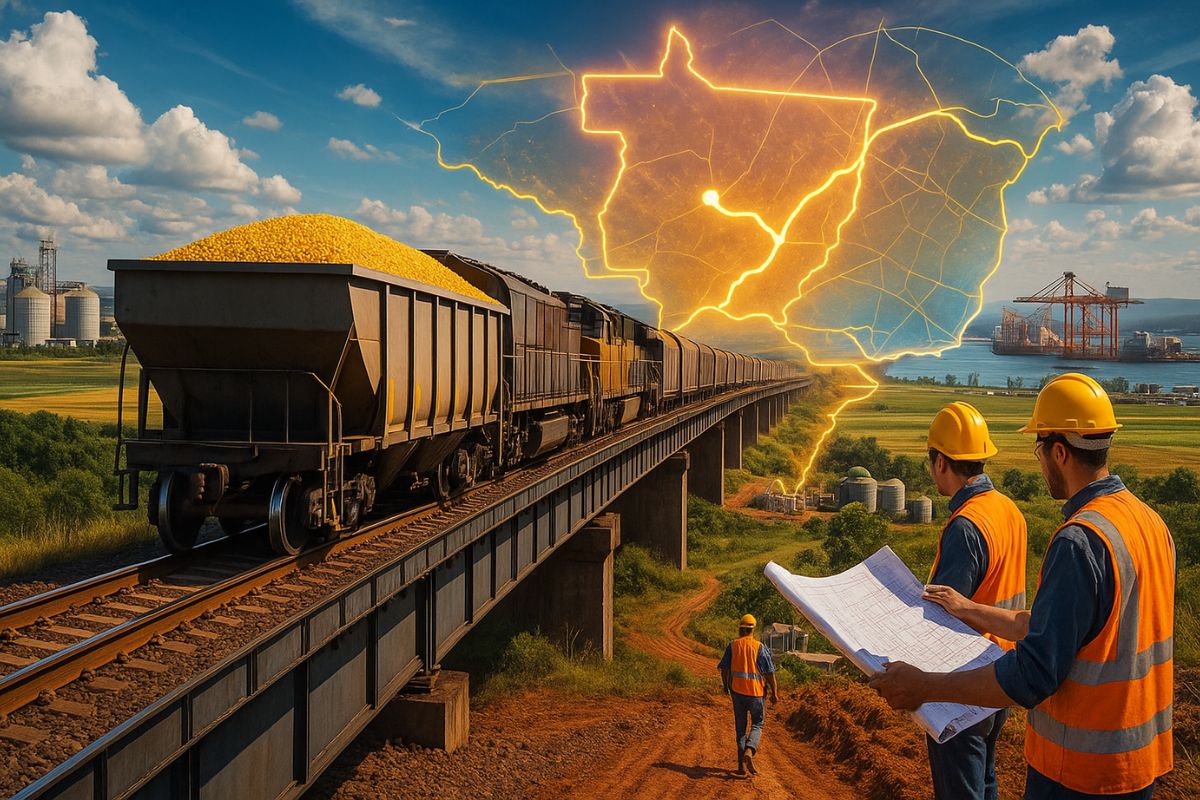
With Investment of Up to R$ 15 Billion, the State Railway of Mato Grosso Advances 743 Km Between Rondonópolis and Lucas do Rio Verde, Connecting the State’s Agribusiness to the São Paulo Network Towards the Port of Santos and Redrawing the Country’s Logistics Map
The largest railway project underway in Brazil is in full swing in the interior of Mato Grosso. The State Railway of Mato Grosso, built by Rumo Logística, is laying tracks on a strategic axis that starts in Rondonópolis, crosses the state northwards, and integrates with the existing network leading to the Port of Santos. With a projected length of 743 kilometers and an estimated investment between R$ 12 billion and R$ 15 billion, the project consolidates a railway corridor designed for grain transportation and to relieve pressure on the highways.
In practice, the State Railway of Mato Grosso is designed to accommodate the explosion of agricultural production in the state, which is responsible for about 40 percent of the 150 million tons of grains exported by Brazil in 2024. At the same time, the project introduces a new regulatory model, with state authorization and completely private infrastructure, in which Rumo will own the railway line for a hundred years, instead of the traditional concession regime that returns the asset to the public sector at the end of the contract.
What’s at Stake with the State Railway of Mato Grosso
The State Railway of Mato Grosso is conceived as a long-distance logistics axis to take trucks off the roads and shorten the journey between farms in the northern part of the state and the São Paulo coast.
-
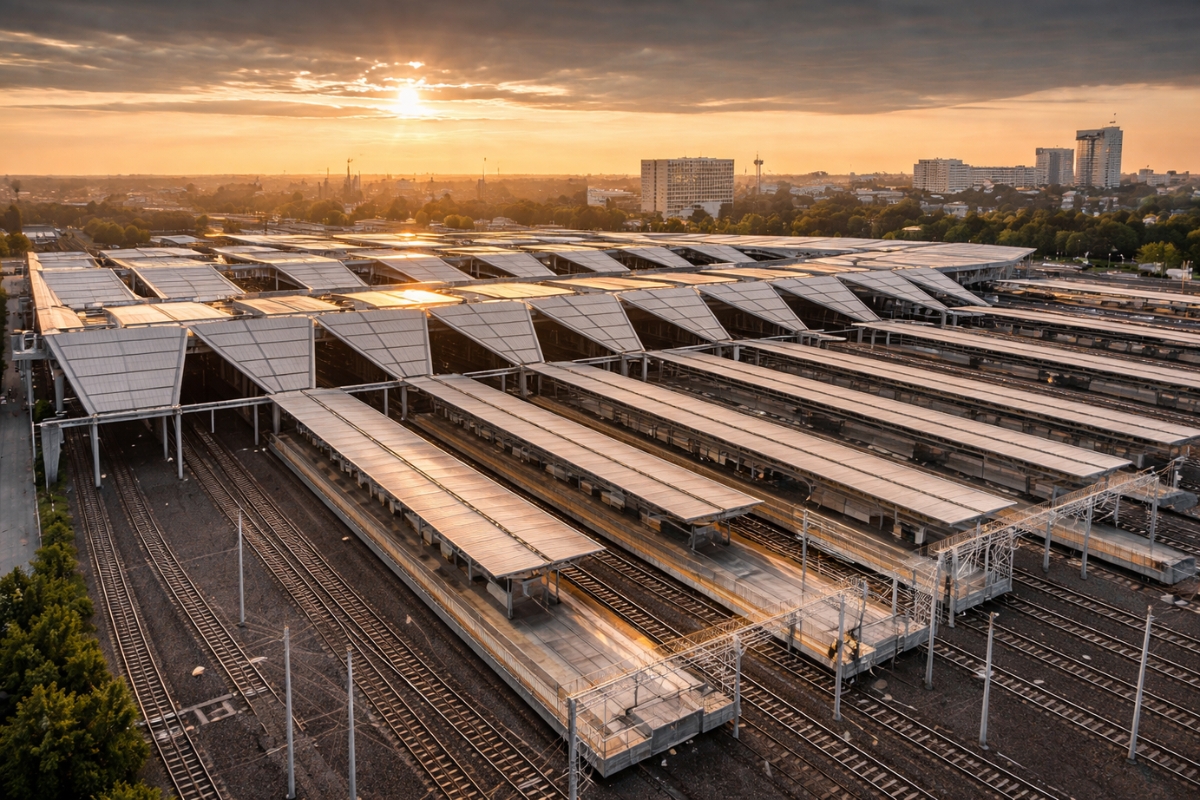
In A European City, The Country’s Largest Railway Junction Was Modernized Without Closing Its Doors, Kept Trains Running During Years Of Construction, Now Serves Up To 60,000 Passengers Per Day, And Installed Solar Panels That Generate About 30% Of Its Energy
-
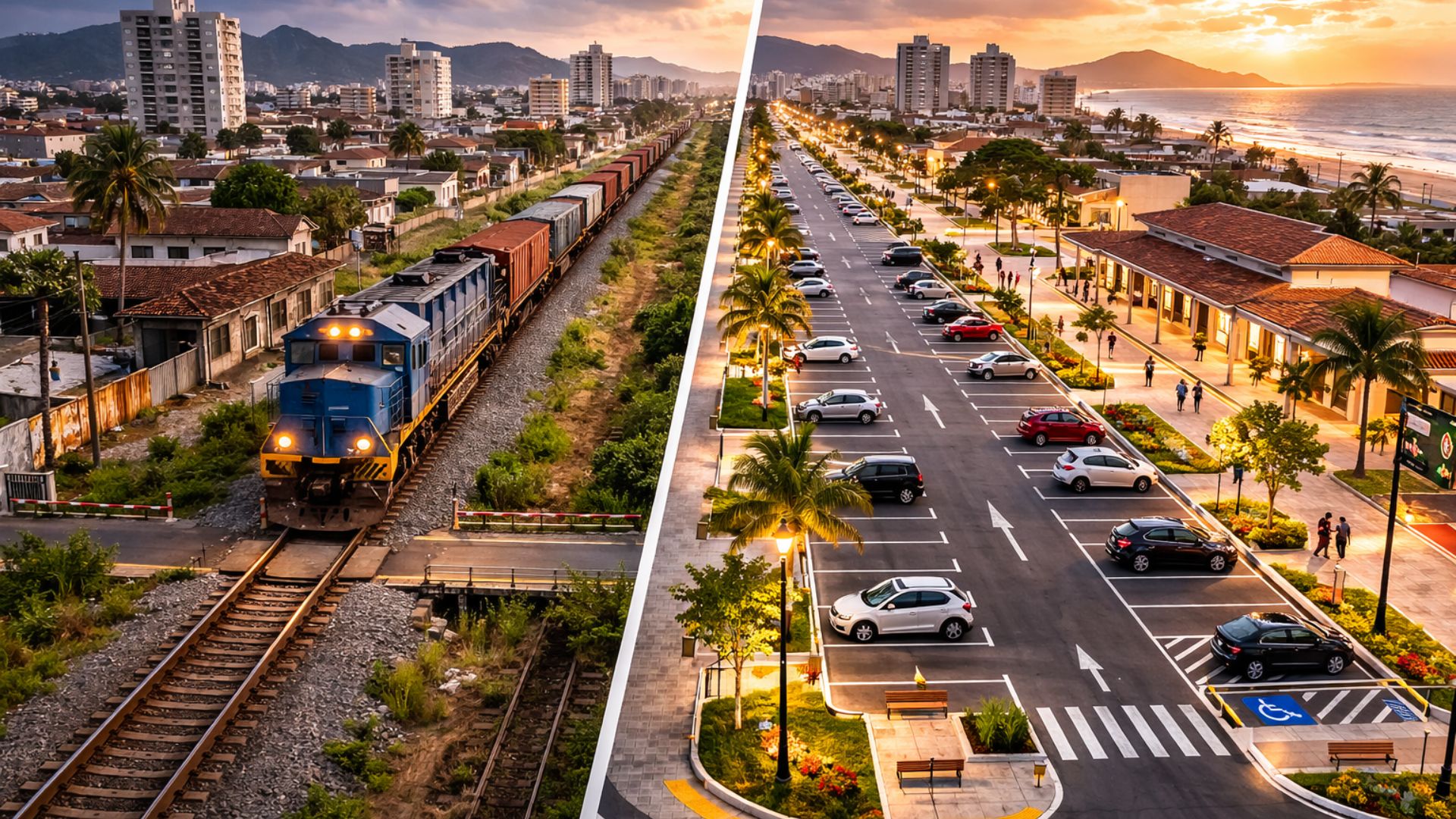
Famous Brazilian Railway May Become a Parking Lot
-
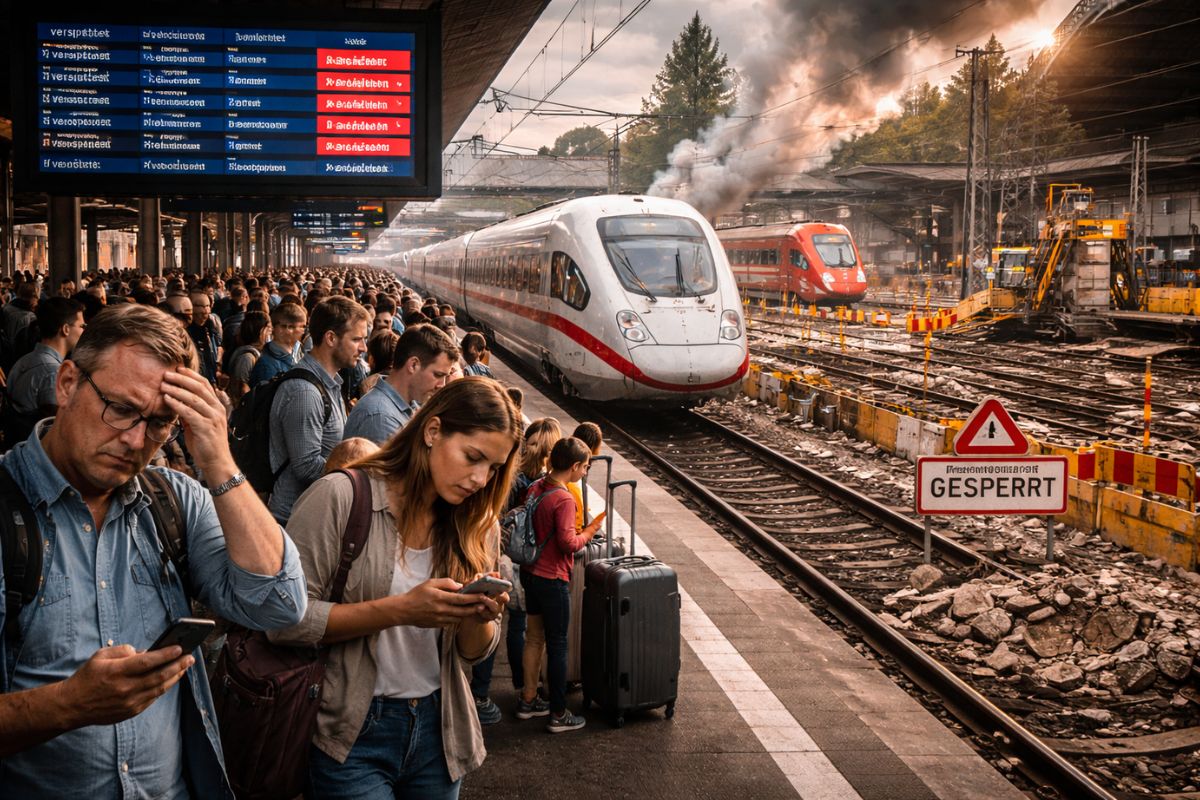
The Country of “Punctual As a Train” Admits It Has Lost Control: High-Speed Trains Delay, Stop, Disappear from the Map and Turn 6-Hour Trips into 10, While Deutsche Bahn Promises Restructuring in 2026 But Faces 19th Century Infrastructure, Staff Shortages and Sections Closed for Months
-
With an Investment of R$ 700 Million in One of the Country’s Main Rail Networks, VLI Reinforces Infrastructure, Receives 8 New Locomotives, and Expands the Corridor Connecting 7 States, Boosting Jobs and the Transportation of Grains, Ore, and Oil Products to the Port of Santos

Today, the operational base is in Rondonópolis, a city that already houses Rumo’s main terminal, with a capacity to handle 22 million tons per year and receive around 1,600 trucks daily.
The railway expansion brings this infrastructure closer to the advancing agricultural frontier.
The grain frontier is growing mainly in northern Mato Grosso, while the south has little space for expansion.
The railway seeks to capture this additional production and channel it to the company’s São Paulo network and, from there, to the Port of Santos, reinforcing the role of the port terminal as the main outlet for agricultural commodities in the country.
743 Km Corridor: Segments, Works, and Schedule
In the first phase, the State Railway of Mato Grosso is focused on the segment between Rondonópolis and Campo Verde, part of the route that will later extend to Lucas do Rio Verde.
With a budget of R$ 5 billion, this initial segment is 211 kilometers, of which 160 kilometers are expected to be in operation by 2026, bringing some logistical gains before the total completion of the line.
The engineering complexity is one of the project’s highlights.
Along the 743 kilometers, there are plans for 22 bridges, 21 viaducts, and 2 kilometers of tunnels, in addition to earthworks and special art structures in 16 municipalities crossed by the railway.
Tracks, 400-kilogram concrete sleepers, and metal structures are accumulating in construction sites spread throughout the state, in a construction site that is already mobilizing thousands of workers.
The goal is to have the entire State Railway of Mato Grosso operational by 2030, consolidating the corridor that connects Lucas do Rio Verde to the existing network towards São Paulo and the Port of Santos.
Jobs, Investments, and Impact on the Affected Cities
The project also has significant weight on the regional labor market.
Rumo estimates that the State Railway of Mato Grosso could generate 145,000 direct and indirect jobs throughout the implementation cycle, with approximately 5,000 workers already mobilized in the first phase of the project.
This group represents about 60 percent of all infrastructure job openings in Mato Grosso today.
In the municipalities crossed by the route, the impact is visible.
Professionals are arriving from different regions of the country, from Maranhão to ABC Paulista, joining local teams in roles ranging from sleeper factory operations to work safety control.
The construction of intermediate terminals also repositions the economy of strategic cities, such as Dom Aquino, where a terminal with capacity to handle 10 million tons per year is being implemented, directly connected to the new railway.
The multiplier effect on services, commerce, accommodation, and municipal income tends to extend beyond the construction phase as the terminals begin to operate at harvest rates throughout the year.
An Unprecedented Regulatory Model in Brazil
The State Railway of Mato Grosso is also an institutional laboratory.
This is the first state authorization for the construction and operation of a railway in the country, supported by the new railway law approved in 2022.
Instead of following the classic federal concession model, where the infrastructure returns to public power at the end of the contract, the line belongs to Rumo, which holds the right to operate for a period of a hundred years.
This model requires the creation of a regulatory framework at the state level, less consolidated than the federal level.
Environmental licenses, safety parameter definitions, interaction with municipalities, and alignment with the national transport policy are being developed in parallel with the physical works.
At the same time, the model is already beginning to attract the interest of other business groups, including the cellulose sector, which are evaluating similar projects in different regions of the country.
Reversal of the Devaluation of Railways
For decades, Brazil’s transportation matrix favored the road modal, especially following the National Transportation Plan at the end of the 1950s when the state’s priority turned to the automobile industry.
The result was the stagnation and even the deactivation of part of the national railway network.
Today, Brazil has about 31,000 kilometers of freight railways, but almost half of this total is deactivated, underutilized, or economically unviable.
Still, railways account for approximately 27 percent of cargo transportation, according to recent data from specialized institutions.
The State Railway of Mato Grosso emerges as a clear movement to regain the railway modal, aligned with the logic of long distances in large volumes, where trucks become complementary rather than the mainstay in the transportation of harvests.
Integration with Rumo’s Network and Change in Grain Flow
Once completed, the State Railway of Mato Grosso will be integrated into the 13,500 kilometers of Rumo’s tracks, operated by about 1,200 locomotives, 33,000 wagons, and 10 multimodal terminals.
This integration is crucial for connecting the interior of Mato Grosso to the Port of Santos without the need for long road stretches.
In practice, the new route tends to ease congestion at the Rondonópolis terminal, which has previously dealt with truck queues that necessitated intervention from the Highway Patrol to free adjacent highways.
Today, the logistics of arrival is controlled by an app, with trucks waiting for authorization to approach. With more loading points along the railway, the flow is likely to distribute, reducing bottlenecks and wait times.
Another sign of the ongoing change is the alteration of the transport calendar. Historically, the window from January to July was dominated by soybeans, followed by corn until December.
Recent observations indicate that trains continue to carry soybeans even in November, suggesting increased storage capacity, more flexible contracts, and a more constant export dynamic, which the new railway is expected to reinforce.
Challenges and Next Steps for the State Railway of Mato Grosso
Despite the physical progress and strategic relevance, the State Railway of Mato Grosso still faces typical obstacles of large infrastructure projects.
Licensing issues, negotiations with landowners affected, coordination with 16 municipalities crossed by the route, and the need to maintain the schedule within an investment window of up to R$ 15 billion are ongoing challenges.
At the same time, the project is viewed as a potential model for new private railway connections, especially in regions where agribusiness, mining, and cellulose demand dedicated high-capacity corridors.
The way the railway will be operated, access conditions for third parties, and the balance between private return and public benefit will be central points of this debate in the coming years.
In the end, the State Railway of Mato Grosso is not just an engineering project, but a test of a development model based on long-term infrastructure, in a country that still largely depends on trucks to carry its production to the ports.
In light of all this, considering the importance of agribusiness in the Brazilian economy, do you think projects like the State Railway of Mato Grosso should be expanded to other regions, or does the country still rely too much on large projects and too little on maintaining the existing network?









-

Uma pessoa reagiu a isso.