





 Português
  Inglês
  Espanhol
  6 min de leitura
  0 comentários


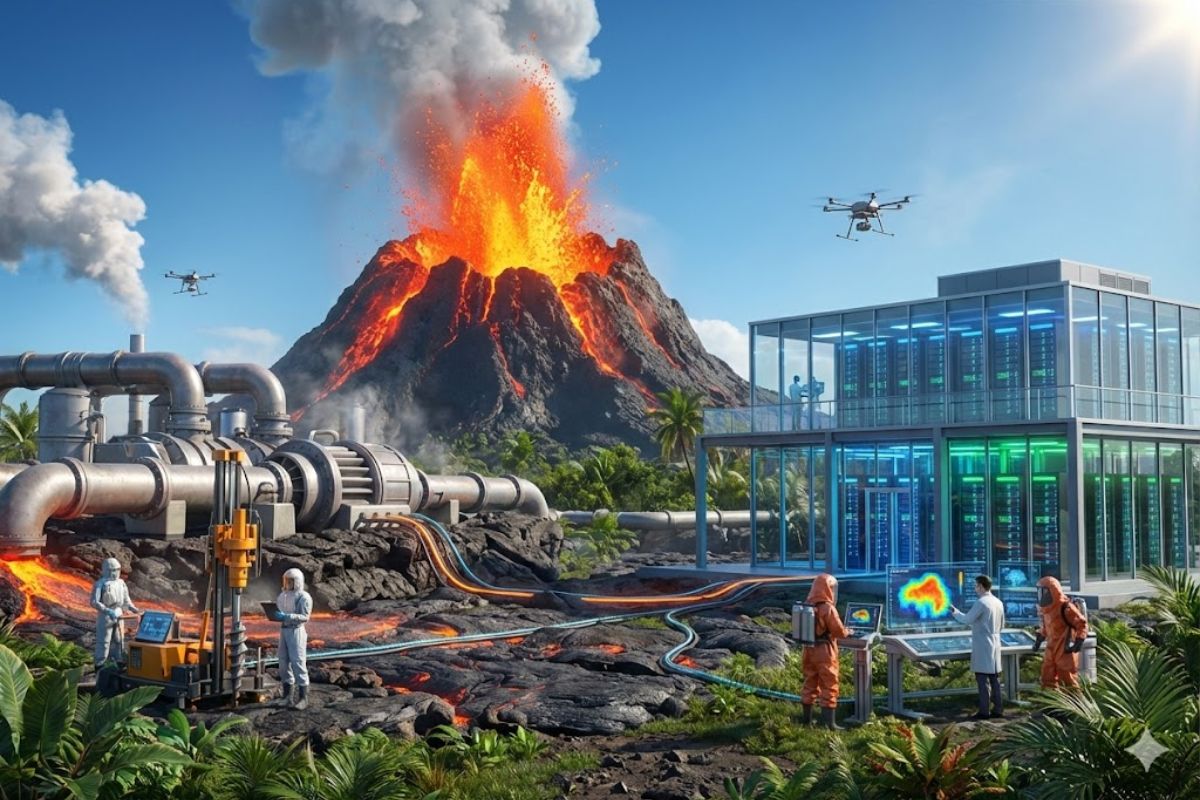
While The Volcano Kilauea Displays Controlled Eruptions In Hawaii, Researchers And Authorities See Geothermal Energy As A Way To Transform Deep Heat Into Steady Electricity And Feed AI Data Centers At Scale
The heat from the depths of the Earth has returned to the center of the debate in Hawaii. While Kilauea is presenting eruptive episodes that launch lava columns to about 300 meters and, at times, up to 457 meters high, scientists and authorities are discussing how to transform this volcanic spectacle into a stable source of geothermal energy for the local power grid.
Below the crust, however, the focus is no longer solely on magma. The archipelago hosts a vast map of usable heat that can be explored by more advanced geothermal technologies, capable of going beyond the currently operating plant in Puna. The dispute now involves public funding, new drillings, and the interest of tech giants looking for continuous electricity for AI data centers.
Kilauea In Controlled Eruption, But In Industrial Scale Of Energy
Recent images of Kilauea, on the Big Island of Hawaii, show columns of ash and lava reaching hundreds of meters in height.
-
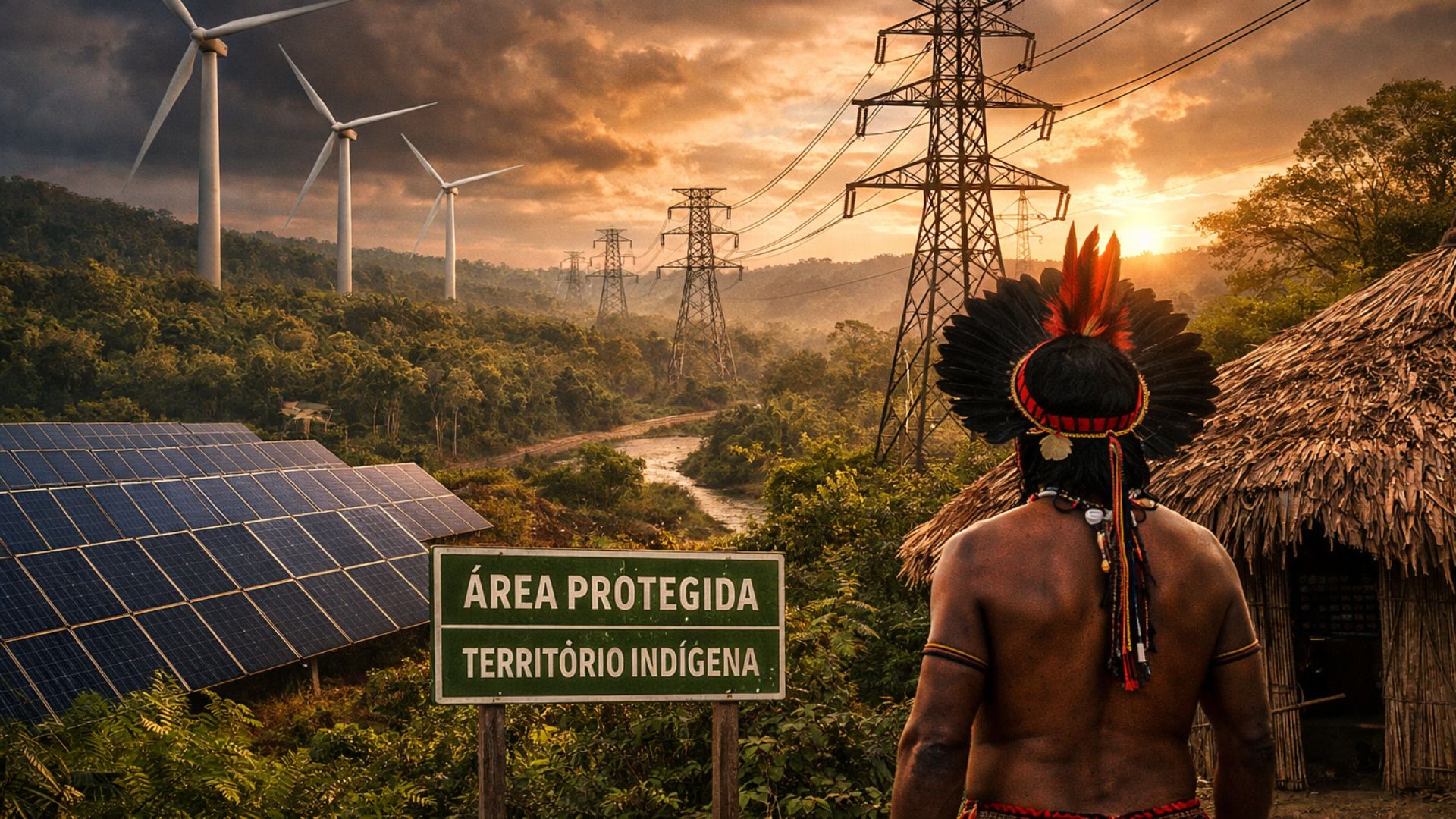
Renewable energy advances over protected areas in Brazil, and a survey by the Energy Transition Observatory reveals silent impacts that challenge environmental conservation and pressure sensitive traditional territories.
-
Rio Grande do Sul accelerates energy transition: State invests in renewable technologies and consolidates decarbonization strategies and pathways to attract billions in new industrial investments.

-
With 160,000 m² of collectors, an area larger than 20 football fields, Silkeborg, in Denmark, hosts a solar thermal plant that heats 19,500 homes and could become the largest solar heating plant in the world.

-
A study reveals the expansion of renewable energy procurement in Brazil and shows how companies are taking advantage of opportunities to reduce expenses, ensure energy efficiency, and strengthen strategic environmental commitments.


Since December of last year, the volcano has recorded between 36 and 37 eruptive episodes, according to alerts from the United States Geological Survey.
In some events, the height of the columns approaches that of a 100-story skyscraper.
Despite the intensity, the activity remains confined to the crater, far from homes and other structures.
In one of the episodes, the USGS calculated that 6.3 million cubic meters of lava were ejected in just nine hours, at a rate of about 190 cubic meters per second, a flow that illustrates the energy scale at play.
Beyond the immediate risk, this behavior reinforces a central point of the discussion: even when the volcano seems to only put on a “show,” the geological system that feeds it is a gigantic reservoir of continuous heat, potentially harnessable by geothermal energy.
Puna, The Plant That Proves The Geothermal Potential Of Hawaii
Hawaii does not start from scratch. Since 1993, Puna Geothermal Venture has operated in the East Rift Zone of Kilauea.
Studies from the University of Hawaii indicate that this commercial geothermal plant produces about five times more electricity than one of the state’s major solar parks, using approximately 80 percent less land.
Even so, the potential has remained underexplored.
The reasons combine real volcanic risks, high exploration costs, and cultural resistance in communities that see deep drilling as a desecration of Pele, the goddess of volcanoes.
For years, geothermal energy has been relegated to the background, keeping Puna almost an exception instead of a model.
The continuous activity of Kilauea and the pressure for steady electricity, however, have reopened the discussion.
The strategic question is straightforward: should Hawaii harness the heat that feeds its volcanoes to bolster its own energy security, in a global context of transition to low-carbon sources?
Deep Heat Maps And The Race For 80 Million Dollars
The University of Hawaii has long argued that the underground of the islands holds geothermal resources well beyond Puna.
With support from the United States Department of Energy, the Play Fairway project produced the first deep heat maps outside the already explored area, pointing to opportunities in different regions of the archipelago.
These maps now feed a concrete political dispute. Three state agencies are competing for about 80 million dollars in public funds to resume geothermal exploration.
The package includes detailed mapping, drilling test wells, and studies for a possible expansion of geothermal energy that has been stalled for decades.
The plan does not limit itself to the East Rift Zone.
There are proposals for drilling in other areas of the Big Island and in islands like Maui and Oahu, where it is believed that resources lie at greater depths.
In practice, this would mean moving from a model concentrated in Puna to a more distributed system, with multiple geothermal generation points.
EGS, AGS, And Superheated Rock: The New Engineering Of Geothermal Energy
The Hawaiian movement occurs in parallel to a broader renaissance of geothermal energy in the United States.
A report from Wood Mackenzie indicates that geothermal investment in North America grew by 85 percent just in the first quarter of 2025, with about 1.7 billion dollars in public funds allocated to the sector.
The momentum comes not only from active volcanoes but also from new technologies capable of transforming almost any hot rock into electricity. Three fronts stand out:
EGS, Enhanced Geothermal Systems, which fracture hot rocks at depth to create artificial reservoirs, increasing fluid circulation and heat extraction.
AGS, Advanced Geothermal Systems, which use closed loops and completely isolate subsurface fluids, reducing the risks of contamination and leaks.
Drilling in superheated rock, at more than five kilometers deep, where temperatures exceed 374 degrees Celsius and the energy available per well increases significantly.
According to this analysis, the United States could reach up to 500 gigawatts of geothermal capacity, a level capable of reshaping the country’s electric matrix.
In this context, Hawaii becomes a natural laboratory where volcanic geology facilitates access to extreme thermal gradients.
AI Data Centers As The Hidden Engine Of This Transformation
The renaissance of geothermal energy is not merely academic.
Data centers and artificial intelligence have become central drivers of the new demand for continuous electricity, which cannot be at the mercy of solar or wind variability.
Analyses cited by specialized outlets indicate that this underground energy could supply about two-thirds of the electricity consumption of new data centers to be built in the United States by 2030.
In light of this perspective, major tech companies are already mobilizing.
Meta has struck a deal with California-based startup XGS Energy to generate 150 megawatts of geothermal electricity by 2030, using a closed-loop system that prevents water leaks.
Google made a similar move by partnering with Fervo Energy.
Geothermal energy has ceased to be a marginal experiment and has become part of the energy strategy of companies leading AI development, precisely because it offers a firm, predictable, and low-carbon generation profile.
For Hawaii, this opens a specific frontier: positioning volcanic islands as bases for geothermal plants dedicated to AI data centers, connected to the local grid and, potentially, to external customers, as long as the transmission infrastructure supports this ambition.
Culture, Volcanic Risk, And Social Legitimacy Of Drilling
The path, however, is not just technological.
Deep drilling in volcanic areas touches on cultural and spiritual dimensions that weigh in the Hawaiian public debate.
For communities tied to the tradition of Pele, the goddess of volcanoes, drilling underground in search of heat is seen as desecration.
Moreover, the geological risks are real.
Even with Kilauea’s activity currently confined to the crater, any expansion of geothermal energy needs to deal with uncertainties about induced seismicity, interaction with natural reservoirs, and the volcanic system’s responses to new wells.
These points fuel local resistance and condition environmental and social licenses.
Therefore, the future of geothermal energy in Hawaii will depend as much on participatory processes as on engineering.
Heat maps, impact studies, and transparency about risks will need to progress alongside the pressure for more stable electricity, in an archipelago that watches closely the national movement toward underground sources.
Volcano, AI, And The Energy Question That Kilauea Leaves Open
As Kilauea continues inflating, rumbling, and projecting lava to heights not seen since the 1980s, Hawaii and the rest of the United States are turning their gaze downward, toward the primordial heat pulsing beneath the Earth’s crust.
Where nature displays its wildest power, technology sees a promise of continuous, abundant, and clean geothermal energy for AI data centers, power grids, and electricity-intensive industries.
The question that remains is not whether this heat exists, but to what extent it will be socially, politically, and technically acceptable to harness it at a large scale.
Facing a volcano that launches millions of cubic meters of lava in just a few hours, do you think Hawaii should accelerate geothermal energy projects to become a stable electricity hub for the AI era, or do the local risks and conflicts outweigh this opportunity?








-

Uma pessoa reagiu a isso.