





 Portuguese
  English
  Spanish
  4 min of reading
  0 comments


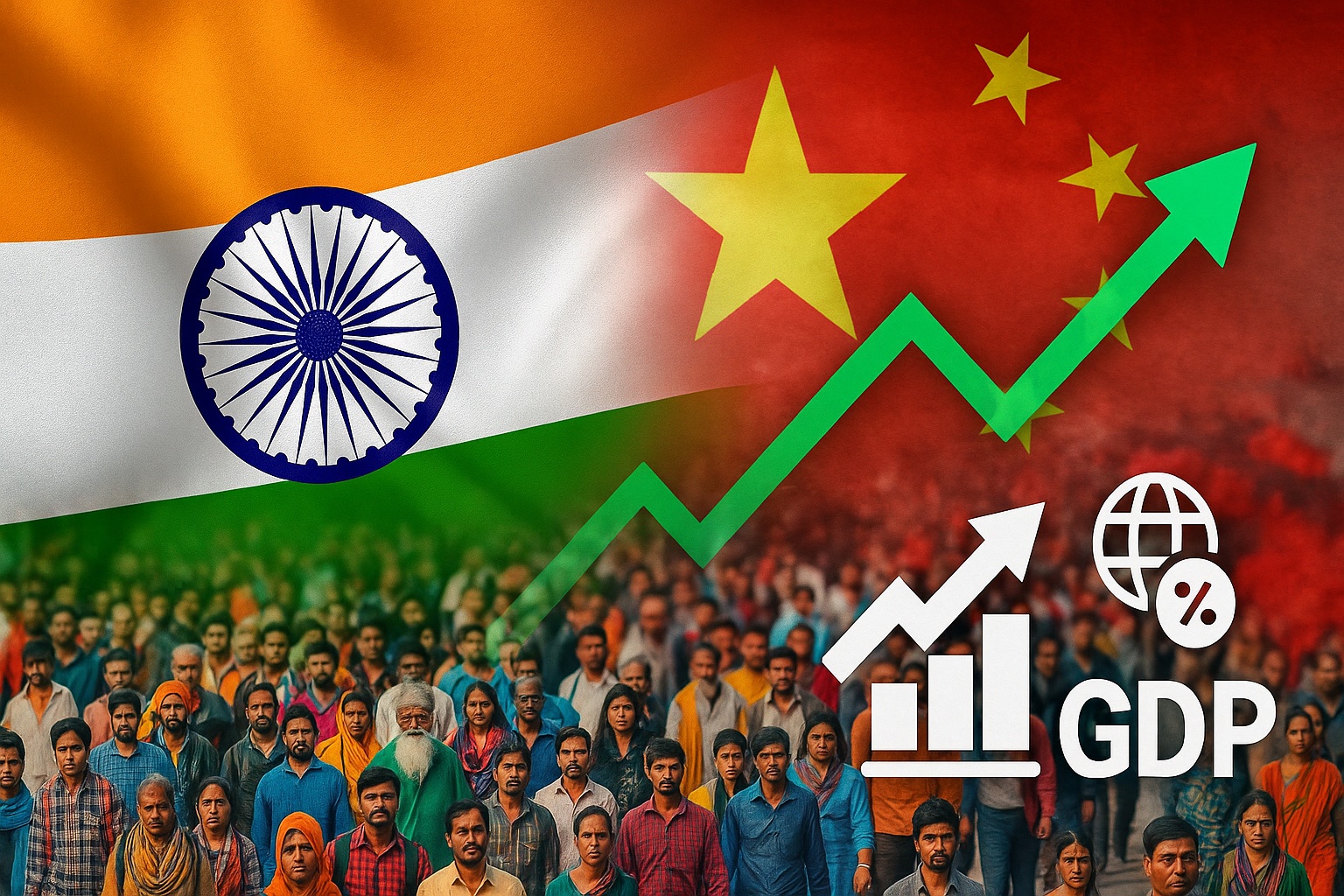
India Consolidates Leadership As The World’s Most Populous Country In 2025, With Over 1.4 Billion Inhabitants And GDP Growing Above 6% Per Year.
In 2023, the UN confirmed what was already expected: India has surpassed China and has become the most populous country on the planet. Two years later, in 2025, this leadership is consolidated. With over 1.4 billion inhabitants, the Asian country has not only surpassed the former demographic hegemony of China but also reinforces its weight as a central actor on the global stage.
The population size alone would give India unquestionable relevance. But what impresses in 2025 is the combination of a young population and robust economic growth, making the nation the new engine of global growth.
Growth Above 6% In 2025
According to projections from the International Monetary Fund (IMF) and the World Bank, the Indian economy is expected to grow between 6.2% and 6.5% in 2025, remaining the world’s fastest-growing major economy.
-
If the USA were to go to war with Brazil, Washington’s greatest fear would not be the attack itself, but facing a vast territory, prolonged resistance, and a costly, chaotic, and unpredictable occupation.

-
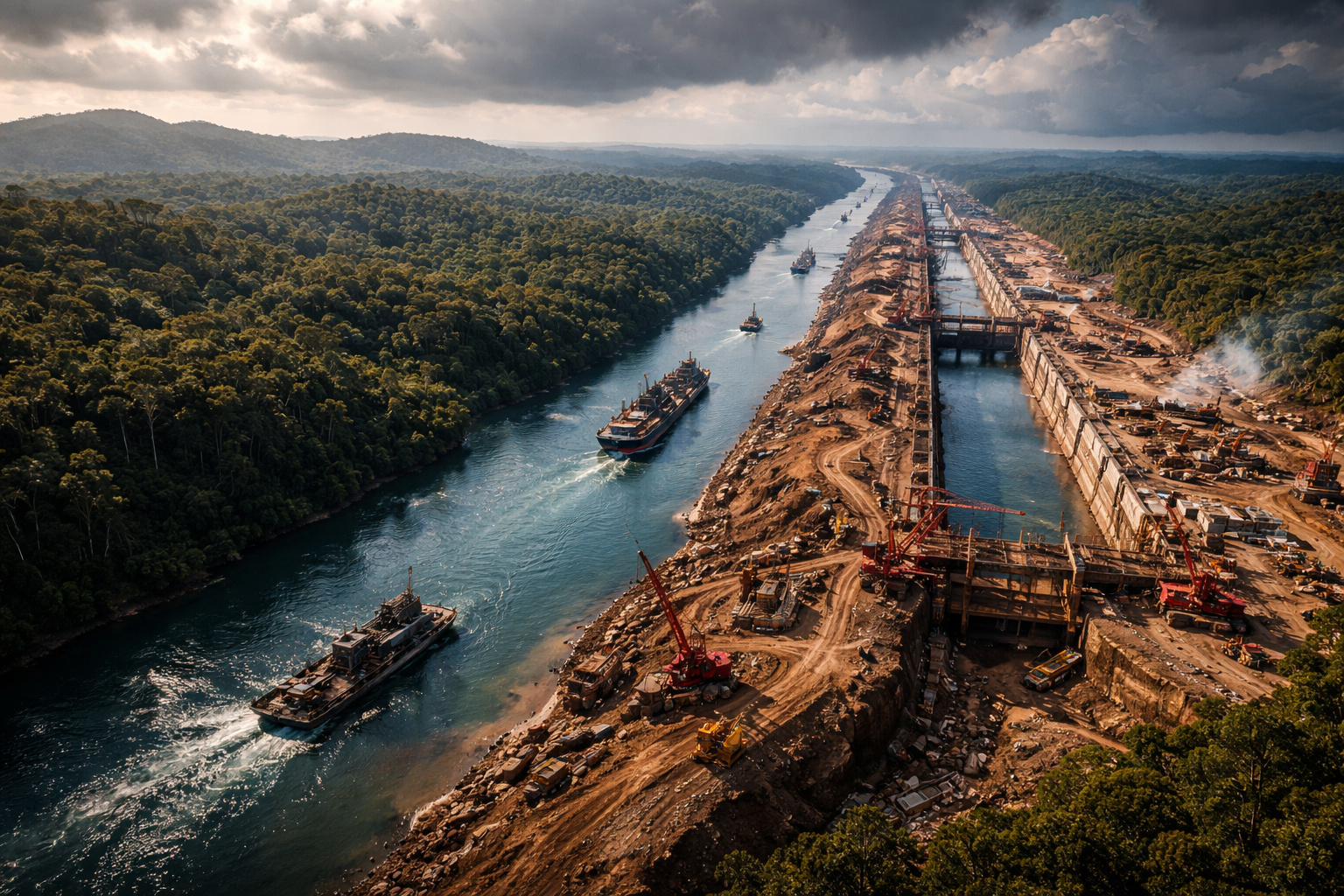
In 2013, Nicaragua sold the concession for a canal to rival Panama to a Chinese billionaire who lost 85% of his fortune, disappeared, and was declared bankrupt. Now the project resurfaces with a new route, a new Chinese partner, and a cost of $64.5 billion.
-
The USA announces a mysterious billion-dollar vault project to store critical minerals, but what intrigues experts is not just the plan itself, but why Latin America, including Brazil, has entered the center of this global dispute against China.

-
Trump Announces Bombing of U.S. Military Targets on Iranian Island Responsible for About 90% of Iran’s Oil Exports, Warns of Further Attacks if Navigation in Strategic Strait of Hormuz Is Threatened


This pace contrasts with the slowdown in China, which is growing below 5%, and with the mature economies of the West, which are registering modest expansion, often below 2%.
The Indian performance is sustained by three main engines:
- Digital Services And Information Technology: with global companies and hubs in Bangalore, Hyderabad, and Pune.
- Industry And Manufacturing: supported by the “Make in India” program, attracting investments to transform the country into an alternative to China in industrial production.
- Domestic Consumption: driven by an expanding middle class and a young population with a growing demand for goods and services.
Young Population As A Competitive Advantage
Unlike China, which faces accelerated aging and a declining birth rate, India has a young population that is its great asset. More than 60% of Indians are under 35 years old, forming the largest potential workforce on the planet.
This characteristic offers a unique window of opportunity. The so-called “demographic dividend” can sustain Indian growth for decades, provided the country can generate quality jobs, invest in education, and expand infrastructure.
Social And Structural Challenges
Despite the optimism, India faces considerable challenges. The country still deals with deep regional inequalities, a lack of basic infrastructure in many areas, and a poverty rate that, while decreasing, still affects hundreds of millions of people.
Issues such as inadequate sanitation, urban pollution, and logistical bottlenecks — at ports, roads, and railways — limit part of the growth potential. Additionally, the need to create millions of jobs annually to absorb the youth into the labor market is an ongoing challenge.
Direct Competition With China
India’s rise as the most populous country and a rapidly growing economy inevitably puts it on a strategic collision course with China.
In recent years, Beijing has faced a decline in birth rates, capital flight due to tensions with the United States, and challenges in the real estate sector. Meanwhile, New Delhi presents itself to the world as a stable alternative for companies seeking diversification of their supply chains.
This dynamic has transformed India into a key player in the plans of large global corporations. Giants like Apple, Samsung, and Foxconn have already shifted part of their production from China to Indian territory.
Growing Geopolitical Weight
Economic growth and population leadership also increase India’s geopolitical weight. The country plays an active role in the G20, leads the Quad (strategic partnership with the US, Japan, and Australia), and is part of the BRICS, where it seeks to balance relations with China and Russia while strengthening ties with the West.
The strategic geographical position, between the Middle East and Southeast Asia, further enhances its importance. In a world of trade disputes and supply chain rearrangements, India appears as a crucial partner for all economic blocs.
Agriculture And Food Security
In addition to technology and industry, India also stands out in agriculture. The country is one of the largest producers of rice, wheat, sugar, and milk in the world. This agricultural base not only ensures internal food security but also supports billion-dollar exports.
With global pressure for food — resulting from climate change and population growth — India reinforces its position as an essential supplier of agricultural commodities.
Infrastructure And Accelerated Urbanization
To sustain its growth, the Indian government has launched billion-dollar infrastructure investment programs. Modernization projects for roads, railways, ports, and airports are underway, along with initiatives to accelerate urbanization.
Cities like New Delhi, Mumbai, and Bangalore face overcrowding problems but are also becoming hubs of innovation and technology. The country is undergoing an accelerated process of urbanization that transforms the social and economic landscape.
Projections For The Next Decade
If it maintains its current pace, India could become the third largest economy in the world by 2030, behind only the United States and China.
Experts say that, with structural reforms, the country has the potential to surpass Japan and Germany in a few years, consolidating itself as a global power both economically and geopolitically.
The major challenge will be to balance economic growth with social inclusion and environmental sustainability — points still fragile on India’s agenda.
In 2025, India is not only the most populous country in the world: it is also the largest growing economy, with projections above 6% per year. This combination of factors positions it as a protagonist of the 21st century, in direct contrast to China, which faces slowdown and demographic aging.
With a young population, a massive internal market, and growing global ambitions, India firmly takes on its role as the new engine of the global economy, reshaping flows of trade, investment, and political influence.










-

Uma pessoa reagiu a isso.