





 Portuguese
  English
  Spanish
  5 min of reading
  1 comment





The Truck Air Brake Uses Compressed Air, Reservoirs, and Independent Circuits to Ensure Reliable Braking in Heavy Vehicles and Act If the Pressure Drops.
The air brake is the solution adopted in trucks because stopping a vehicle weighing dozens of tons requires much more than strength. It requires a reliable system capable of remaining safe even when something goes wrong. This is what explains why a loaded truck can slow down and stop with control, even in situations of intense use.
Those who see a truck in traffic often pay attention only to the size, axles, and load, but rarely think about what happens when the driver steps on the brake pedal. Stopping over 30 tons in motion is not a simple task, and that is precisely why heavy vehicles use a different system than what we find in passenger cars.
Why Trucks Do Not Use the Same Brakes as Cars
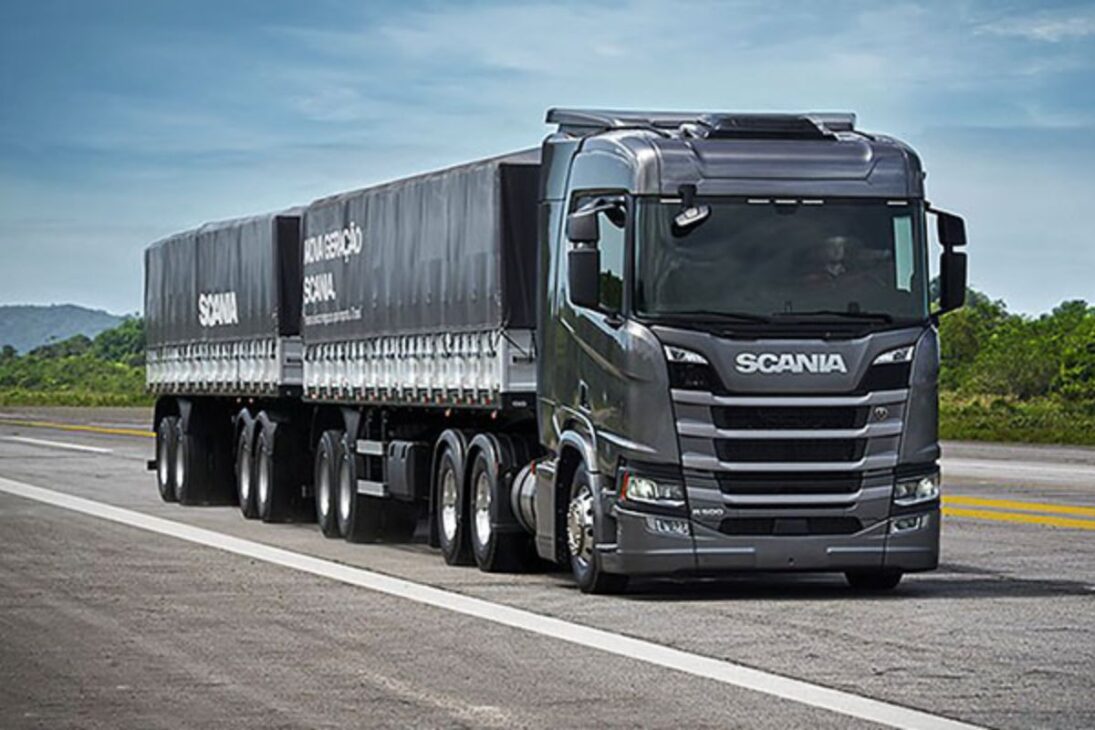
In regular cars, the best-known braking system is hydraulic. It works with fluid under pressure, which transmits the force of the pedal to the wheels. For light vehicles, this suffices and delivers efficiency in daily use.
-
A “silent skill” is allowing Brazilians to earn up to R$ 22,000 per month without a degree and become indispensable for companies that rely on millions of data to survive.

-
Researchers at the Toyota Research Institute found that if a human uses robotic arms to flip a pancake 300 times in an afternoon, the robot learns to do it on its own the next morning, and this is currently the most promising method to solve the biggest bottleneck in modern robotics.

-
Goodbye iron: a common item in households is starting to lose space to technology that smooths clothes in minutes without an ironing board and with less energy consumption.

-
Antarctica reveals an unusual clue high in the Hudson Mountains, and what appeared to be just an isolated rock began to expose a secret hidden under the ice for ages.


In trucks, the logic changes. The weight is much greater, the demand is constant, and the risk of failure has much more serious consequences.
In a loaded vehicle, any loss of braking efficiency represents a very serious problem. Therefore, the system needs to be designed not only to brake well but also to remain safe even if there is a defect.
How the Air Brake Works
The air brake operates with compressed air instead of fluid. The truck’s engine activates a compressor that takes air from the environment, compresses it, and sends it to reservoirs installed in the vehicle. These reservoirs act as a reserve of energy ready to be used in braking.
When the driver steps on the pedal, the pressurized air exits these tanks and travels through piping to the wheels.
There, it activates the braking mechanism, pressing the components responsible for generating friction and reducing speed. The higher the pressure applied, the greater the braking force.
What Makes This System Safer in Heavy Vehicles
The main difference of the air brake is not just in the use of compressed air. The central point is how it reacts when a failure occurs.
In trucks, there is a mechanism with internal springs that keeps the brake released while the pressure is adequate.
If this pressure drops for any reason, these springs come into action, and the brake is applied automatically.
Instead of leaving the truck without brakes, the system tends to stop the vehicle. This feature is one of the main reasons for choosing this model for heavy vehicles.
The Role of the Compressor and Reservoirs
The compressor is the heart of the system. It is powered by the engine and is responsible for generating the compressed air necessary for all braking. Without this component, the truck would not be able to maintain enough pressure to operate safely.
The reservoirs store this pressurized air so that it is available when the driver needs to brake. In practice, they serve as a reserve ready to act immediately. This allows for quick response and stability in braking, even under high load conditions and continuous use.
Why There Are Independent Circuits


Another decisive factor for safety is the presence of two independent air circuits. They work simultaneously but are separated. Each circuit controls part of the braking capacity of the vehicle.
This means that the system does not rely on a single line to continue functioning. If one of the circuits fails, the other can still maintain part of the braking.
The driver notices the problem but is not left completely out of control of the truck. In cargo transport, this redundancy is essential.
The Importance of the Air Dryer in the System
The air used by the air brake comes from the environment, and the air from the environment always carries moisture. When compressed, this moisture can turn into water inside the system.
If accumulation occurs, risks such as corrosion on internal parts and issues with valves and tubing arise.
To prevent this, trucks use an air dryer. This component removes a large part of the moisture before the air reaches the reservoirs.
Even so, the tanks need to be drained periodically. This simple care helps to avoid failures and keeps braking stable in different weather conditions.
How the System Controls Pressure Safely
As the system relies on compressed air, the pressure needs to stay within a safe range. For this, there is a governor, a component responsible for monitoring the reservoirs and determining when the compressor should stop or start working again.
In addition to this, the system also has safety valves. If the pressure exceeds the considered adequate limit, these valves automatically release air.
It’s not just about generating force, but about maintaining constant control of pressure to ensure stability and protection of the system.
Maintenance Is Part of Safety
Even though it is robust, the air brake depends on regular maintenance. Reservoirs need to be drained, hoses should be checked, and mechanical components must be properly adjusted. Leaks, accumulated moisture, and small oversights can reduce the efficiency of the system.
In heavy transport, this checking is part of the routine. The safety of the truck depends as much on the design of the system as on the maintenance performed over time.
It is this care that ensures that the vehicle continues to stop safely on roads, mountain passes, long trips, and under maximum load.
Why the Air Brake Continues to Be the Best Choice for Trucks
After understanding how it works, it’s clear why the air brake was adopted in heavy vehicles. It combines strength, control, and a safety logic designed for critical situations.
If there is a loss of pressure, the system tends to brake automatically. If one circuit fails, another continues to operate.
Additionally, the use of compressed air facilitates the distribution of braking force in trucks with multiple axles and larger setups.
It is not just a technical choice, but a decision focused on safety and efficiency in vehicles that transport tons every day.
And you, did you know that the truck is designed to automatically apply the brake if the pressure fails?






Faz muitos anos que é assim….. Desde 1990….