





 Portuguese
  English
  Spanish
  5 min of reading
  0 comments


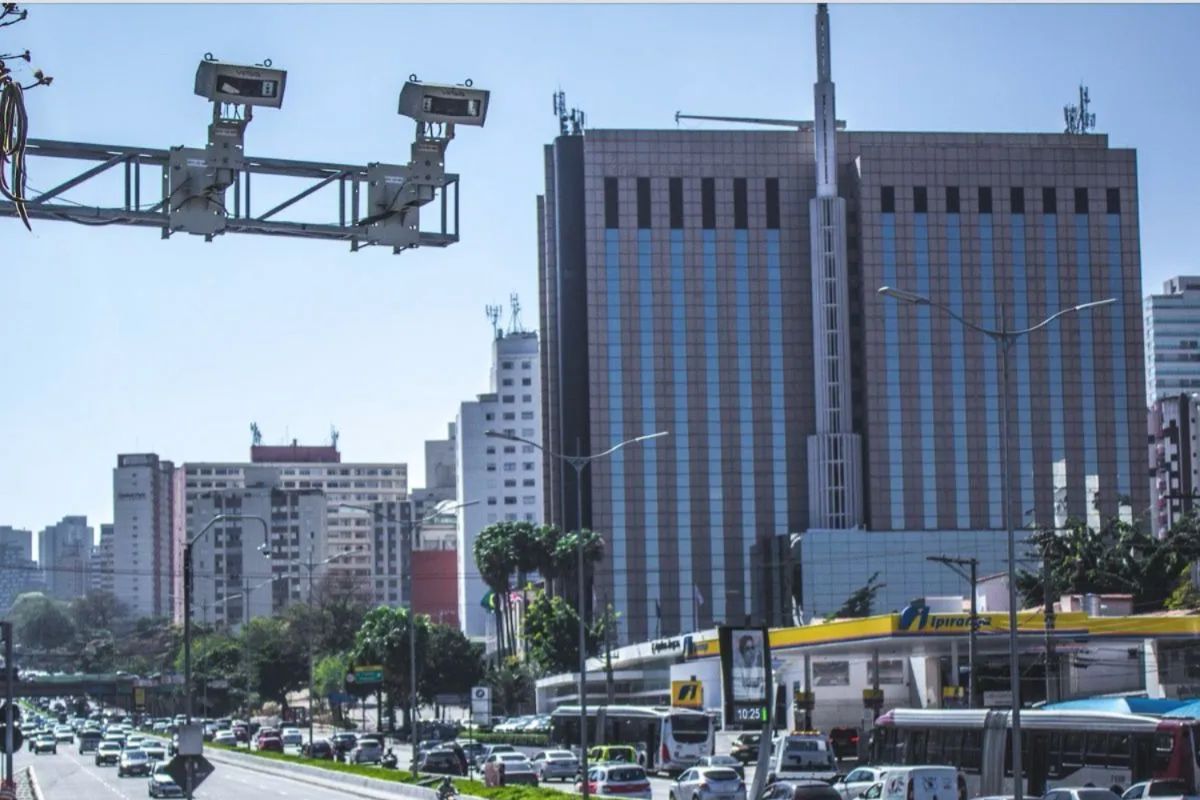
With Over 730 Doppler Radars Covering More Than 1,700 Traffic Lanes in 24 States, New Technology Identifies Speed, Cell Phone Use While Driving, Running Red Lights, and Other Violations in Real Time, Increasing Pressure on Driving Offenders.
The doppler radars are changing the way traffic is monitored in Brazil. In a short time, this technology has transitioned from being an occasional novelty to becoming a central piece of electronic enforcement, with over 730 devices installed in 24 federative units, monitoring speed and a range of other risky behaviors on the roads.
Unlike old equipment that only measured whether a vehicle exceeded the speed limit, doppler radars can detect in real time behaviors such as running a red light, using a cell phone while driving, illegal turns, and even wrong-way driving. The stated goal is simple: to increase safety, reduce accidents, and make the compliance with traffic laws less dependent on the physical presence of agents.
What Are Doppler Radars and Why Have They Spread Across the Country

The doppler radars are an evolution of traditional traffic enforcement radars. They use electromagnetic waves to measure the speed of vehicles and, based on the frequency variation of these waves when reflecting off a moving object, can accurately identify whether or not a violation occurred.
-
The Senate approves a bill that criminalizes misogyny, hatred, or aversion towards women, and includes the crime in the Racism Law with a penalty of up to 5 years.

-
Chamber Approves Bill That Allows Pepper Spray for Women Over 16 and Imposes Strict Rules for Purchase, Possession, and Use as Self-Defense
-
Chamber Approves Law to Combat Leucaena, Fast-Growing Plant That Dominates Land and Threatens Native Species in Various Regions of the Country

-
Asset Division: Know What Cannot Be Divided in Case of Divorce


This technology has gained popularity because:
- It allows for continuous monitoring of large stretches of roads
- It works in various weather conditions
- It provides records with higher accuracy, making it harder to contest unfairly
- It easily integrates into traffic management systems and fine databases
In practice, public managers have come to see doppler radars as tools for traffic control and also for behavioral change, as the mere possibility of being flagged for different types of violations tends to make drivers more cautious.
How the Technology Behind Doppler Radars Works
The basis of doppler radars lies in the so-called Doppler effect, a physical phenomenon in which the frequency of a wave changes when there is relative motion between the source and the observer.
In traffic, the radar emits electromagnetic waves that hit the vehicle and return to the device.
When the vehicle is in motion, the frequency of these reflected waves is altered. The system calculates this variation and transforms the data into precise speed measurements, even over long distances.
This allows for the monitoring of multiple lanes of traffic simultaneously, with a high degree of reliability.
Tests conducted in cities such as Curitiba and São Paulo have shown that these devices are resistant to attempts at manipulation and perform well in varied conditions, such as rain, fog, and heavy traffic.
This performance, combined with automated record-keeping, increases authorities’ confidence in the citations generated by doppler radars.
What Violations Can Doppler Radars Detect in Real Time
Contrary to the idea that radars are only for penalizing those who exceed the speed limit, doppler radars have been designed to monitor a much broader range of irregularities.
Combining sensors, cameras, and image processing, they can register behaviors that endanger drivers, pedestrians, and cyclists.
Among the violations that doppler radars can detect are:
- Running a Red Light
Helps reduce accidents at intersections and busy roads. - Using a Cell Phone While Driving
Identifies the driver holding the device, helping to curb one of the main causes of distraction in traffic. - Illegal Turns
Improves traffic flow and prevents maneuvers that catch other drivers by surprise. - Wrong-Way Driving
Reduces the risk of serious head-on collisions on urban roads and highways. - Stopping on the Pedestrian Crosswalk
Ensures greater respect for those crossing the road, reinforcing the priority of pedestrians as provided for in the Traffic Code.
With doppler radars, enforcement transitions from being occasional to constant and multifunctional, increasing the perceived risk for those who insist on disregarding the rules.
Distribution of Doppler Radars and Impact on Road Safety
According to the numbers already released regarding the use of the technology, Brazil currently has about 730 doppler radars, covering more than 1,700 traffic lanes in 24 states.
This means that, in many important stretches, the chance of a violation going unnoticed has significantly decreased.
This broader distribution has two main effects:
- More Present Enforcement on urban roads and highways, even in areas previously little monitored
- Educational Effect, as awareness of the presence of doppler radars prompts many drivers to reconsider habits such as speeding, “forcing” the yellow light, or using a cell phone while driving
Over time, the trend is that the increased presence of doppler radars will help reduce serious accidents, especially at intersections, high-speed avenues, and sections with a history of recklessness.
Pedestrians and cyclists are likely to benefit directly from a more controlled traffic environment.
Technological Perspectives for the Future of Doppler Radars in Brazil
The scenario indicated by experts is one of expansion and sophistication. The trend is that doppler radars will increasingly be integrated into intelligent mobility systems, connected to traffic control centers, applications, and real-time databases.
Among the possibilities shaping the future are:
- Integration of doppler radars with smart traffic lights, adjusting signal times according to detected flow
- Automatic cross-referencing of information with vehicle databases, facilitating the identification of irregular cars
- Combined use with license plate recognition cameras and more advanced image analysis systems
- Monitoring of specific corridors for public transport, preventing encroachments into exclusive lanes
This modernization movement shows that enforcement will cease to be merely a punishment mechanism and will assume a central role in traffic management and urban planning, provided it is accompanied by transparency, proper signaling, and traffic education.
In all of this, one thing is certain: doppler radars have come to stay and will occupy an even greater space in discussions about road safety, privacy, and public mobility policies.
And what about you, do you think the expansion of doppler radars will truly reduce accidents and save lives, or do you view this technology more as an increase in the sense of surveillance and punishment in Brazilian traffic?








Seja o primeiro a reagir!