





 English
  Francês
  Alemão
  Italiano
  Japonês
  Norueguês
  Portuguese
  Spanish
  8 min of reading
  0 comments


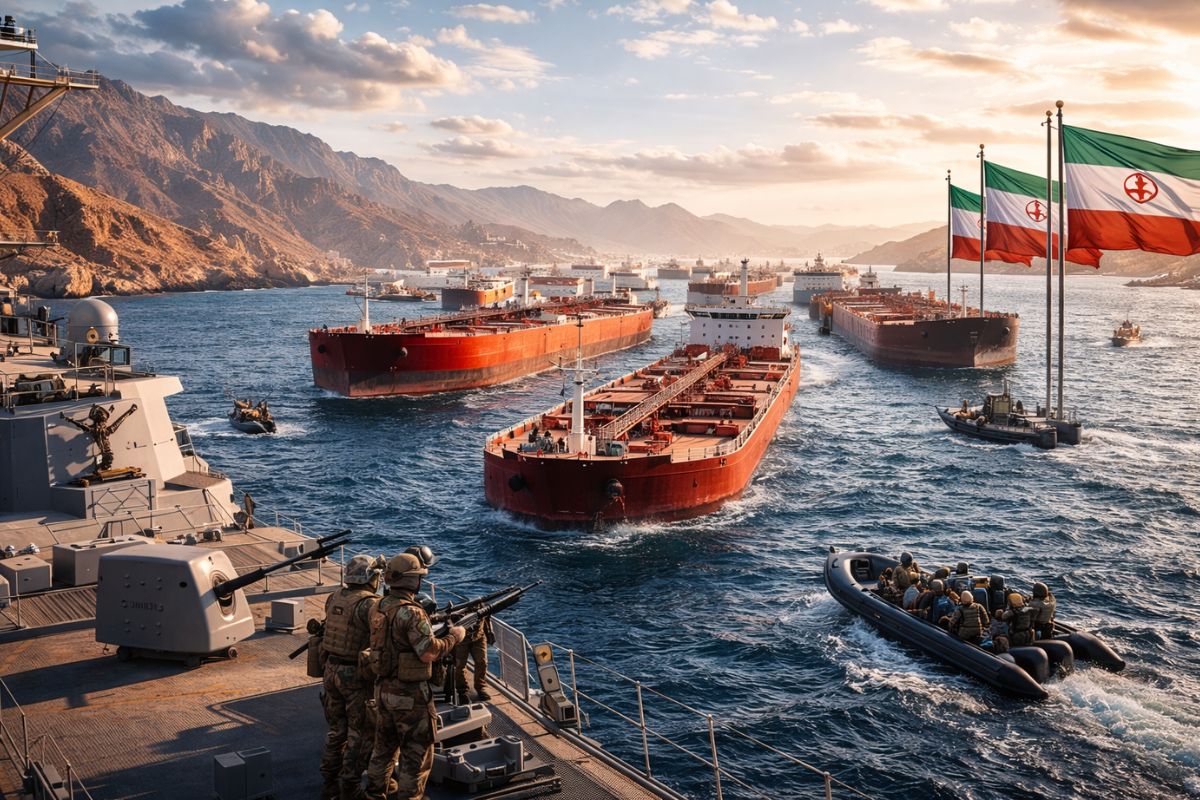
The Strait of Hormuz Has Returned to the Center of Global Geopolitics After the Military Operation of February 28, 2026, With Ships Stopped, Insurers Receding, Oil on the Rise and a Real Risk of Chain Energy Shock.
The Strait of Hormuz has become the center of a crisis capable of affecting energy prices, maritime transport, and the economic stability of several countries at the same time. With less than 40 km wide at its narrowest point, this waterway concentrates a gigantic portion of the global oil flow, and according to the sent report, it collapsed operationally after the military operation launched by the United States and Israel against Iran on February 28, 2026.
Since then, the Strait of Hormuz has ceased to be a distant name on the map and has come to represent a critical chokepoint for the world economy. Tankers were hit, companies suspended operations, insurers began to cancel coverage, and oil prices reacted almost immediately. When such a small corridor begins to obstruct such a large chain, the impact moves from the military field to the pocket of the entire world.
What Happened After the Operation Against Iran
According to the transcript, the crisis gained full force after the Epic Fury operation, carried out on February 28, 2026, by the United States and Israel against Iranian targets.
-
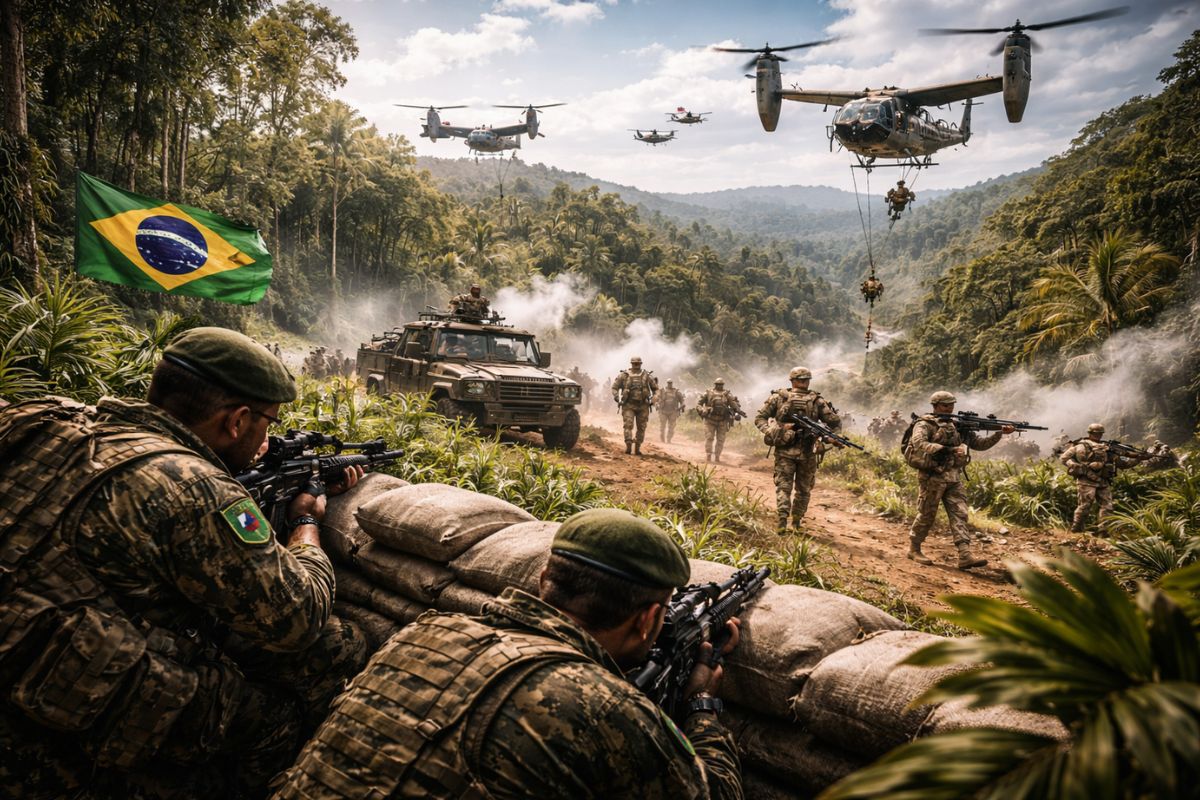
If the USA were to go to war with Brazil, Washington’s greatest fear would not be the attack itself, but facing a vast territory, prolonged resistance, and a costly, chaotic, and unpredictable occupation.
-
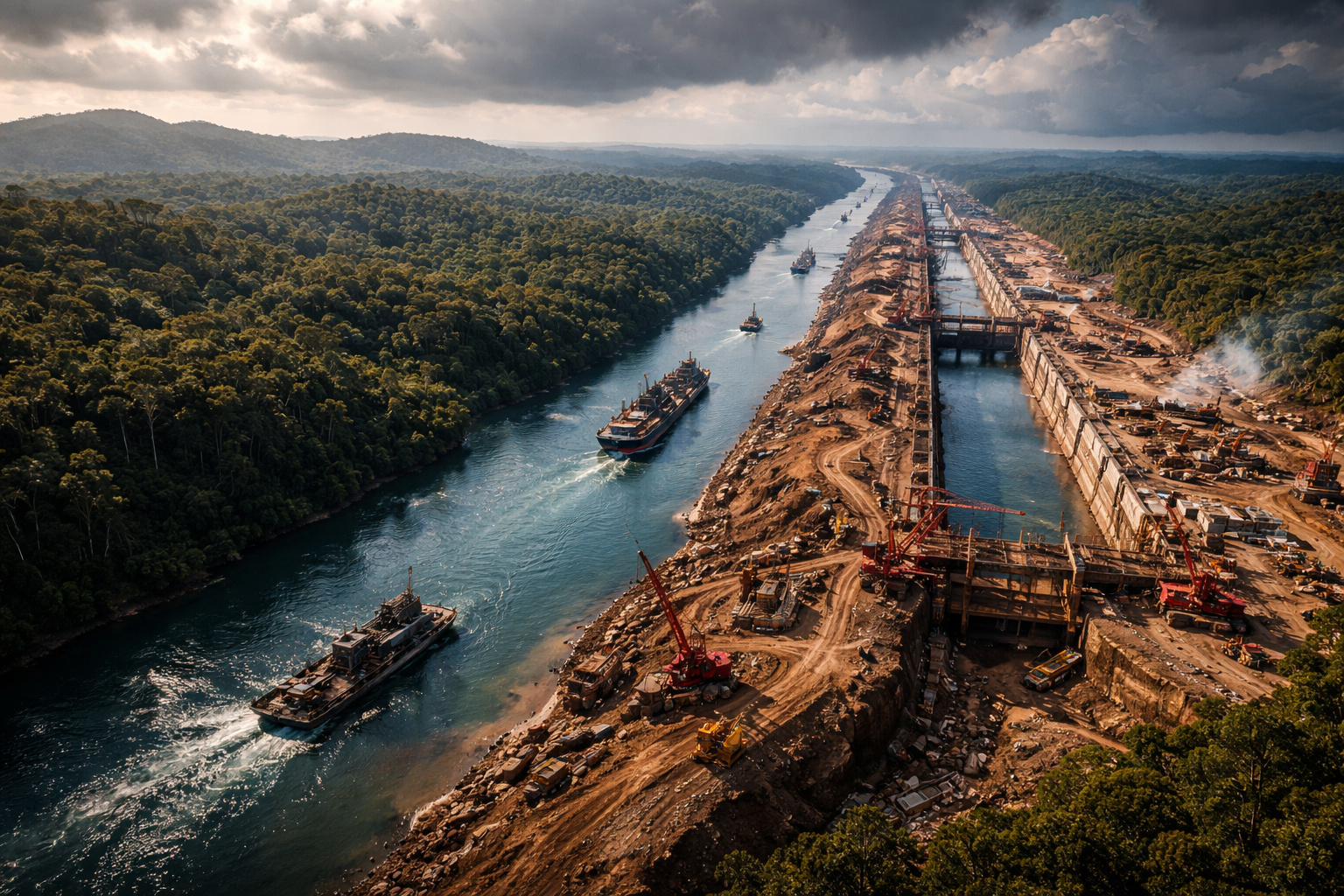
In 2013, Nicaragua sold the concession for a canal to rival Panama to a Chinese billionaire who lost 85% of his fortune, disappeared, and was declared bankrupt. Now the project resurfaces with a new route, a new Chinese partner, and a cost of $64.5 billion.
-
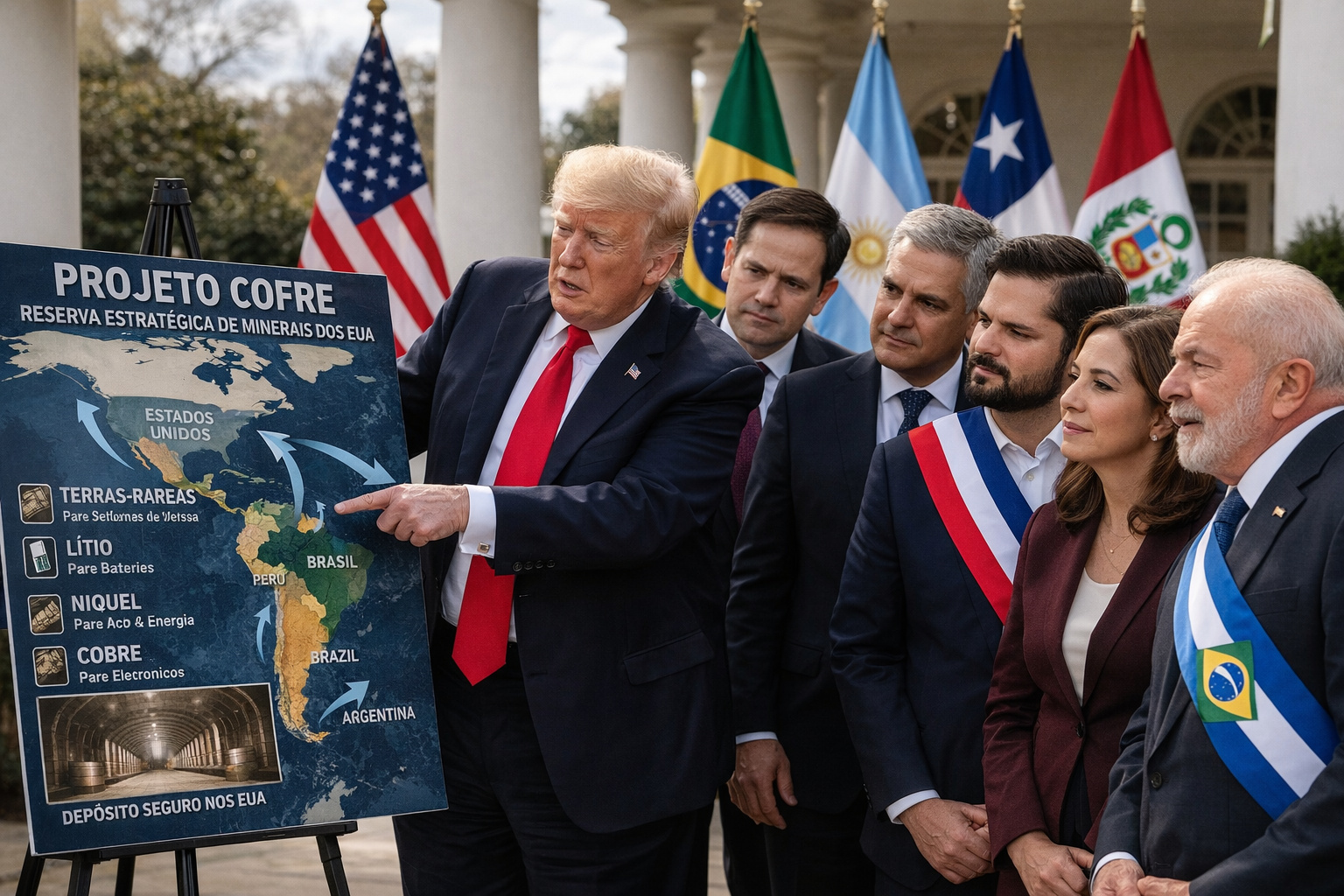
The USA announces a mysterious billion-dollar vault project to store critical minerals, but what intrigues experts is not just the plan itself, but why Latin America, including Brazil, has entered the center of this global dispute against China.
-
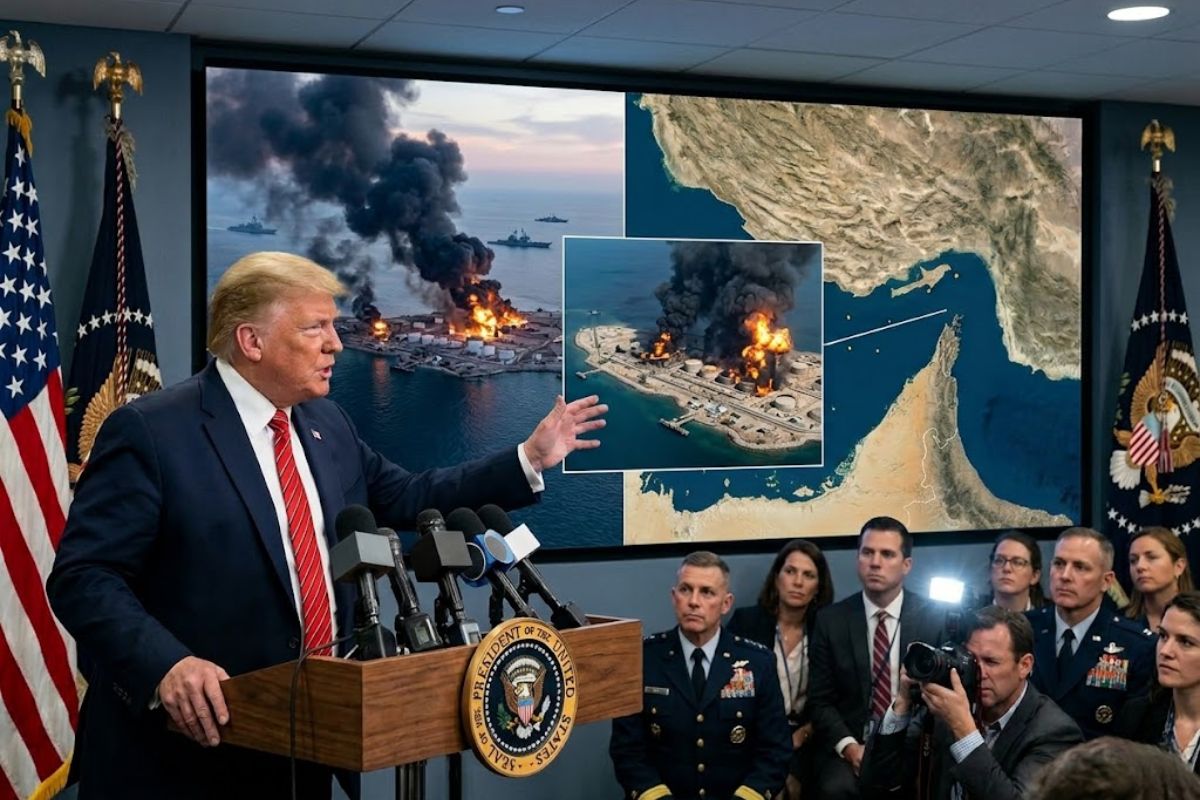
Trump Announces Bombing of U.S. Military Targets on Iranian Island Responsible for About 90% of Iran’s Oil Exports, Warns of Further Attacks if Navigation in Strategic Strait of Hormuz Is Threatened

Among the targets were nuclear facilities, military bases, and leadership positions of the regime. The report also claims that Ali Khamenei was killed in the attacks.
The Iranian reaction, also according to the sent material, came just hours later. The Islamic Revolutionary Guard began transmitting messages via VHF radio to ships in the region, informing that crossing the strait was prohibited.
Even without a formal declared blockade, the effect was immediate. Traffic of tankers fell sharply, vessels became anchored unable to pass, and the sense of practical closure took over the region.
This detail is crucial. In crises of this nature, the market does not depend solely on an official declaration. It is enough for the risk to become too high for carriers, insurers, and operators to decide to stop.
Why the Strait of Hormuz Is So Important
The Strait of Hormuz connects the Persian Gulf to the Gulf of Oman and, consequently, to the Indian Ocean. In practical terms, it is the only maritime outlet of the Persian Gulf to the open sea. This means that a large portion of the energy produced in the region must pass through there to reach buyers on other continents.
The report describes a data point that helps to gauge this weight: about one-fifth of all the oil consumed on the planet traverses this passage. It is such a large volume concentrated in such a small space that any interruption automatically becomes a global problem.
This is why the strait is considered one of the most strategically important geographical points in the world. It is not just about location. It is about systemic dependence. When too much needs to pass through a single place, that place becomes a geopolitical pressure point.
A Tiny Corridor Decides the Pace of Global Energy

Although the strait is about 167 km long and reaches 95 km at its widest point, the truly shocking data lies in the regulated shipping lanes. According to the transcript, the actual routes used by large vessels are only 3 km wide in each direction, separated by a central zone.
In practice, this means that gigantic ships, some over 300 meters long, must traverse a very narrow corridor to maintain the planet’s energy flow. The global economy depends on a passage with a minimal margin of error.
This factor helps explain why electronic interference, military threats, accidents, or insurance suspensions can cause so much damage in such a short time. In a place like this, any disorganization grows exponentially.
The Economic Weight of the Strait Is Hard to Overstate
The report states that, in 2024, about 20 million barrels of oil per day passed through the Strait of Hormuz, equivalent to approximately 20% of total global consumption. In financial terms, this would represent over 500 billion dollars per year in energy trade.
And it’s not just crude oil. The text also highlights that about one-fifth of all liquefied natural gas traded in the world crosses this route, with Qatar as the main player in this flow. In other words, the crisis threatens not only liquid fuels but also a critical part of global energy supply.
Another important point mentioned in the report is the destination of this volume. About 84% of the oil that crosses the strait is destined for Asian markets, especially China, India, Japan, and South Korea. This further amplifies the scope of the problem and shows that the crisis goes far beyond a regional confrontation.
Iran Occupies Strategic Positions Around the Route
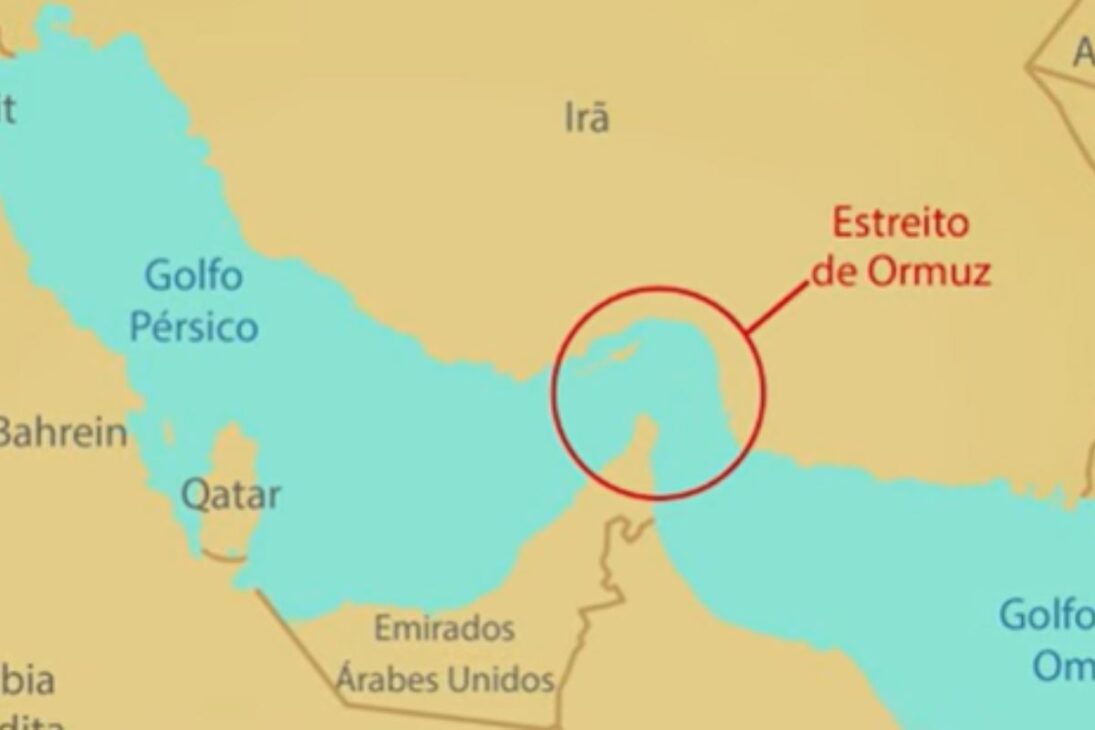
One of the most relevant points in the transcript is the geographical control exerted by Iran over the region. The report states that the strait has eight main islands and that Iran controls seven of them, including strategic areas such as Abu Musa, Greater Tunb, and Lesser Tunb, disputed with the United Arab Emirates.
This presence gives the country an important tactical advantage. The islands function as outposts from which it is possible to monitor, pressure, and potentially disrupt maritime traffic.
In addition, there are Iranian naval bases on the coast, with Bandar Abbas highlighted in the report as Iran’s main naval installation on the northern shore of the strait.
In practice, this means that Iran does not need to physically close the route with a gigantic fleet to generate a blocking effect. Its geographical position already puts the country in a condition of permanent pressure on navigation.
The Invisible War Has Turned Into a Real Weapon in the Strait
Perhaps the most impressive part of the report is the description of the ongoing electronic warfare. According to the transcript, in the first 24 hours after the start of the Epic Fury operation, there were interferences in GPS signals and in the automatic identification system of more than a thousand vessels in the Persian Gulf region.
The text also reports that ships began to appear in impossible locations on tracking systems, including over airports, nuclear facilities, and points on solid ground. This technique, known as GPS spoofing, consists of transmitting false signals to deceive navigation systems.
In the Strait of Hormuz, where the routes are already narrow and congested, this is especially dangerous. You do not need to launch a missile to create chaos. Just confuse navigation and make traffic unsafe and legally risky. The effect ranges from collision risks to issues with sanctions, insurance, and international tracking.
The Region Carries Centuries of Commerce and Conflict
The name Hormuz has a disputed origin, according to the report. There are theories linking the term to Ahura Mazda, a deity of Zoroastrianism, others to ancient Persian, Greek, and even names related to the history of Persia. Regardless of the exact origin, the point has been central to international trade for many centuries.
The transcript reminds us that the ancient kingdom of Hormuz, between the 10th and 17th centuries, was an extremely important trade center.
It also cites historical memories that show the location as a convergence of routes between East and West. In other words, the strait has been a crucial commercial chokepoint long before the oil era.
The modern conflict has only updated the strategic importance of a route that has already been vital in other times.
The Strait of Hormuz Has Already Been the Stage for Serious Tragedies
The report also revisits the military history of the region. During the Iran-Iraq war in the 1980s, the area was the scene of the so-called tanker war, with attacks on terminals, tankers, and rising tensions around the possibility of closing the passage.
The material also mentions the Praying Mantis operation launched by the United States in April 1988, and the tragedy of Iran Air Flight 655, shot down by the American cruiser USS Vincennes in July of that same year. All 290 people on board died.
These episodes show that the Strait of Hormuz is not only sensitive from an economic standpoint but also a territory historically marked by confrontations and geopolitical trauma.
This helps to understand why any new escalation in the region rekindles memories and quickly raises the level of market fear.
The Legal Paradox Increases Instability
Another fascinating point in the report is the legal issue. The transcript states that since 1972, the sum of the territorial waters of Iran and Oman exceeds the total width of the strait at its narrowest point. This means that, technically, there is not even a centimeter of international waters there.
Navigation only exists thanks to the principle of transit passage provided for in the United Nations Convention on the Law of the Sea.
The problem is that, according to the report, Iran has never ratified the convention, and the United States, which often invokes freedom of navigation, has not either.
The result is one of the most delicate legal paradoxes of contemporary geopolitics. The two powers most directly involved in the dispute are not signatories to the treaty that underpins the crossing that both want to control or defend.
There Is Almost No Plan B to Replace This Route
Given all this vulnerability, the inevitable question is whether there is a real alternative to the Strait of Hormuz. According to the transcript, the answer is practically no.
The report mentions two relevant pipelines to divert some of the oil: the East-West Pipeline from Saudi Arabia and the Habshan-Fujairah pipeline from the United Arab Emirates.
It also mentions the Goreh-Jask pipeline from Iran. Even with the available capacities combined, the alternative volume would fall far short of the approximately 20 million barrels that pass daily through the strait.
The maritime diversion around the Cape of Good Hope is another possibility, but it significantly increases travel time and costs.
In the case of liquefied natural gas, the situation is even worse because transport depends entirely on ships. The math is simple: today, Hormuz cannot be replaced on an equivalent scale.
The Domino Effect Is Already Impacting Energy, Insurance, and Commerce
The last consequence highlighted by the report is the chain effect. The first impact appears on oil prices.
The second arises in maritime transport, as major operators have suspended operations in the region. The third comes from the insurance market, with companies canceling or restricting coverage for ships operating in the Persian Gulf.
Without insurance, vessels simply stop navigating, even if the route is not formally closed. And the fourth impact is geopolitical.
Asia, especially China and India, heavily relies on the flow that passes through the strait. A prolonged closure of the Strait of Hormuz would have the potential to pressure prices, block logistics chains, amplify diplomatic tensions, and accelerate disputes over energy alternatives.
In the end, what the crisis exposes is something very direct: geography continues to dictate geopolitics. All the technology in the world still depends on physical chokepoints that, when they collapse, drag down markets, governments, and supply chains.
In your opinion, will the Strait of Hormuz continue to be the most dangerous point in the global economy or will the world finally rush to reduce this dependence?








Seja o primeiro a reagir!