





 Português
  Inglês
  Espanhol
  5 min de leitura
  0 comentários


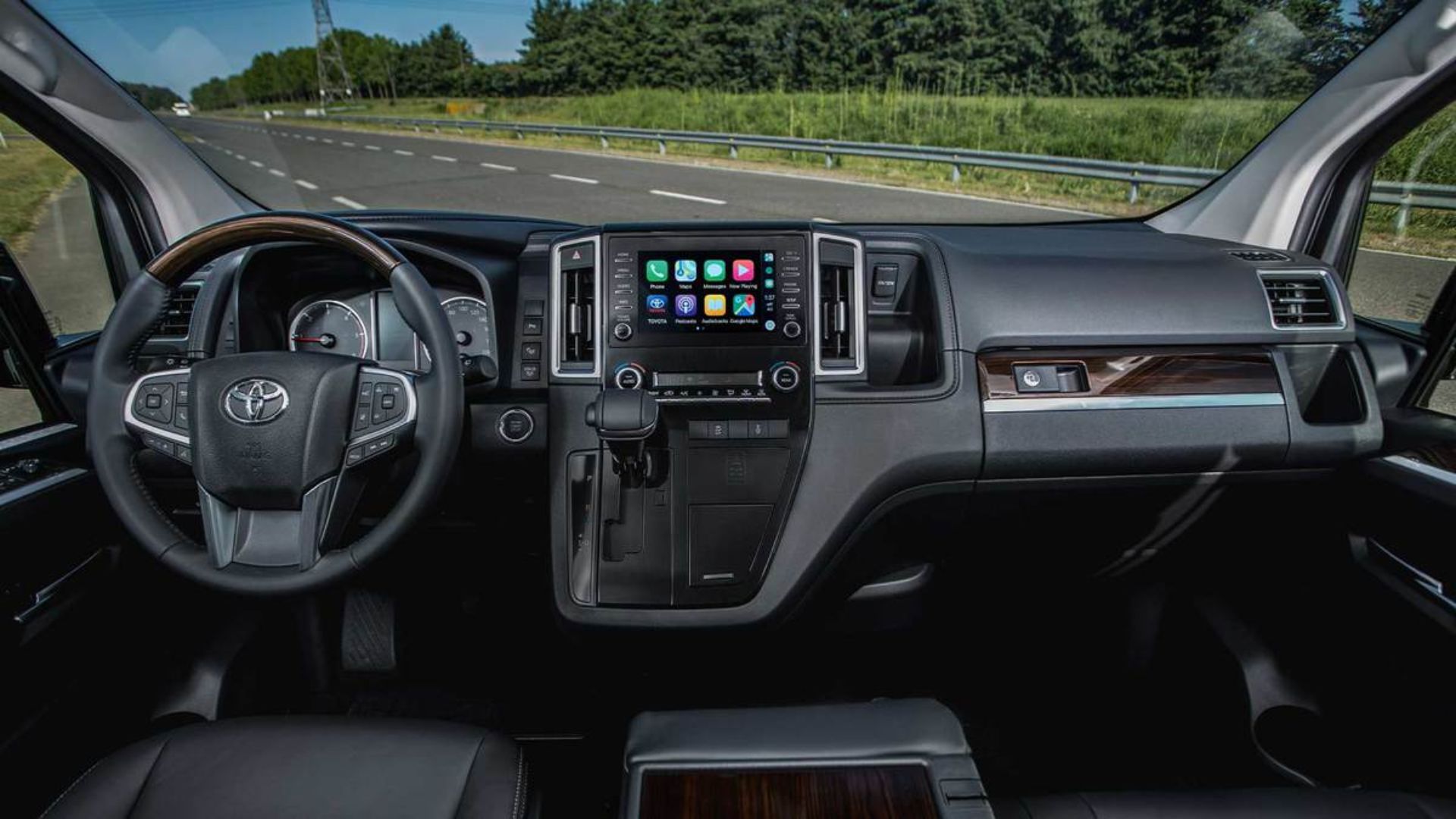
The New Toyota Hiace Model Will Be Equipped With The 2.8 Turbo Diesel Engine From Hilux And Will Have The Capacity To Transport Up To 14 Passengers. The Van Produced In Argentina Arrives In Brazil To Compete With Established Rivals In The Segment.
The arrival of the Toyota Hiace to the Brazilian market is near. Imported from Argentina, the van has already been spotted on car transport trucks heading to the brand’s dealerships in the country.
The version debuting here is the Commuter, designed to carry up to 14 occupants, including the driver, and equipped with the 2.8 turbo diesel engine that powers the renowned Hilux pickup.
Produced at the Zárate plant in Argentina, the Hiace, shared with the Hilux and the SW4 SUV, arrives in Brazil to compete with established models such as the Fiat Ducato, Mercedes Sprinter, and Renault Master.
-
OMODA & JAECOO grows in Europe in 2026 with an integrated strategy of sales, innovation, local production, and technological advancement in the United Kingdom, Italy, and Spain.
-
OMODA & JAECOO expands after-sales service in Brazil with competitive maintenance, a 7-year warranty, and high availability of parts for technological SUVs.
-
OMODA & JAECOO appoints Alessandra Souza as executive marketing director in Brazil and accelerates brand expansion with a focus on innovation, networking, and hybrid portfolio.

-
Jaecoo 7 with super hybrid SHS system exceeds 1,200 km of combined range with a 1.5 turbo engine, high-density battery, and intelligent energy management.
The strategy of Toyota is clear: to provide a robust, reliable vehicle adapted to Brazilian needs, especially for public transport, tourism, and corporate fleets.

2.8 Turbo Diesel Engine With The Robustness Of Hilux
The 1GD 2.8 turbo diesel engine equipping the van is an adjusted version of the unit that delivers up to 204 horsepower in the pickup.
In the case of the Hiace, power is reduced to 163 hp, but torque remains high at 42.8 kgfm (420 Nm), available at low revs, favoring performance with load and fuel economy.
This engine is already recognized for its durability and resistance in severe conditions, factors that reinforce Toyota’s confidence in the van market.
The six-speed automatic transmission, also the same as the Hilux, combines practicality and comfort for the driver, while rear-wheel drive maintains the robustness and load capacity required by the segment.
The suspension with a rigid axle and leaf spring offers durability and stability even on uneven roads, a crucial point for the vehicle’s operation in different Brazilian regions.
Dimensions And Capacity For 14 Passengers
In terms of dimensions, the Toyota Hiace presents 5.91 meters in length, 1.95 meters in width, 2.28 meters in height, and 3.86 meters in wheelbase, measurements that position it in direct competition with other large vans.
The Commuter configuration, aimed at passenger transport, comfortably accommodates up to 14 people, making it ideal for public transport services, school vans, tourism, and companies that need versatile vehicles.
The interior of the van promises comfort and functionality, with items such as air conditioning, front electric windows, multifunction steering wheel, and a multimedia system with a 9-inch touchscreen.
Safety features like front and knee airbags for the driver, electronic stability and traction controls, ABS brakes with electronic brake distribution (EBD), and hill-start assist are also part of the package, reinforcing Toyota’s commitment to occupant safety.
Estimated Price And Future Variants
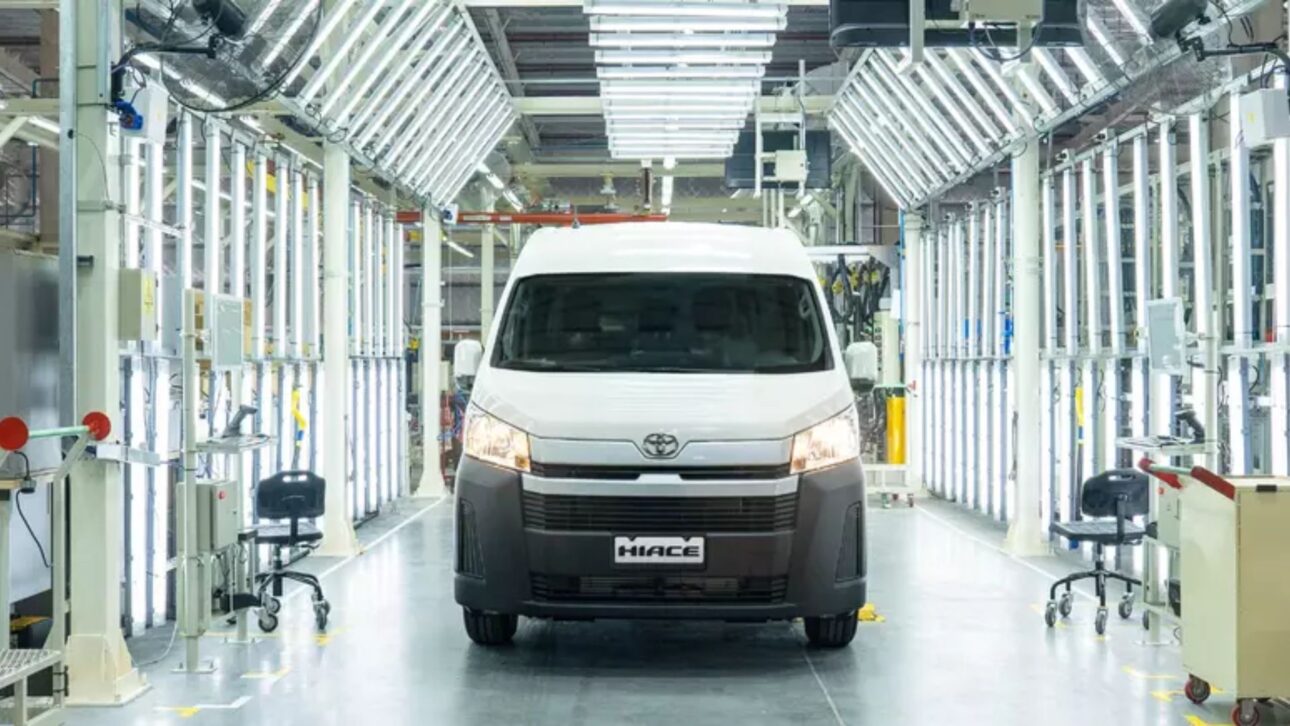
Although Toyota has not yet disclosed the official prices of the Hiace in Brazil, estimates based on prices practiced in Argentina indicate that the Commuter version should reach the Brazilian market costing around R$ 295 thousand.
Still, the official value is expected to be confirmed by the brand at a launch event scheduled for the second half of 2025.
In addition to the passenger version, Toyota already sells in Argentina the cargo van variant of the Hiace, which offers a volumetric load capacity of approximately 9.3 cubic meters and accommodates three occupants.
However, this configuration still has no expected arrival in Brazil, but its inclusion in the national portfolio is anticipated in the coming months, expanding the range to meet companies that need vehicles for transporting goods and services.
Production And Competitive Market
The production of the Hiace in Zárate follows the CKD (Complete Knock Down) model, in which the van is assembled from kits sent from Brazil and Argentina.
The factory where the Hilux and the SW4 are produced has received recent investments to expand capacity and adapt production lines to the new model.
This strategy reduces logistics costs and facilitates maintaining Toyota’s quality standards.
The arrival of the Hiace represents an important expansion for Toyota in the van segment, which has been dominated in Brazil for years by the Fiat Ducato, Mercedes Sprinter, Renault Master, and Ford Transit.
The expectation is that the robustness of the Hilux engine, combined with comfort and embedded technology, will be a competitive edge, especially for fleet owners and corporate clients seeking vehicles with good cost-benefit and affordable maintenance.
The Brazilian market for passenger vans and light commercial vehicles has shown continuous growth, driven by demand in sectors such as tourism, school transport, corporate transport, and public services.
According to data from the National Association of Motor Vehicle Manufacturers (Anfavea), in 2024 there was an 8% increase in sales of this segment compared to the previous year, demonstrating strategic relevance for automakers.
With the arrival of the Toyota Hiace, competition is expected to intensify, and companies in the sector will have another robust and updated option.
The capacity for 14 people is a differentiator that meets the needs of those looking for larger seating without compromising comfort and safety, while the 2.8 turbo diesel engine brings efficiency and strength for urban and highway routes.
Moreover, the set of standard equipment reinforces the proposal for a well-equipped vehicle, with technologies aimed at safety, connectivity, and comfort, elements that are increasingly important for corporate and private clients.
The expectation is that at the launch, Toyota will also present special commercial conditions for fleet owners, which may accelerate the adoption of the model in the market.
In the future, the brand may expand the offering with versions aimed at specific uses, such as cargo van and models customized for tourism, depending on the acceptance of the Brazilian public and the initial performance of the Hiace at the dealerships.
The experience in Argentina, where the model is well-received, will be an important indicator for future decisions.
Given the set of attributes and the robustness inherited from the Hilux engine, do you believe that the Toyota Hiace could become a reference among passenger vans in Brazil and surpass traditional competitors?








-

-

-

4 pessoas reagiram a isso.